Does your feed determine your world view?
An educational initiative at the UW/H invites students to take a critical look at their own media consumption - and to strengthen informed participation. A guest article by PPÖ student Linda von Velsen.
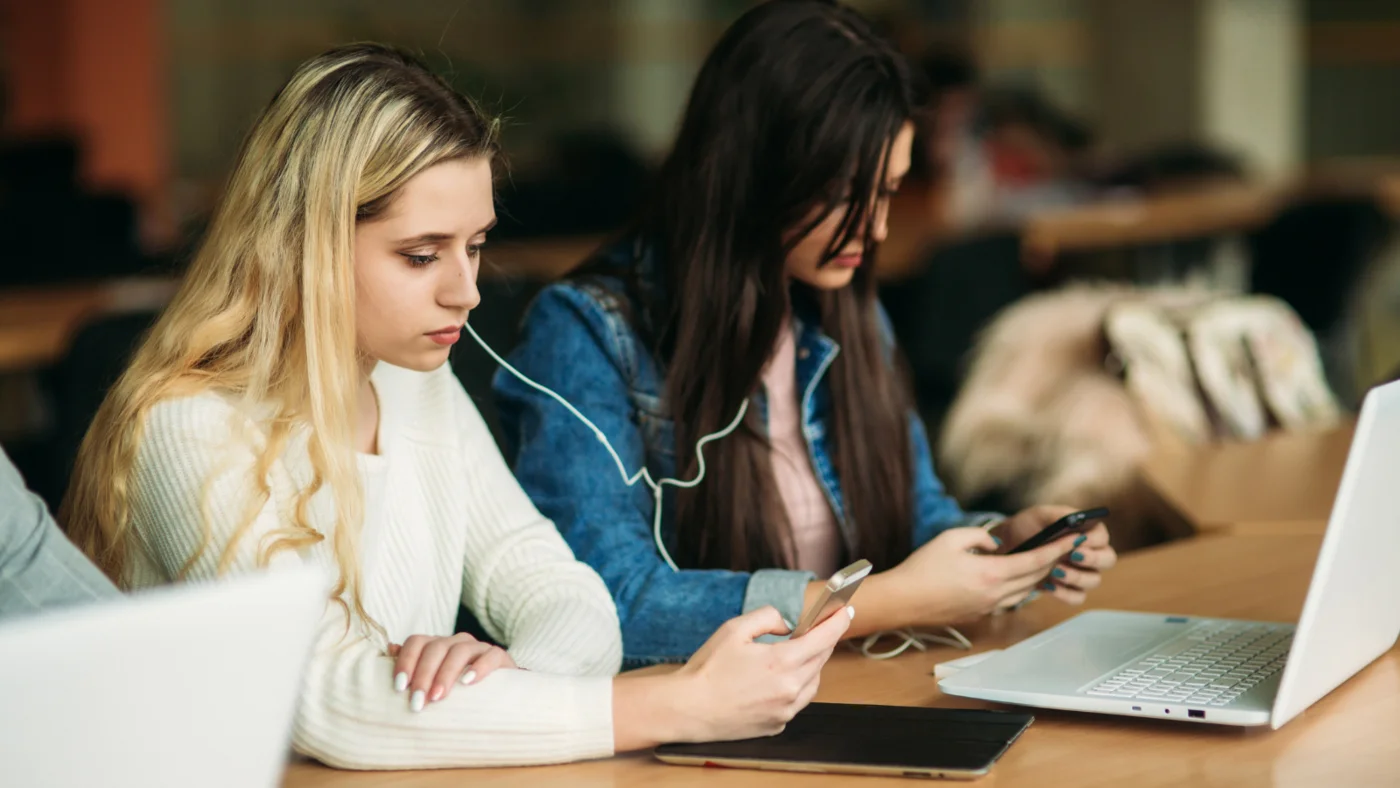
The news on your smartphone. The algorithm that determines the feed. The images that go viral. All of this shapes how we see the world - often without us realising the mechanisms behind it. In international surveys, around 60% of people state that they do not trust the news or only trust it to a limited extent. 39% of them actively avoid - at least sometimes - obtaining information about current events from the media. In Germany, this figure is 37% (sources: Digital News Report 2024, Reuters Institute Digital News Report 2024). Many suspect economic or political influence on journalistic content. At the same time, more and more people are turning away from political news - not because they are uninterested, but because they are overwhelmed, tired or distrustful. What does this mean for a democratic society?
"Understanding Media" is an educational initiative at Witten/Herdecke University that offers students from all disciplines the opportunity to explore the role of media in a changing society. It was launched by UW/H graduates Johannes Wiek and Max von Abendroth; Lutz Kinkel has also been part of the team since 2022. In Studium fundamentale, the seminar series brings together European and international guests from media studies, journalism and politics with students from UW/H and other European universities - for joint reflection and critical analysis.
Previous guests have included Rasmus Kleis Nielsen (Professor at the Department of Communication Studies at the University of Copenhagen and Senior Research Associate at the Reuters Institute for the Study of Journalism at the University of Oxford), Charlie Beckett (Director of the Polis Think Tank/JournalismAI Project at the London School of Economics), Marius Dragomir (Director of the Media and Journalism Research Centre) and investigative journalist Mar Cabra, who was awarded the Pulitzer Prize for her work on the "Panama Papers".

They provided insights into their research and professional practice and opened up new perspectives on the question of how media works and what influence it has on social processes. In the seminar, the experts reported on and discussed with us students, among other things, the fact that in many countries media and social media are systematically infiltrated, influenced or controlled by governments or economic actors ("media capture"), how AI-generated images can influence our understanding of the world and our perception of events and contexts - or the fact that despite (or precisely because of) technological progress in the context of artificial intelligence, the need for human empathy, judgement and social competence in journalism is growing.

Topics that characterise the public debate
In the 2025 summer semester, we will once again be focussing on pressing questions: What does it mean when more and more people turn their backs on journalism? How are AI-generated images changing our relationship with reality? How can we protect and support investigative journalism? What role do influencers play in political debates? How independent are the media anyway? And what does freedom of expression actually mean - and how can we protect it?
Sessions on the role and impact of algorithms in the media landscape and a simulation game on the topic of "Detoxing Information Ecosystems" are also planned.
The "Understanding Media Club" is also being planned as a student initiative in which UW/H students can engage in dialogue on media topics.
Open to all - and made for many perspectives
The exchange with my fellow students and international media experts in the 'Understanding Media' seminar was particularly enriching for me as a long-time participant in many ways - not least because it impressively demonstrated to me the essential role media play in our perception of the world and social developments. I was also able to gain a deeper understanding of the underlying media structures and their mechanisms. I learnt how I can be more reflective and responsible in today's media world - and gained new perspectives thanks to the diverse impulses.
I am convinced that we students need spaces in which we can talk about these topics and further develop our understanding of the media. That's why I'm now also involved as a student representative within the initiative - and I'm looking forward to the coming semester!
If you're curious, you can still register for the UNDERSTANDING MEDIA seminar via UWE, or get in touch with initiator and lecturer Johannes Wiek.
More information about Understanding Media
The current issue of WITTEN LAB MAGAZINE #5 | 2025, which focuses on Media & Democracy, offers deeper insights into the topic.
A selection of the topics:
- How the media landscape is changing
- How artificial intelligence is changing the news
- The state of media independence in Germany
The magazine is available online at www.wittenlab.de.
Impressions and reviews of past sessions can be found on Instagram at @understanding_media_seminar.

