“Entrepreneurship may seem glamorous, but it requires a lot of sacrifice”: UW/H alumnus Max Elster shares tips for founders
“Just do it”—that’s how you could sum up the motto of management graduate Max Elster. He has (so far) founded two startups, hosted a podcast, and lived in four countries. In this interview, he talks about what he’s planning to do next in the U.S.
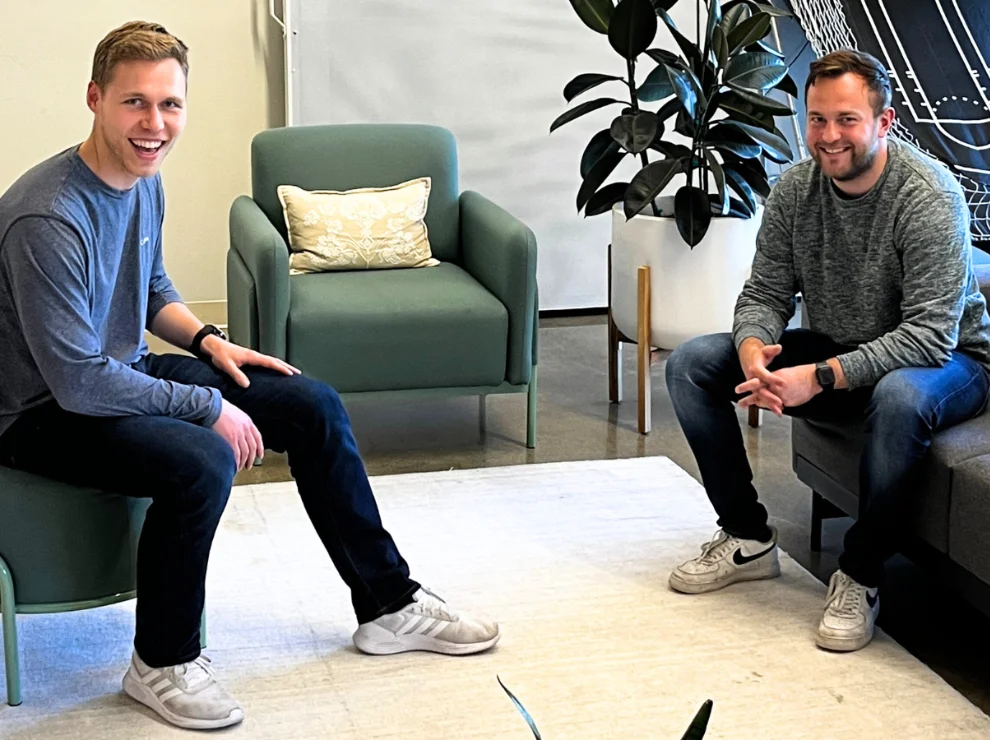
You studied at a total of four universities: Stellenbosch University in South Africa, Witten/Herdecke University (UW/H), Vienna University of Economics and Business and the online university Tomorrow. Why was it important to you to have a wide range of educational opportunities in different countries and what did you take away from the variety of learning experiences?
It was always important to me to gain diverse experiences. I really liked Stellenbosch because I found South Africa culturally exciting and wanted to get to know the people and the environment. I was impressed by how much potential there is in the parts of the continent that I got to know - South Africa, Botswana, Namibia and Zimbabwe. The people there want to move their countries forward and contribute to social progress. Although they have less access to financial prosperity, they often seem happier than people in the West. This showed me that gratitude is possible within certain limits, even with just a few basics. This experience had a huge impact on me.
After my semester abroad in South Africa, I returned to Witten for my Bachelor's degree in Management. I was originally drawn to Witten because I found the interdisciplinary approach of the university, which offers various degree programmes in a very small space, fascinating and appreciated the small learning groups in which intensive discussions take place. For my Master's degree, I wanted to take a closer look at sustainability and data science. The concept of Tomorrow University really fascinated me at the time: A purely remote university, where all courses and exams take place online, in combination with the Vienna University of Economics and Business as an on-campus university - I really wanted to try out this format.
How did studying in Witten differ from studying at the other universities?
Regardless of the fact that I met my closest friends in Witten, the university was always a place for me to meet and exchange ideas on very diverse topics. I never had the feeling that I was simply studying economics. Rather, the intensive discussions with students from politics, medicine or psychology allowed me to familiarise myself with the perspectives of other disciplines on social and economic issues. I found this environment extremely inspiring. In a way, Witten represents real life, where you interact with people from different backgrounds and professional fields.
At the same time, I had the opportunity to find out at a young age what I was really interested in because Witten gives you the chance to integrate working student activities and voluntary projects into your everyday life beyond university. It was a great experience and I look back on my time in Witten very positively.
In 2015, during your time at UW/H, you hosted your own podcast "Feed your Brain" and interviewed Blinkist founder Holger Seim and President George W. Bush's Chief Protocol Officer, among others. Did you discover your passion for entrepreneurship and technology during this time?
Yes, the podcast definitely provided important insights into these topics. However, my interest in entrepreneurship and technology was sparked earlier: I did an internship at a software start-up in Cologne in my first and second semesters. There I learnt what it really means to work in a small team of five to ten people. I also gained an understanding of how software is developed. To be honest, I was very naïve at the time and didn't understand much, but my interest and desire for a deeper understanding was awakened.
At the time, I listened to a lot of English-language podcasts with entrepreneurial personalities and realised that there were no podcasts like this in German-speaking countries. So I simply ordered a microphone and asked people if they wanted to talk to me about their topics. At first, people were sceptical because podcasts were considered "old school", but I was keen and managed to convince them to listen in. Through the university network, I got to know and interview many exciting people, such as Radoslav Albrecht, the founder and CEO of the Berlin-based FinTech Bitbond, and Daniel Heer, the founder and CEO of Zeotap.
So you just got started. Is it typical of you to just get started and see what happens?
Yes, I think so. I had read a book by the well-known podcaster Tim Ferris, which mentioned, among other things, how to get started with podcasts. He recommended recording ten episodes to start with. That sounded doable. So I started with ten episodes ... and kept going.
During this time, you also developed an app that documents meetings and converts the spoken word into text. How did that idea come about?
Through the podcast, I became intensively involved with audio technology. During my last semester in Witten, I came up with the idea of developing an app that could be used by sales representatives, for example, to automatically record their voice notes. Although we were a little too early back then, we already had our first paying customers. In the meantime, the market for transcription apps has developed into a large business area. As we gradually moved more and more from the B2B sector into the consumer sector, I realised that I wanted to try out a different direction again. That's why I eventually left the founding team.
You are now co-founder of Minoa, a software company based in San Francisco, which raised 2.7 million dollars a few months ago. How did your own start-up come about?
My co-founder Richard and I realised through our own experiences in the B2B environment and later through interviews with around 50 companies that pricing is a huge problem - especially when selling customised software to medium-sized or large companies. Here, companies usually have to rely on experienced salespeople. In the end, it often feels like someone is sticking their finger in the air to feel out the ideal price point between their own costs and the customer's willingness to pay. An extremely large number of companies do not even realise their sales potential because they do not correctly identify this price point. For us, this was the starting point for trying to solve the problem.
Why is that?
In theory, you have all the information at hand when negotiating a price, but in the real world this information is very one-sided: as a rule, you only know your own cost points and profit intentions, which is why customers and sales staff carefully explore their mutual limits in discussions.
We want to change this and make pricing more collaborative and transparent for both sides. Our application enables sales staff to show their customers exactly how the value of the desired software is defined: How much time does the development cost the programmers? What database can they access? What needs to be customised for the customer? How much specialised knowledge is required? Our software brings all these values together and thus helps to calculate the value of the application precisely.
What has contributed to your success so far?
We are still at the beginning of our journey. The fact that we were able to raise 2.7 million dollars via the financing round is a signal for us that the idea is basically right and that we work well as a team. We were very transparent right from the start and sent regular updates on product development to the investors. This approach, which is rather atypical for German founders, enabled us to gain the trust of investors.
What do you think makes the difference between German and American founders?
American founders are often better at packaging their ideas into a convincing story and marketing them successfully. This is partly due to the fact that technology has a long tradition in the USA. In addition, Americans have a strong product orientation and a fascination for developing good products. We can still learn a lot from the Americans here, especially in combination with modern software development.
What advice would you give to students who are interested in entrepreneurship?
Firstly, they should ask themselves why they want to start a business in the first place. Entrepreneurship seems glamorous, but it requires a lot of time and sacrifice - you should be aware of that.
Our university has a strong entrepreneurial history that is often overlooked. I recommend combining this tradition with your own interests - for example, by carrying out small projects for family businesses from the UW/H network alongside your studies. Internships or temporary work in existing start-ups or companies are also worth their weight in gold, as they help you to better understand the market and technologies. This allows you to find out what you enjoy and which areas really interest you.
Basically, I believe that technology will play an increasingly important role in the future. It therefore makes sense to get to grips with it - for example via online courses or the modules of the new "Social Data Science" degree programme, which was presented at the Alumni Day. Regardless of which area you want to work in later on, it is definitely important to prepare yourself for a future characterised by technology.