Gender equality at the UW/H: Five questions for Elisa Mura
We talk to the new representative for equality and diversity about empowerment, visibility and equal opportunities.
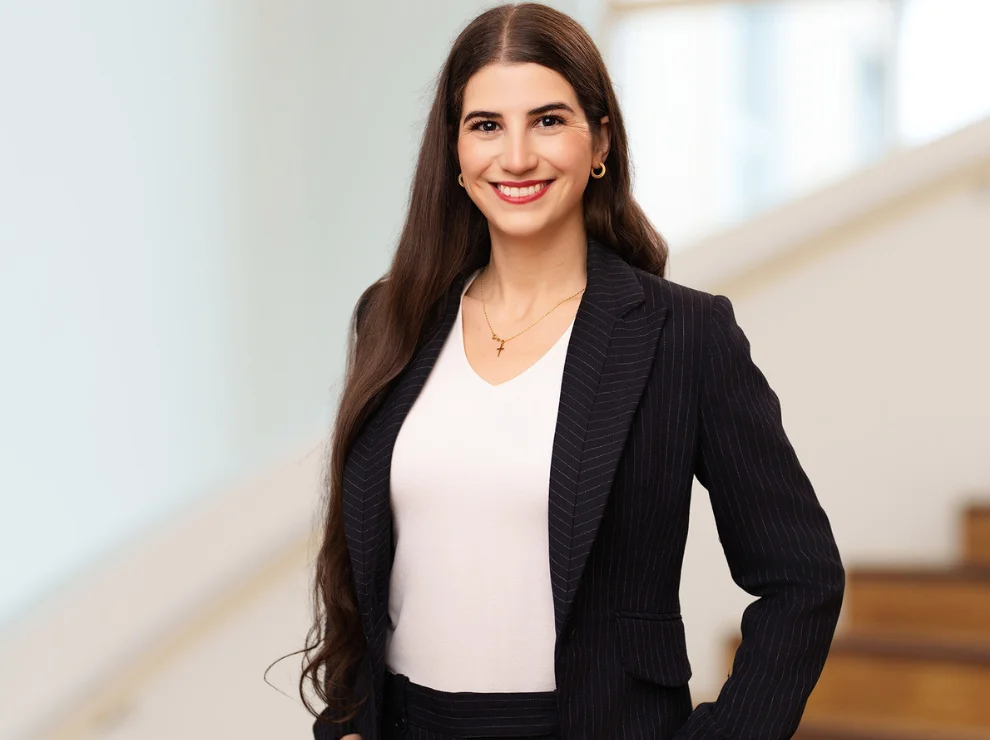
Elisa Mura took up the post of Equality and Diversity Representative at UW/H in September 2025. However, she has been associated with the university for a long time: Elisa studied psychology here, specialising in clinical psychology and psychotherapy. Since 2023, she has been working as an academic staff member in the Faculty of Health at the School of Medicine, where she is involved in integrative health care research. At the same time, she works freelance in her own psychological practice with a holistic approach that sees body, mind and soul as a unit.
In her commitment to diversity, equality and inclusion, she focuses on open dialogue, appreciation and empathy. In her private life, Elisa enjoys a good book with a cup of coffee, relaxing in Witten's Café Leye, standing in front of a canvas with a paintbrush or on a yoga mat.
In this interview, Elisa Mura talks about what is particularly important to her in her new position, how she reacts to common gender equality myths and what social developments concern her.
You've been in office for a few months now. What excites you most about this task?
Empowerment and visibility are key levers for me to create a non-discriminatory space. That's why I'm particularly passionate about giving a voice to people who are often overlooked and not heard. Standing up for them is very important to me. My position also enables me to initiate structural changes and steer the direction in which we develop in terms of equal opportunities and equality.
What does diversity mean to you personally?
For me, diversity means broadening our view to include what we may not be able to perceive ourselves. I like to compare this to the colour spectrum: we don't see all colours, such as ultraviolet. We can't perceive that at all. And we also move around in everyday life with our own glasses. This makes it all the more important to look beyond this and recognise everything our society has to offer.
You often hear sentences like: "We've all had equal rights for a long time" or "There are bigger problems than ...". How do you deal with this?
I prefer to respond with facts and figures. These phrases are often very emotionally charged and linked to subjective impressions. But I prefer to discuss things on a factual, tangible basis. Whether or not I am a feminist in my basic attitude is of secondary importance. It's more about what facts are on the table.
Let's take universities as an example: there are many female academic staff. However, their proportion decreases over the course of their career. Nationwide, the proportion of female professors is currently around 30 %. This picture can be seen throughout the German higher education system. This makes it clear that we have achieved formal equal opportunities, but not actual equal opportunities. Many meaningful discussions can be held on such a factual basis.
Are there any particular encounters with people or experiences at UW/H that have particularly inspired you?
I can't pin it down to a specific person. But in my counselling sessions, I talk to people who are affected by discrimination. I often experience enormous resilience, drive and important impetus for my work. I am particularly impressed by how much strength there is in the vulnerable and the opportunities for development that this brings.
Are there any social developments that worry you?
We are currently experiencing a strong polarisation and division in society. That worries me greatly. I would like to see more genuine dialogue - because it can help to question and break down entrenched positions and open up new perspectives.
At the same time, I think it is more important than ever that we refer to our history, to what we have learnt. We need to re-engage in dialogue and remind ourselves that we are one society and that we can only move forward as one. I also think it's important not to look at issues such as migration, inclusion and equality from a deficit perspective. As a trained clinical psychologist, I have a fundamentally salutogenic attitude and am convinced that inequality often harbours far more opportunities and possibilities than deficits.
Do you have a book tip for anyone who would like to take a closer look at the topic of gender equality?
"Nemesis' Daughters" by Tara-Louise Witwer. It's a great book because it combines historical aspects with current debates and sheds light on the areas in which the patriarchal system still has an impact today. At the same time, it also shows the opportunities that cohesion offers - and that is encouraging.