Holistic and practice-orientated: your psychology degree programme in Witten
Would you like to become a psychologist or psychotherapist? Then you will receive a comprehensive education at the UW/H in the Bachelor's and Master's degree programmes.
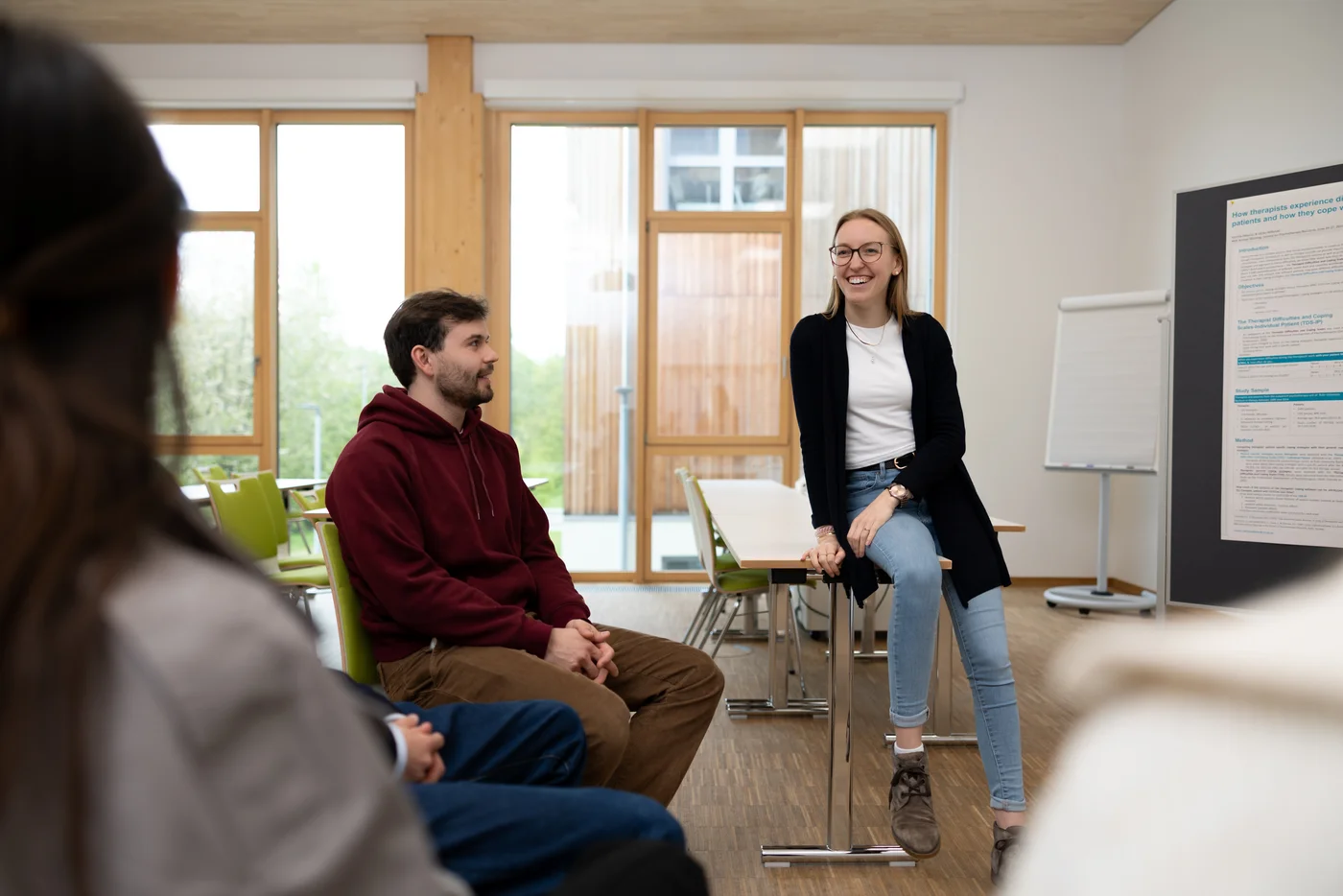
Mental illnesses are on the rise worldwide and mental health issues are becoming increasingly important. As a result, the demand for well-trained specialists continues to rise. This is not the only reason why studying psychology at Witten/Herdecke University opens up good career prospects.
"Witten is one of the major teaching centres for psychotherapy."
Prof Dr Thomas OstermannHead of the School of Psychology and Psychotherapy at UW/H
Thanks to the high practical relevance, you will get a precise idea of your future appointment during your studies. One special feature is the university's own outpatient clinic. The Centre for Mental Health and Psychotherapy not only treats adults, but also children and adolescents. This gives you direct insight into various treatment methods.
Our strong network of clinical partners also enables you to gain practical inpatient training so that you can come into contact with patients and gain experience at an early stage.
Focus on humanity
At Witten/Herdecke University, you will learn to understand people as a whole - from their individual perception and experience to their actions. You will deal intensively with mental illnesses and challenges and acquire in-depth knowledge of various therapeutic approaches and scientific methods.

The Bachelor's degree provides you with the ideal basis for joining the Master's degree programme in Psychology with a focus on Clinical Psychology and Psychotherapy (M. Sc.) at the UW/H or a comparable Master's programme at another university.
Around 85 per cent of our students also do a Master's degree at UW/H after completing their Bachelor's degree in Psychology. But even if you don't opt for the clinically oriented Master's programme, you will have a good foundation for your future appointment and can work as a psychological assistant, for example.
Ideally equipped for research and practice
The Master's degree programme focuses on practical relevance in combination with intensive research training. All four psychotherapy methods - behavioural therapy, psychodynamic methods, systemic therapy and humanistic psychotherapy methods - are taught. "This diversity of perspectives is very important to us, as is teaching in small groups," says Prof Ostermann. In addition, you will acquire skills in scientific work through a research project and familiarise yourself with various research methods.
The Master's degree programme also meets the criteria of the licensing regulations for psychotherapists, so that after graduation you will have all the requirements to be allowed to practice as a psychotherapist in the future.