Hope for new treatments: DFG project aims to decode dangerous cold viruses
Witten/Herdecke University is collaborating with the University of Freiburg to coordinate a new research group on adenoviruses, with the aim of better understanding infections and identifying new vaccines and treatment options.

Adenoviruses are part of everyday life. They cause colds, eye infections and gastrointestinal infections. For most people, they are harmless. For children or people with a weakened immune system, however, the infections can be severe - in some cases even fatal.
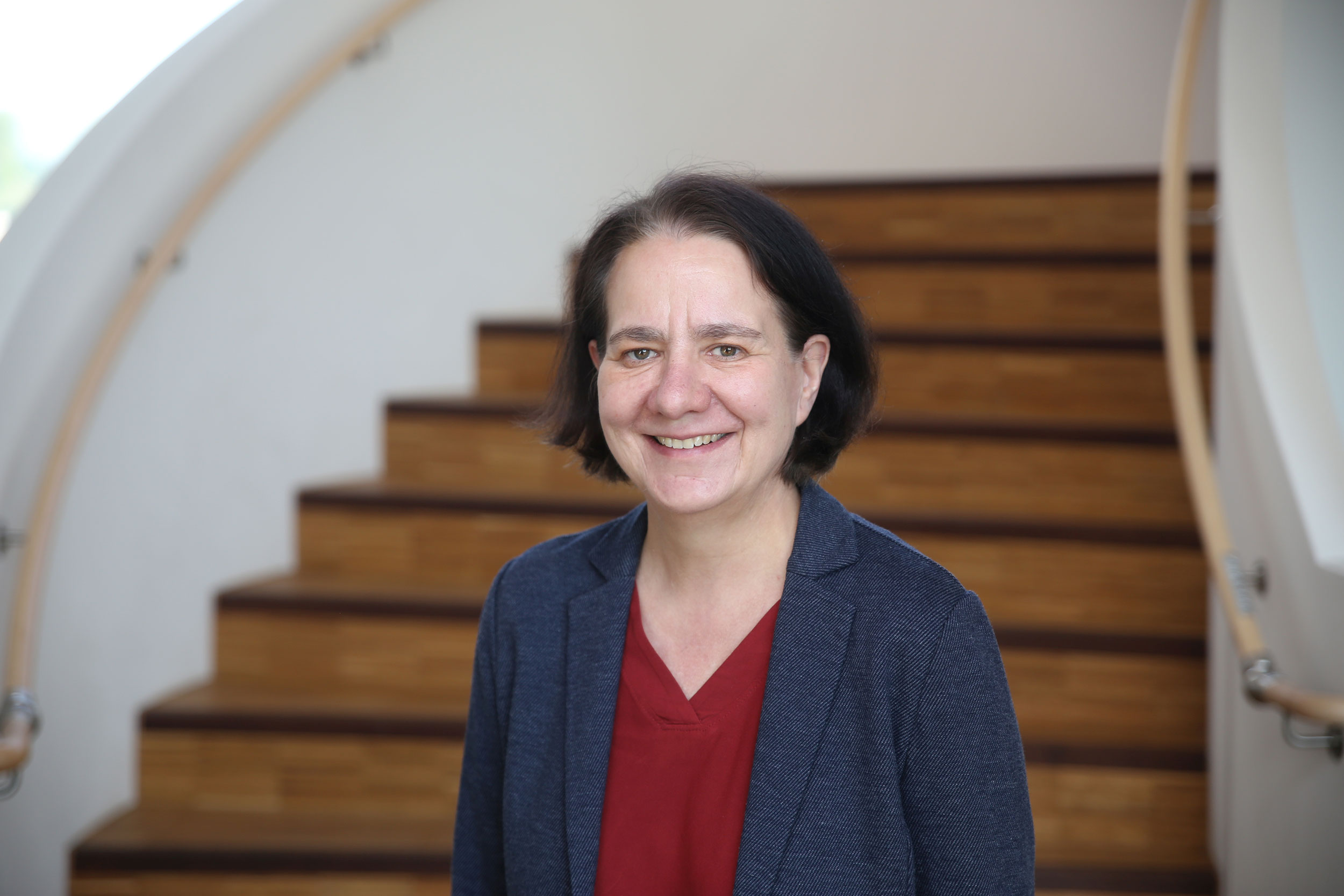
Despite this, many of these viruses have hardly been researched: of 116 known types, only a fraction are scientifically well understood. The new research group "AdBHealth", funded by the German Research Foundation (DFG) with around 5.9 million euros, aims to close this gap. It is being coordinated by Witten/Herdecke University (UW/H) together with the University of Freiburg. "We are still at the very beginning with many adenoviruses. If we understand their mechanisms better, we can not only treat infections more specifically, but also develop completely new therapies," says Prof Dr Anja Ehrhardt, Chair of Virology and Microbiology at the UW/H.
From virus to tool: how adenoviruses are used in medicine
However, adenoviruses can do more than just make you ill - they are also an important tool in modern medicine. Researchers can modify them so that they no longer reproduce. In this form, they serve as vectors, i.e. as a means of transport to introduce genetic material into cells. This technology is already used in some vaccines and plays a key role in new approaches to cancer and gene therapy. It became known in the COVID-19 pandemic, among other things.
The potential of these applications is great - but they are not without risks: In rare cases, side effects can occur when using adenoviruses as vectors. The mechanisms behind this are not yet fully understood. This is precisely where the research comes in. The working group is systematically investigating how adenoviruses work in the body and how their use can be further developed and made safer. "Our goal is to improve the balance: maximum effect with minimum risk," says Ehrhardt.
Concrete prospects for patients
The expectations for research are high: for example, targeted drugs against adenoviruses could be developed for the first time - to date, there is no specific standard antiviral therapy for the diseases they cause, such as respiratory tract infections, conjunctivitis or gastrointestinal infections; treatment is usually only symptomatic. New perspectives are also opening up in cancer medicine and genetic diseases. Therapies could be customised and made more tolerable. In the long term, it is even conceivable that treatments will only require a single application, as the genetic information introduced could remain permanently effective in the body - with the effect of creating immunity. However, it would then not be possible to reapply the same vector, as the immune system recognises it after the first administration and quickly neutralises it. "If we succeed in precisely controlling adenoviruses, we can better control infections and at the same time open up new avenues in personalised medicine," says Ehrhardt.
Further information:
The "AdBHealth" research group is a joint project with a total of twelve sub-projects at locations in Germany and a partner in Bordeaux. In addition to Witten/Herdecke University and the University of Freiburg, the universities of Greifswald, Leipzig, Lübeck and Duisburg-Essen are also involved, as are institutions such as the Centre for Structural Systems Biology (CSSB) in Hamburg and Hannover Medical School. In addition to twelve sub-projects, the network comprises a central project and a coordination project, which manage the cooperation between the participating locations.
The coordination project and three sub-projects are based at the UW/H. The sub-projects are implemented at the Centre for Biomedical Education and Research (ZBAF) - at the Chair of Virology and Microbiology (Prof. Dr Anja Ehrhardt) and in the Laboratory for Translational Medicine (Prof. Dr Dr Malik Aydin).
Photos for download

Contact person
Svenja Malessa
Press Officer
Administration | Communication & Marketing
Alfred-Herrhausen-Straße 48
58455 Witten
Room number: 2.F05