"I have always felt valued as a person and an individual in Witten."
UW/H graduate Alexander Ritter on his work in Africa and how the Witten spirit still accompanies him today.
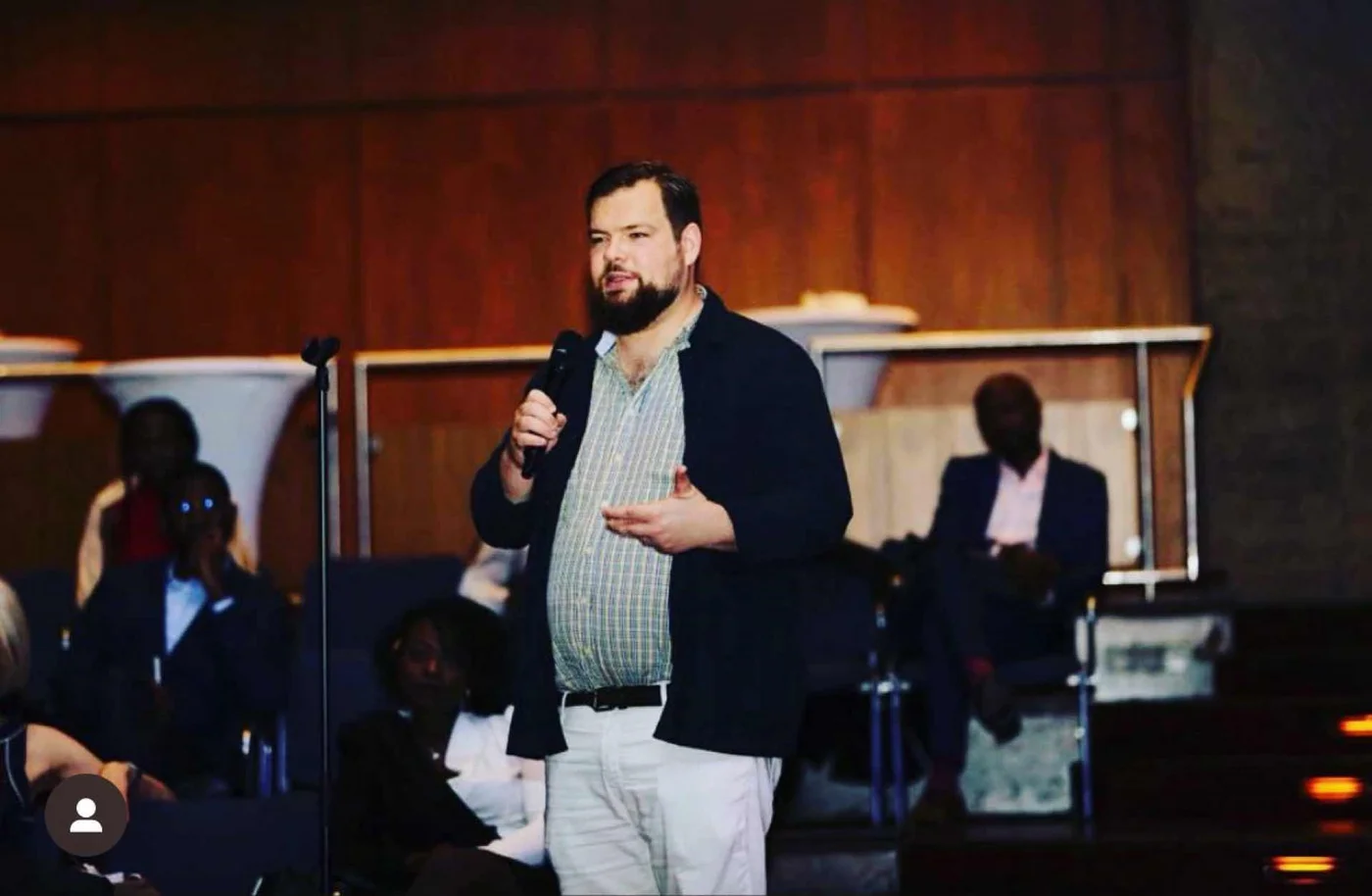
Alexander laid the foundation for his long-cherished plan with his Master's degree from Witten/Herdecke University: To promote digitalisation in Africa and create jobs in the process. He now employs almost 80 people in Nigeria, Gambia and Germany.
He has always enjoyed travelling the world: after a year of "work & travel" in Australia and a Bachelor's degree in Management at the Royal Holloway University of London, Alexander Ritter returned to Germany. In Düsseldorf, he worked full-time in the digital industry, but after six years he needed a change and his father drew his attention to UW/H and the PPE - Philosophy, Politics & Economics Master's degree programme.
"You're interested in philosophy and the big questions," he said, hitting the nail on the head: Alexander visited the UW/H, spoke a lot with students during a taster day and then it was clear: he wanted to go to Witten.
His vision quickly became reality
Even before starting his Master's degree, Alexander wanted to make an appointment in development cooperation and digitalisation in Africa. He wanted to learn the necessary expertise at UW/H. The exceptional didactics and interactive learning environment in Witten offered Alexander the space to deepen his interests and expand his skills in new areas.

"The seminars and discussions with fellow students and lecturers had a strong influence on me - here I was able to expand my own ideas with the perspectives of others," he recalls. He was particularly impressed by the freedom he had to help shape the curriculum and take part in Studium fundamentale courses that went beyond the traditional subjects.
His plan materialised and so he founded his company "netspice GmbH & Co. KG" during his Master's degree in 2016. With a first branch in Germany, Alexander began offering services in the field of digital marketing and IT project management. He soon recognised the opportunity to combine the growing shortage of skilled workers in Germany with the enormous IT potential in Africa.
In 2020, in the midst of the pandemic, he expanded his company to Nigeria - a move that laid the foundation for a bridge between the German and African labour markets. Today, his company employs more than 80 people at locations in Nigeria, The Gambia and Germany. "There is a shortage of IT specialists in Germany, while many young, motivated people in Africa are looking for training and work in the IT sector. We can combine this demand with our offer and thus create a win-win situation."
What makes Alexander particularly proud is that the digital talents from Africa stay in their home countries and work for German companies from there. In this way, they contribute to local development instead of migrating in large numbers, as was previously the case. By creating new jobs and building up local IT teams, Alexander is helping to establish a long-term IT industry that strengthens local economies and offers young people prospects.

The values of the UW/H remain with him to this day
"The Witten spirit had a strong influence on me," says Alexander looking back. His time in Witten enabled him to think in an interdisciplinary way and recognise connections that often remain hidden to others. He also strengthened his self-awareness in Witten - a skill that helps him enormously in his work as an entrepreneur: he knows which tasks he should tackle himself and which he should delegate. "Entrepreneurial success is only possible in a team - and understanding your own strengths and weaknesses helps enormously."
Alexander Ritter is not only an entrepreneur, but also a pioneer in the field of international cooperation. He has clear advice for today's students at UW/H: "Take advantage of the freedom that Witten/Herdecke University offers you and seize every opportunity to think outside the box. The experiences and networks you can build up here are priceless."
His memories of Witten are still vivid today: "Whether it was discussions about 'God and the world' or the personal conversations with the professors - UW/H was a place where I felt truly valued as a person." This experience and this spirit still guide him in his work today.