"I want to improve care provision in rural regions"
Graduate Daniela Fischer on studying Community Health Nursing at the UW/H.
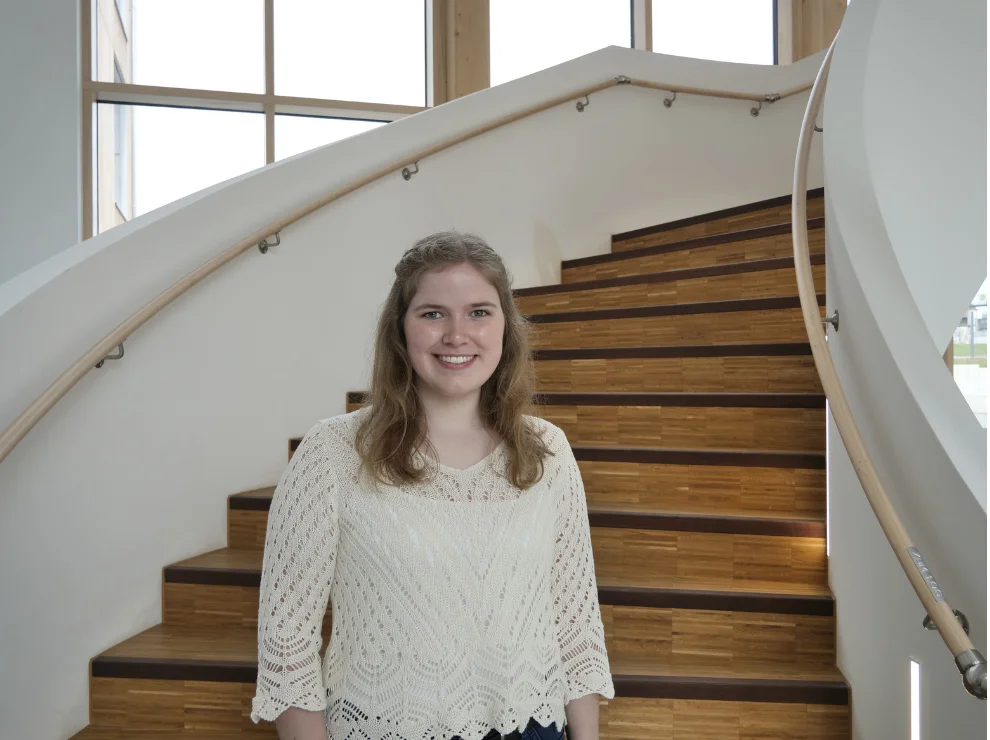
In a world where the healthcare system is reaching its limits, Community Health Nursing (CHN) plays a key role: The Master's degree programme trains nurses for preventive and advisory tasks in communities. As community nurses, they take on medical services that are currently still provided by doctors.
The first person to complete the Master's degree programme at Witten/Herdecke University is Daniela Fischer. In this interview, the UW/H graduate explains how she came to this decision, what appeals to her about the profession and what political changes she would like to see in the future.
Why did you choose CHN?
My interest in CHN was already awakened during my dual Bachelor's degree programme in Nursing at Osnabrück University of Applied Sciences. It was already clear to me back then that I wanted to improve nursing care in rural regions - the CHN Master's degree programme at UW/H offers the best possible qualification for this. In terms of content, I am particularly enthusiastic about health promotion, providing people with needs-based support and working with experts from different disciplines in the community.
What did you take away from your studies?
From a professional point of view, I was able to deepen my knowledge of target group- and needs-specific care concepts, assessments of patients' health status and the basics of social law. Based on these principles, we worked together to develop solutions that involve various stakeholders in local healthcare. The joint courses with medicine students were particularly valuable for me. I was also able to expand my academic expertise through my first own research project and by reviewing current studies in my Master's thesis on the topic of "Interprofessional cooperation in early help using the example of the children's network in the district of Emsland - a qualitative content analysis".
What is special about the UW/H for you?
The special thing about the UW/H is the family atmosphere. Another aspect that characterises the UW/H is the Studium fundamentale (Stufu). The free choice of Stufu seminars allowed me to think outside the box. I particularly remember the Stufu seminars "Digital Medicine, Eat This - Nutrition in Medicine" and "Urban Futures: How do we want to live? Housing of the future". I really enjoyed being able to get a taste of other departments and get to know students from other disciplines.
Is there a particular highlight that you remember fondly?
I have fond memories of the first day of the Master's programme, when I got to know the university, my fellow students and lecturers and we went on an exploratory tour of the city together. As the CHN degree programme is largely online, I really enjoyed the weeks of attendance at the university. I will especially miss the walks together, the meetings at Knuts or at the Christmas market in Witten with my fellow students.
What are you doing now after your studies?
I started my career while I was working on my Master's thesis: I've been working in my home district of Emsland in Lower Saxony, at the senior citizens and care support centre, since October 2023. I came into contact with my current employer during my compulsory internship in my third semester.
Here, I advise people in need of care, family carers and interested parties during consultation hours, establish networks and initiate collaborations to ensure the best possible local care. I particularly enjoy the varied activities from telephone counselling to home visits or consultations during office hours. I also really appreciate the close collaboration with my team and other cooperation partners.
What do you wish for the future of CHN?
For the future of CHN, I hope that its importance will be politically recognised and promoted in order to establish the profession nationwide and create corresponding positions in healthcare. It is important that politicians take social changes seriously and act accordingly.