One in ten elementary school children often feels lonely
Loneliness begins at an early age and is often evident as early as school. This is shown by the “Inspire Youth” research project, in which Witten/Herdecke University is participating.
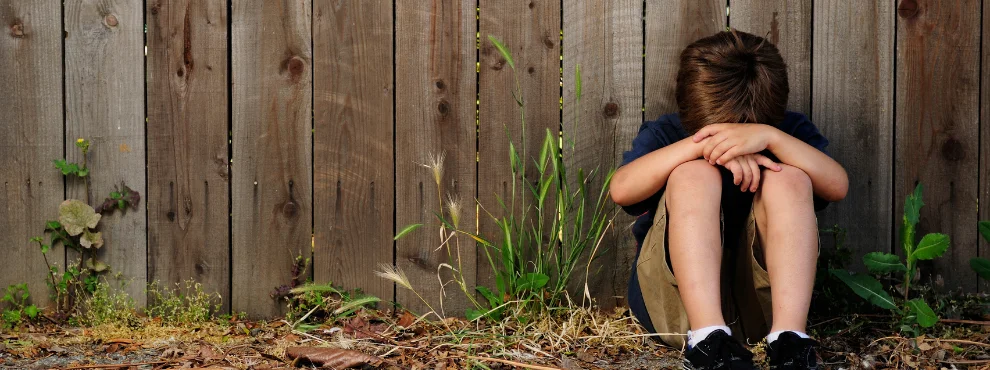
Even in primary school, loneliness is part of everyday life for many children. More than one in three children sometimes feel lonely, and around one in ten often or always feel lonely. This is shown by the latest interim results of the "Inspire Youth" study with the participation of Prof Dr Susanne Bücker, Professor of Developmental and Educational Psychology at Witten/Herdecke University (UW/H). The study surveyed 428 children in second to fourth grade at schools in Bochum, Herne and Gelsenkirchen.
A feeling without words
Many children experience loneliness but cannot put a name to it. Around a third cannot explain the term - especially children who do not grow up with German as their mother tongue. This has consequences: Those who don't have a word for a feeling find it difficult to talk about it and are less likely to seek help. "Loneliness arises when your own relationships are not what you want them to be - for example, because you don't have enough friends or the relationships are too superficial," says Prof Dr Susanne Bücker. "Children first have to learn to categorise this feeling, otherwise it often goes unnoticed."
What's more, many children equate loneliness with being alone. They therefore describe a situation, not the underlying feeling. This makes it difficult for adults to recognise loneliness in the first place.
Children experience loneliness above all where they are together with others, and school is a central place for this. This is where relationships are formed - or not. "For children, loneliness is a very concrete, social experience," says Bücker. "If no one plays with them or they are excluded, it becomes tangible, but often intangible."
Between self-help and withdrawal
Most children try to change things themselves: they seek contact with other children, talk to adults or forge new relationships. Such strategies are the most common reaction. But this pattern does not apply to everyone. The more children are affected by loneliness, the more often they resort to other strategies. They withdraw, others react conspicuously or aggressively, distract themselves or try to regulate their feelings on their own. In some cases, children even report "shutting down" so that they no longer feel anything. This points to a central problem: Not all children have the same social and emotional resources. While some actively connect, others lack precisely this opportunity.
Prevention means enabling relationships
This is where the "Inspire Youth" project comes in. It is not just about measuring loneliness, but recognising it at an early stage and empowering children to deal with it. To this end, loneliness prevention is to be anchored at all levels - in lessons, throughout the day and in school structures. Children should learn to recognise and name feelings, schools should actively promote a sense of belonging and adults should be approachable when children seek help. However, the study also shows how difficult it is to integrate this into everyday school life: large groups, little time and a lack of space make it difficult to focus on the individual child. Quiet children in particular are easily overlooked. However, trained staff can recognise loneliness and effectively reduce it through targeted measures. This opens up concrete starting points for strengthening children at an early age and enabling them to establish reliable social relationships.
Further information:
The "Inspire Youth" pilot project is the first study in North Rhine-Westphalia to systematically investigate loneliness at primary school age. It will run until the end of 2027.
It is investigating how children understand, experience and cope with loneliness and how prevention can succeed in everyday school life. On this basis, concrete recommendations are to be developed for schools, all-day programmes and education policy. In addition to Prof Dr Susanne Bücker from Witten/Herdecke University, the Institute for Social Work and Social Pedagogy (ISS), AWO Ruhr-Mitte and AWO Gelsenkirchen/Bottrop are involved in the project. The project is funded by the state government of North Rhine-Westphalia and the NRW Social Foundation.
Contact person

Svenja Malessa
Press Officer
Administration | Communication & Marketing
Alfred-Herrhausen-Straße 48
58455 Witten
Room number: 2.F05