Work on the topic ‘Transformation of economic growth’ honoured
According to Dr Tobias Vogel, a scientist at the University of Witten/Herdecke, there is an alternative to turning away from economic growth - without devastating consequences for people and the environment.

How can we manage to secure prosperity but also counteract climate change? This question not only concerns politicians - for example in the current coalition negotiations - but also the humanities and economics. The philosopher Tobias Vogel also addressed the conditions for a less radical way out of the crisis in his doctoral thesis ("Grundlegung einer Kritischen Theorie des Wirtschaftswachstums"). It was reviewed by former Witten professor Reinhard Loske, who became known for his books on climate policy and as a representative of the Green Party in the Bundestag. The work is so outstanding that it was awarded second prize in the humanities and cultural studies section of this year's Körber Foundation German Study Prize out of almost 700 applicants. It has also been published as a book by Metropolis Verlag.
"The rapid progression of climate change is fuelling doubts as to whether the prevailing model of prosperity is compatible with ecological sustainability in the long term," says Tobias Vogel. "There are also doubts as to whether further economic growth in existing affluent societies will contribute to quality of life." These doubts have serious consequences for a social market economy based on growth, as is the case in Germany: Its basis for legitimisation threatens to erode if it is not ecologically sustainable and its promise of prosperity is no longer convincing. In addition, current tendencies towards social division are exacerbated by a polarised debate surrounding growth. On the one hand, it appears that growth is responsible for the current problems, while on the other, it is seen as the solution: It is only with increasing prosperity that the planetary limits have been systematically exceeded and, at the same time, it is only possible for financially strong, innovative economies to achieve a comprehensive energy transition.
Transformation instead of stagnation
Growth can reduce the quality of life if people have to constantly fully utilise new efficiency potential in order not to fall behind. It can also contribute to global warming as long as greenhouse gas emissions in production and consumption bring more benefits than savings. In his PhD thesis, Tobias Vogel categorises the negative consequences of growth in the complexity of contemporary societies, thereby opening up ambivalences and new scope for the growth debate. What is surprising is that "this does not mean that there is a need for a general rejection of growth, but rather for a consistent growth transformation that counteracts existing growth problems without jeopardising established achievements," explains the author.
In order to achieve this, he sees the technological innovation capability of growth as an important prerequisite for overcoming the current challenges. In addition, a reduction in socio-economic inequalities, a more robust stock of public goods, a much more ecologically framed world trade and various forms of civil society self-organisation and, last but not least, moderate growth paths on a global scale are required. "As the climate crisis in particular is rapidly worsening, a politically compatible growth transformation is not only a desirable goal for the future, it is also urgently needed," summarises Tobias Vogel.
About the person
Tobias Vogel studied philosophy and history at Ruhr University Bochum and completed his doctorate in 2020 at the Faculty of Philosophy and Educational Science at the Chair of Applied Ethics under Prof Dr Klaus Steigleder. He has been working as a research assistant at the Chair of Moral and Political Philosophy at Witten/Herdecke University since 2013.
Original publication
Tobias Vogel: Foundations of a Critical Theory of Economic Growth. Normative standards and causal accountability of growth problems, Metropolis Verlag, Marburg, 2020, 270 pages, ISBN 9783731614586
The German Academic Award
The German Academic Award aims to honour German doctoral graduates who have completed an excellent doctoral thesis with particular social significance. One first prize and two second prizes are awarded in each of the sections Humanities and Cultural Studies, Natural and Technical Sciences and Social Sciences.
Photos for download

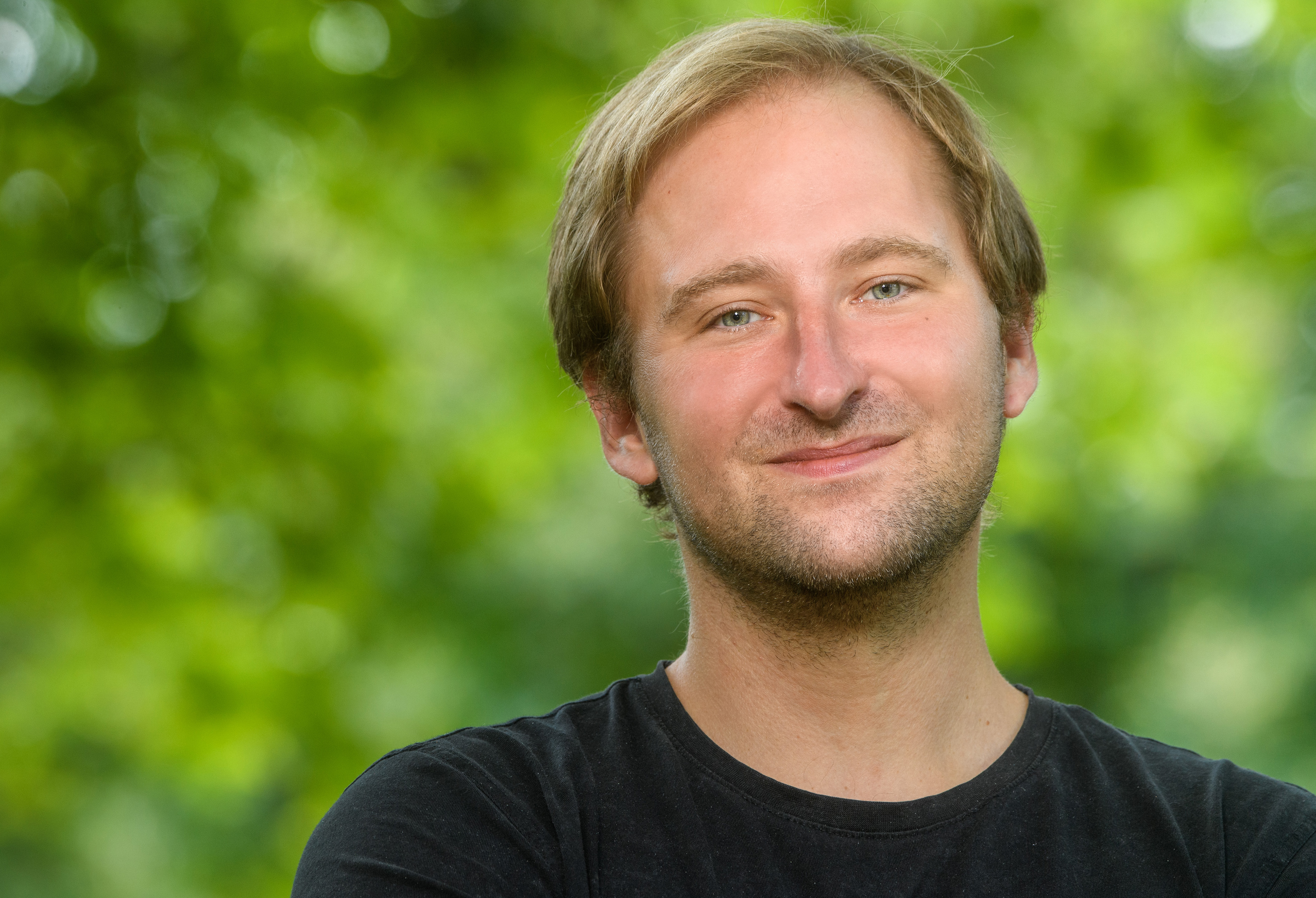
Contact person
Svenja Malessa
Press Officer
Administration | Communication & Marketing
Alfred-Herrhausen-Straße 48
58455 Witten
Room number: 2.F05