"Justice is often neglected in sustainability research"
Interview with Prof Dr Magdalene Silberberger and Dr Sonja Knobbe from the [tra:ce] research centre at UW/H.
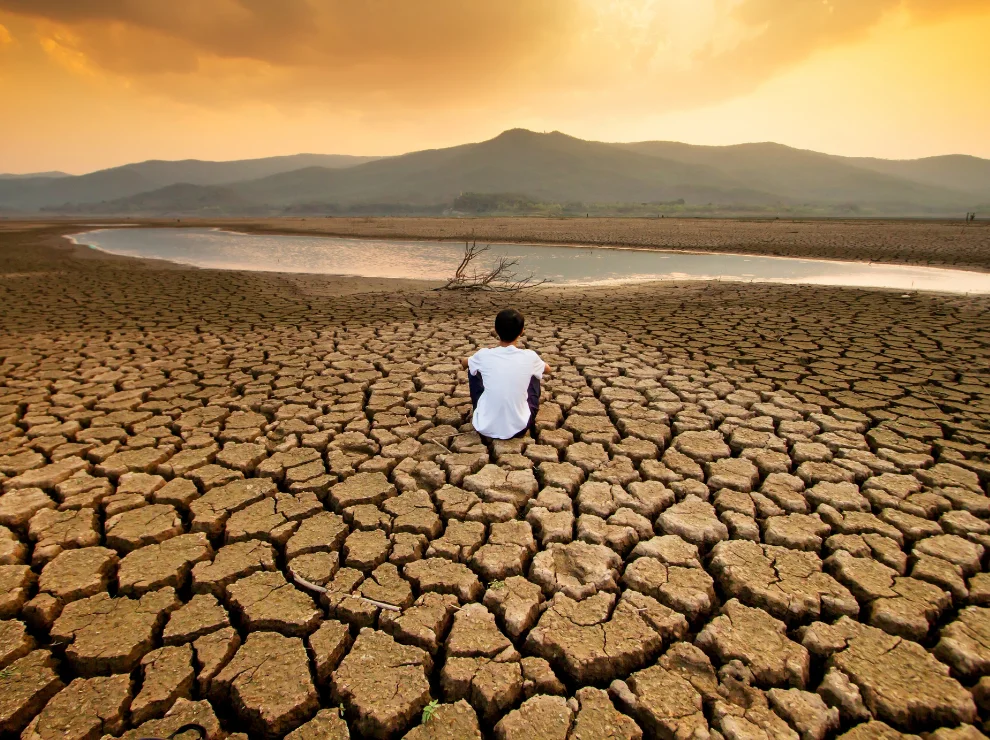
The continuously worsening climate catastrophe with dramatic effects worldwide presents humanity with a task of the century: the socio-ecological transformation of the economy, state and society. The UW/H founded the International Centre for Sustainable and Just Transformation [tra:ce] in October 2022 to provide scientific support and drive this forward with concrete recommendations for action.
The cross-faculty research centre examines sustainability-related issues from a problem-oriented, transdisciplinary and holistic perspective. The centre aims to have an impact on science, society, business and politics far beyond Witten and help shape the transformation. All in all, the research conducted here is intended to help enable and encourage sustainable decisions in times of multiple crises.
In this interview, Prof. Dr Magdalene Silberberger and Dr Sonja Knobbe explain how this is to be achieved in concrete terms, what distinguishes [tra:ce] from other research centres and why social justice plays a central role in this. As Academic Director of [tra:ce], Silberberger is responsible for the content and cooperation in teaching and research, while Knobbe coordinates the management and strategic orientation. In the interview, the academics also explain how researchers can contribute to winning over the population for social change and where they believe the greatest levers for socio-ecological transformation lie.
Why did you found [tra:ce] and what do you hope to gain from the cross-faculty research centre?
Magdalene Silberberger : Numerous people, departments and divisions with very different perspectives were involved in the founding of [tra:ce] - first and foremost my colleague Joscha Wullweber, who holds the Heisenberg Professorship for Politics, Transformation and Sustainability and is now also co-responsible for [tra:ce] as its director. In joint discussions with numerous members of the university, we realised that although sustainability is very close to the hearts of many people at the UW/H and they are intensively involved in research and teaching, both the faculties and the individuals do not have much to do with each other. So there were a lot of overlaps and unused synergies. We therefore wanted to create a space where these people could network, pool expertise, drive forward joint research projects and acquire new third-party funding.
What distinguishes [tra:ce] from other transformation research centres?
Sonja Knobbe : There are many sustainability research centres in NRW and throughout Germany, and there are more and more every year. However, the connections between sustainability and human health are not necessarily the focus there - in this respect, the most important unique selling point is the inclusion of the Faculty of Health, which is also strongly represented by members such as Petra Thürmann as Vice President for Research and Jan Ehlers as Vice President for Learning and Teaching. Why the health aspects are important in the context of the socio-ecological crisis is already evident in very simple things: for example, the realisation that eating meat harms both the planet and our health, or the fact that cycling keeps me fit and also protects the environment. We humans are part of this planet and this ecosystem: what is good for the planet's ecosystem is also good for our ecosystem.
Magdalene Silberberger : The holistic approach is also an important element: we don't want to limit the content of our work to just our two faculties, but rather involve the entire university - including the WittenLab. Sustainability in art is therefore just as much a topic of [tra:ce] as the health consequences of the climate crisis.

Dr Sonja Knobbe (left) and Prof Dr Magdalene Silberberger
How important are questions of social justice?
Magdalene Silberberger: From the outset, it was important to us to take a broad view of sustainability: ecological sustainability is at the centre, but it doesn't work without the justice dimension. Although you would think that the issue of justice would always be considered in sustainability issues, it is usually not addressed or only given secondary importance. There are many institutes that are very strong in areas such as environmental economics or the natural sciences, for example, but ignore social issues due to their narrow focus. We wanted to emphasise this holistic approach with the name "International Centre for Sustainable and Just Transformation". Strictly speaking, the social dimension appears twice here, as "sustainability" by definition also includes the aspect of justice. But, as I said, this dimension is often lost in the concept of sustainability.
Sonja Knobbe: That was actually one of the reasons for my application. I have a background in public participation - and it is particularly obvious that social aspects are often forgotten. This harms the public discourse. If the understandable interests of certain groups are forgotten, tabloid media can polarise more easily.
How can researchers help to better reach the population?
Sonja Knobbe : There are various perspectives on this in sustainability research: Transformative and transdisciplinary research recommends involving all status groups and developing holistic research questions together. It is important not only to work on problems from within the scientific bubble, but also to involve different groups throughout the entire process and to provide good communication support for the results.
For example, the [tra:ce] is working on various projects that involve different stakeholders - such as the UrbanZero project, which aims to realise a sustainable transformation of Duisburg's Ruhrort district with the involvement of business, administration and citizens. The BioVal - Biodiversity Valuing & Valuation project also works directly with business representatives. In the area of Planetary Health, educational events are also evaluated in terms of their impact on students far beyond the UW/H. Last but not least, as an institute we offer public events to communicate our research to a non-scientific audience. We also want to reach a broad audience beyond such events, which is why we work closely with the communications department at the UW/H.
What are the next milestones for [tra:ce]?
Sonja Knobbe: I see it as my primary task to promote identity building, visibility and networking within the university in order to institutionalise [tra:ce] as a contact point for sustainability research. For example, we want to offer colloquia, including with external guests such as Uwe Schneidewind, the Lord Mayor of Wuppertal. At the same time, we want to establish new exchange formats - for example, workshops for doctoral candidates or events for students. We also want to strengthen our external visibility - for example by representing [tra:ce] at conferences. At the same time, we want to network more closely, initiate new projects and acquire additional third-party funding. In the longer term, we also want to identify and occupy new research topics.
Magdalene Silberberger: We have already had our first successes in the area of networking. For me personally, for example, two collaborations have come about with the Institute for Water Engineering and Management (IWEM) and the Centre for Sustainable Leadership (ZNU) that would probably never have come about as quickly or at all without [tra:ce].
Why is the UW/H the ideal location for [tra:ce]?
Sonja Knobbe : Witten has an incredibly warm working culture; people here are very open to each other and try to find a solution together. One example: I was recently a guest at one of the discussions in the sustainability coordination team, which centred on the fact that UW/H wants to become climate-neutral on the main campus within a very short space of time. Although this is very ambitious, it wasn't about the question of why it couldn't be done, but rather it was exclusively about how we could achieve this. I've never experienced that in other settings. In this respect, there is a great deal of ambition and a great deal of self-evidence here when it comes to sustainability. It's a great environment for driving the topic forward in research too: You no longer have to explain to people why sustainability is important, but can start at a different level.
Magdalene Silberberger : In a way, that's also the constraint of a small university: you have to talk to each other and inevitably have a connection. Despite all the disadvantages that a small university brings with it in terms of research, this is a great strength of the UW/H.
![Group photo of the [tra:ce] founding members holding up an inflatable globe.](https://www.uni-wh.de/fileadmin/_processed_/7/f/csm_magazin-uni-witten-herdecke-nachhaltigkeitsforschung01-2024-01-10_8aaa155669.webp "The founding members of [tra:ce] also cover different disciplines and fields of research. (Photo: UW/H | Lucy Mindnich)")
Sonja Knobbe: Exactly. Very different people and disciplines come together here in a small space that would never have anything to do with each other at a large university. Not necessarily because they don't like each other, but because they don't overlap in terms of space or content. There are usually large gaps between economics, art and culture, medicine and the humanities. These may also exist here in a smaller form, but we always try to overcome them. The interdisciplinary approach that can result from this is a great benefit.
Where do you see the greatest levers for a socially and ecologically just transformation?
Sonja Knobbe: Overall, I would like us as a society to talk much more about possibilities, that we move forward together and discuss less about why something doesn't work, why the last generation is annoying and that the heating reform doesn't work that way. In my view, a positive attitude and the involvement of all status groups are crucial.
Magdalene Silberberger: The transformation is a task for society as a whole. Unfortunately, the discussions are currently going in the wrong direction: instead of focussing on what we have in common, we are fuelling conflict. We can't prescribe solutions from above and point to research - that won't work. The central question is: how can we reinforce a sense of necessity and at the same time ensure that people are involved and do not feel that they are exclusively disadvantaged? We will all have to limit ourselves, but the burden must be shared fairly. What good are a thousand new mechanisms and models if they ultimately fail because people don't go along with them?
