Homesick for the office - managers want to get out of the home office
Management radar shows: If working from home becomes a permanent fixture, managers fear that the exchange with employees will be increasingly lost and the corporate culture will suffer.
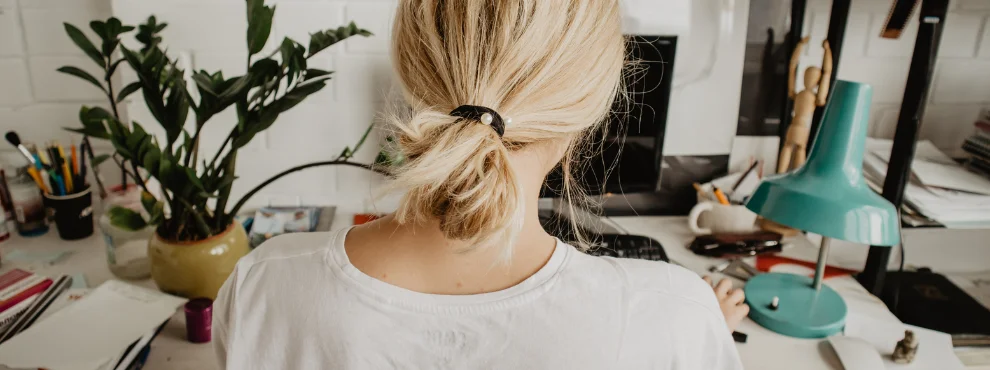
The latest Leadership Radar from the Bertelsmann Foundation and the Reinhard Mohn Institute at Witten/Herdecke University shows that the majority of managers surveyed did not notice any reduction in employee productivity as a result of working from home. This means that fears often expressed in this way have not materialised. Only a quarter of managers working from home (124 out of 496) are not sure whether their employees are working as productively as before the pandemic. The situation is very similar when it comes to fears that corporate culture could suffer: Only just over a quarter (27.1 per cent) feel this way, while 46.1 per cent do not. Most managers have therefore not experienced any slumps or disappointments in productivity or corporate culture. Reservations about working from home, which were widespread before the crisis, therefore seem to have become unfounded based on experience to date.
"Even if work processes have worked in the first half of the pandemic, tasks have been completed and shared values have held up so far, there is a threat from another direction: during the home office period, emotional and social contact between management and employees could break down," says Martin Spilker, an expert in leadership and corporate culture at the Bertelsmann Foundation. The majority of managers say that employees are less able to communicate with each other (44.3 per cent) and that managers are not able to support them as much as they would like (45.7 per cent).
Working from home in the long term can be problematic
Working from home on a permanent basis can therefore have far-reaching consequences if urgently needed coordination processes are not carried out or identification with the organisation or team decreases. To ensure that contacts and cooperation are not lost, it is important to create both task-related and relationship-orientated opportunities to exchange ideas with one another. It is not unreasonable to try to organise meetings or informal occasions that are otherwise unplanned in the office. This works, for example, if you arrange to meet online and sometimes seek dialogue without a specific reason or a predetermined agenda. In other words, you leave open what exactly you want to talk about, except that for once you don't talk about business or the projects that are otherwise the subject of the meetings. Many teams now have virtual coffee or lunch breaks in which people take part voluntarily. The coffee cup in your hand can be the signal that it's "break time" and time for socialising.
Managers are homesick for the office
From spring to autumn 2020, the pandemic has created an unwanted distance in places where working from home was the order of the day. It is hoped that this will change: 43.2 per cent of managers agree and only just over half as many (24.3 per cent) disagree that they themselves and their employees would like to work primarily in the office again as soon as possible. This is also reflected in the freely formulated comments of many managers, who on the one hand emphasise the advantages of working from home, such as an improved work-life balance and reduced commuting times. On the other hand, managers emphasise the technical problems of working from home, the lack of social proximity and the loss of information. When asked whether they are less aware of what is being worked on, 36.9 per cent agree and 38.8 per cent disagree.
"Back to the office" is therefore the desire that many managers feel for themselves and their employees. However, this wish will probably not be fulfilled for quite some time. And even after the pandemic is over, working from home will still be the norm. This is why managers must work together with their employees to prevent or reduce the social and collegial disconnect when working from home.
New leadership role: mediating instead of announcing
In contrast to the heroic leadership style of the past, which was often assumed in crises, coronavirus does not evoke the "doers" of earlier times, but rather the mediating manager. "The core of leadership in the first waves of the coronavirus pandemic was not 'telling people what to do', but finding a common path," says Prof Dr Guido Möllering from the Reinhard Mohn Institute. "This gives us hope that the subsequent waves can also be managed cooperatively and constructively. However, this depends on whether the internal and external support of managers can be maintained."
Mediating, cooperative leadership here means not simply setting guidelines, but addressing the home office situation with employees. The aim is to find out what works well and what doesn't, either in a group or in individual discussions. Even in the virtual space of home office collaboration, there are rules that each group must find for itself. In learning processes, new beginnings or changes, it is often necessary to make things explicit that later become self-evident and implicit. If working from home remains necessary for longer and will become more or less normal, then managers should create opportunities to organise the new way of working together in order to maintain productivity and collegiality.
However, politicians and social partners also have a responsibility to configure the legal framework for the working world of tomorrow in order to avoid negative consequences for corporate culture and performance in the medium term. At the same time, HR and personnel development will have to break new ground. Many measures from the analogue world will not be transferable one-to-one to a digital or hybrid working environment: This applies to employee appraisals for mobile working, as well as the evaluation of working hours through to the creation of meeting spaces to prevent a split in the workforce.
Additional information
IPSOS GmbH conducted a representative survey of managers in Germany in September and October 2020 for the Bertelsmann Foundation's 2020 Management Radar. The questionnaire was further developed by the Reinhard Mohn Institute of Management (RMI) on the basis of earlier Bertelsmann Stiftung surveys and expanded to include questions on the topics of experiencing the coronavirus crisis and experiences of working from home. The data was analysed quantitatively by the RMI, with special consideration given to possible differences based on age, gender, management level and organisation size.
The analysed data comprises a sample size of 1,010 participants. 69 per cent of respondents are male and the average age of the sample is 50. The participants have been with their organisation for an average of 16 years, have held their position for an average of 9.5 years and have an average of 14 years of management experience. Of the managers surveyed, 23 per cent work in micro and small companies, 35 per cent in medium-sized companies and 42 per cent in large companies, which means that the study disproportionately represents larger companies. Eleven per cent of the respondents are in top management, 56 per cent are in middle management and 33 per cent are in lower management. 53.5 per cent of managers are responsible for up to ten employees.
To the publication:
Download the management radar
Photos for download

Contact person
Svenja Malessa
Press Officer
Administration | Communication & Marketing
Alfred-Herrhausen-Straße 48
58455 Witten
Room number: 2.F05