WittenLab. Zukunftslabor Studium fundamentale
Chair of Digital Arts and Cultural Mediation
Themes, strategies and developments in technology- and time-based arts
The name of the chair already makes it clear that art must be considered in a pluralistic way in the face of constantly advancing technological developments: The focus in teaching and research is on exploring the themes, strategies and developments of technology- and time-based arts since the mid-20th and especially the 21st century and reflecting on the resulting cultural mediation formats.
The focus is on the visual arts. Insights into this field are gained through methods of art and media studies as well as visual culture and expanded in an interdisciplinary way through artistic disciplines such as film, literature, music, dance and theatre.
chair holder
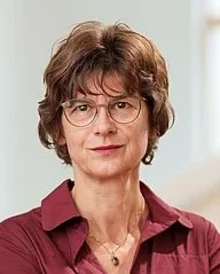
Univ.-Prof. Dr.
Renate Buschmann
Chair holder
WittenLab. Zukunftslabor Studium fundamentale | Chair for Digital Arts and Cultural Communication
Academic Director
WittenLab. Zukunftslabor Studium fundamentale
Alfred-Herrhausen-Straße 48
58455 Witten
Room number: 1.062.2
Research
The chair is primarily dedicated to the interactions of materiality, immateriality and variability in the digital arts. This is achieved through three focal points, which are explored in scientific and artistic collaboration:
I. Digitality as drive and challenge: media upheavals and technological innovations as catalysts for artistic practice
II. cultural mediation: changes in the distribution, presentation and accessibility of the arts through digitality
III. conditions of digital art and cultural production: production, archiving, preservation and resource requirements of digital arts
The chair researches digitisation processes in the arts: in cultural terms, digitality has increasingly shifted from the paradigm of reproduction to that of production. It therefore examines how artists react to this in terms of motifs, material, but also structurally in their work: Algorithms, codes, data and generative practices are now part of artistic work.
Artworks are shaped by new instruments such as so-called 'artificial intelligence'; the arts are also changing through virtuality and immersive concepts, through the use of computers or robotics. The question is how media are currently being digitally transformed and placed in new sensory and spatial contexts.
It also examines how institutional practice is being expanded by smart extended reality devices. All of this is not only changing art itself, but also its perception and thus access to it: digital socio-cultural and culturally (re)producing networks are increasingly forming the technological interfaces that influence people's physical and environmental experiences of the arts.
Current research projects
Completed research projects
Teaching
At the Chair of Digital Arts and Cultural Mediation, students are taught basic skills for dealing with contemporary art, visual cultures and other contemporary media phenomena. The aim is to be able to analyse historical, social and cultural debates relevant to the present that are currently being negotiated in the arts. In this way, students are supported in thinking and acting critically in the present: with media, diversity and viewing skills.
In the seminars, students acquire elementary knowledge of art and media history and their cultural practices, in particular digital culture. This involves not only working on and with the objects of study - such as works of art, VR applications, apps, social media phenomena, advertising or film - but above all goal-oriented, systematic research and reading as well as visits to exhibitions and discussions with actors in the cultural sector such as artists and curators.
At the same time, open discussions will convey that dealing with digital arts and cultures always requires extensive source and media criticism. This should contribute to the understanding that categories and standards can never be applied unambiguously and that it is positive to recognise and endure ambivalences.
The team of the Chair of Digital Arts and Cultural Mediation
Dr.
Regine Ehleiter
Researcher
WittenLab. Zukunftslabor Studium fundamentale | Chair for Digital Arts and Cultural Communication
- +49 2302 926 835
Orcid ID: 0009-0003-3786-5761
Alfred-Herrhausen-Straße 48
58455 WittenRoom number: 1.066

Dragana Mitric
Secretariat
Faculty of Management, Economics and Society (Department of Management and Entrepreneurship) | Chair of Medical Biometry and Epidemiology (MBE)
Alfred-Herrhausen-Straße 50
58455 Witten
Andreas Czwodzinski
Student assistant
WittenLab. Zukunftslabor Studium fundamentale | Chair for Digital Arts and Cultural Communication
Alfred-Herrhausen-Straße 50
58455 Witten