Democracy in the crosshairs: politically motivated violence on the rise
Politically motivated violence is on the rise - and is affecting democracy right down to the local level. At a panel discussion at the UW/H, representatives from politics and civil society debated the causes, consequences and necessary countermeasures.
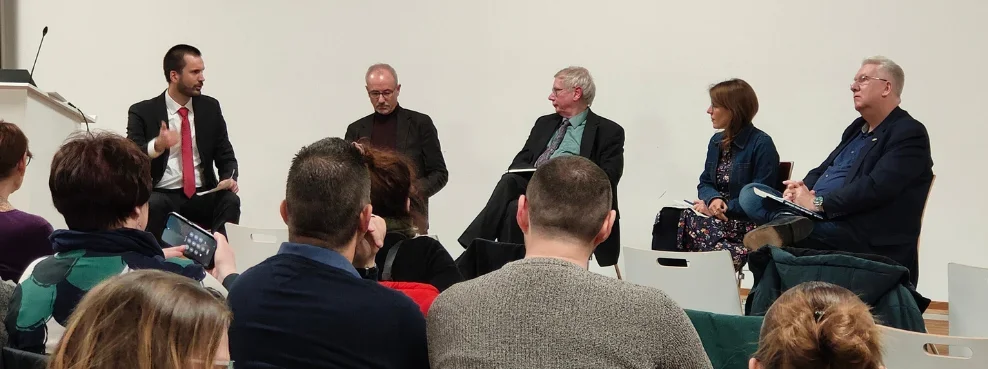
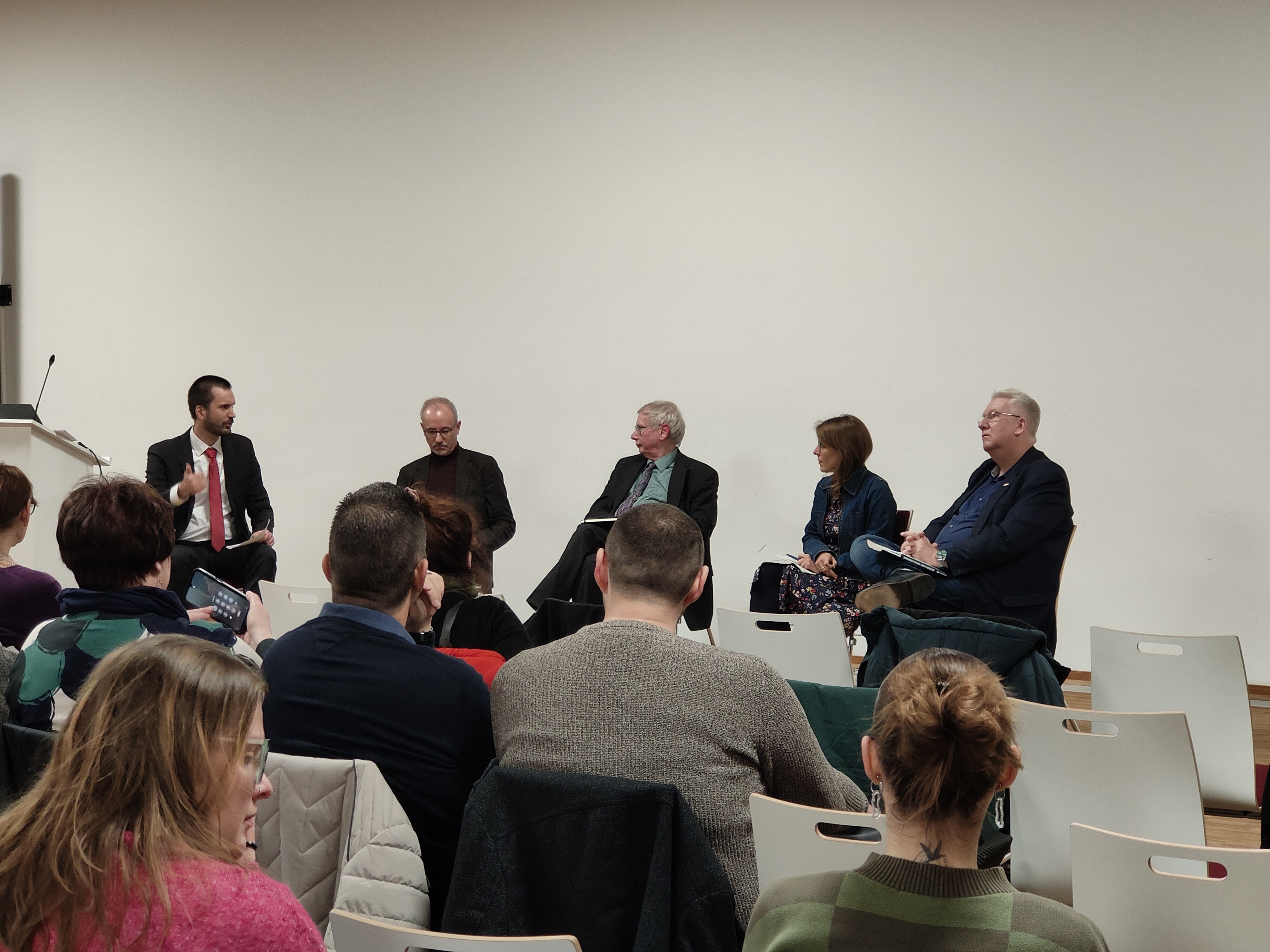
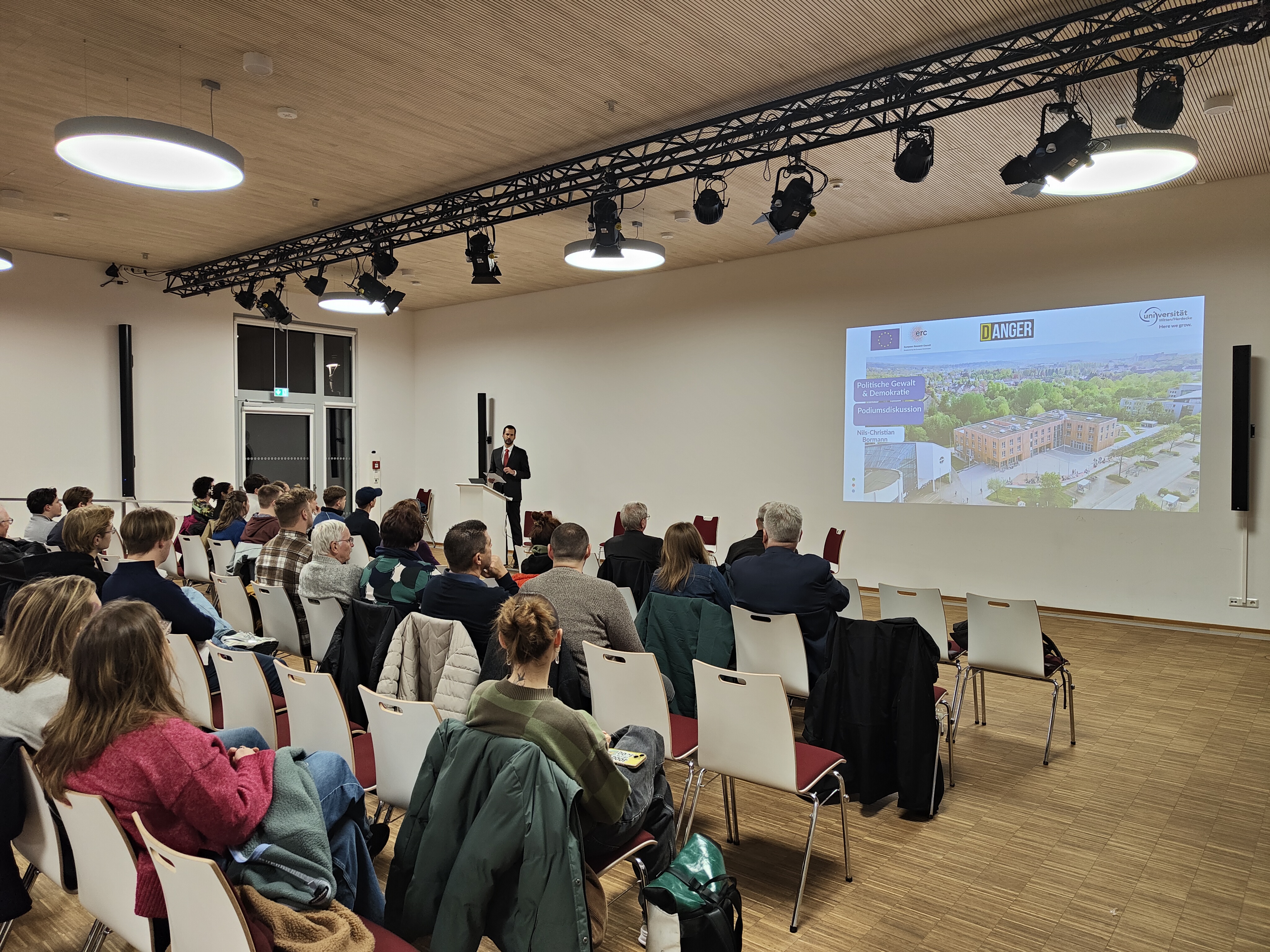
The number of politically motivated and extremist acts of violence in North Rhine-Westphalia and nationwide has been rising for years. Threats, online hate speech and physical attacks have become part of everyday life for many politically active people. At the same time, research findings show that extremist violence leads to more votes for nationalist, radical right-wing parties. Against this backdrop, Witten/Herdecke University (UW/H) organised a panel discussion entitled "Political violence and democracy". It was organised by Prof. Dr Nils-Christian Bormann, who holds the Professorship of International Political Studies at the UW/H.
Hartmut Ganzke (SPD, MdL NRW), Verena Schäffer (parliamentary group leader of Bündnis 90/Die Grünen in the NRW state parliament), Volker Pompetzki (CDU Witten) and Sven Tetzlaff from the Körber Foundation discussed current developments, historical classifications and societal reactions to politically motivated violence on the podium. It became clear that local politicians in particular are under increasing pressure. Volker Pompetzki, parliamentary group leader of the Witten CDU, emphasised: "Differences in political and social opinion usually erupt at the lowest political level. Local politicians are in daily contact with local citizens and are personally acquainted with many of them. Although they are not directly involved in legislation, they are held responsible for all effects at local, state, federal and EU level. And they do this on a voluntary basis."
Rising number of politically motivated crimes
Sven Tetzlaff, Head of Democracy and Cohesion at the Körber Foundation, added: "Political violence against elected representatives is no longer an exceptional occurrence, but a constant burden on democracy. It is particularly problematic that everyday intimidation often remains below the threshold of criminal offences, but nevertheless undermines democratic participation in the long term." Hartmut Ganzke (SPD), member of the state parliament, also warned of the consequences of rising numbers of politically motivated offences. In 2024, more than 84,000 such offences were recorded in Germany - more than ever before. Anti-Semitic and right-wing extremist violence is also on the rise in North Rhine-Westphalia.
With regard to the particularly sharp rise in right-wing extremist violence, Verena Schäffer, Chair of the Green Party faction in the North Rhine-Westphalia state parliament, said: "Right-wing extremist violence is directed against politicians, but also against people who are already the focus of marginalisation, i.e. Jews, queer people, people with a history of migration, refugees and many others. Anyone who attacks these groups is attacking our democracy. That is why we must clearly identify politically motivated violence, consistently prosecute it and protect those who are particularly at risk."
Photos for download

The guests on the podium (Photo: UW/H)

Contact person
Svenja Kurth , M. A.
Team Leader Communication
Administration | Communication & Marketing
Alfred-Herrhausen-Straße 48
58455 Witten
Room number: 2.F05 | 2.028