Four years of war in Ukraine: Now it's just a matter of holding out
On the anniversary (February 24) of Russia's attack on Ukraine, Prof. Dr. Nils-Christian Bormann from Witten/Herdecke University assesses the military and political situation of the conflict.
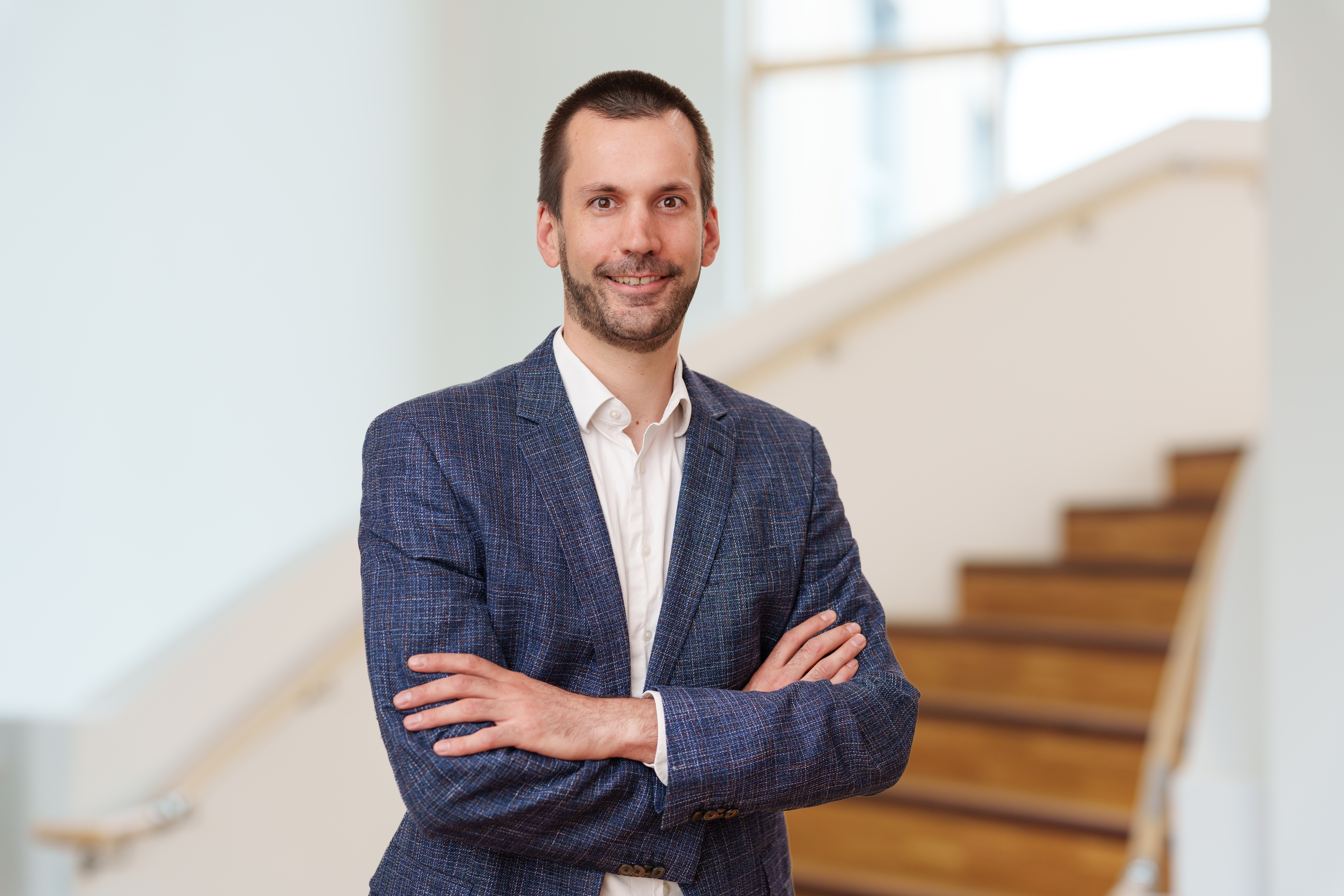
"In military terms, the situation has hardly changed compared to the previous year," says Nils-Christian Bormann, conflict researcher at Witten/Herdecke University (UW/H). Four years after the invasion, Russia continues to make small territorial gains - with high losses: Almost 100,000 Russian soldiers die within three months. Strategic breakthroughs have failed to materialise, with attacks focusing primarily on the destruction of Ukrainian infrastructure.
As a result, the war remains in a phase that scholars describe as a war of attrition. The decisive factor for the further course of the war is not a single military breakthrough, but the ability of both states to hold out. "Such a war ends when one side is no longer willing or able to bear the costs," explains Bormann.
Putin's power appears stable - but could be built on shaky foundations
It is difficult to judge how stable the Russian regime actually is. Open protest is rare because many people remain silent for fear of the consequences. However, media reports indicate growing dissatisfaction.
Economically, Russia is coming under pressure: inflation and structural imbalances are increasing. Nevertheless, the regime still has sufficient resources to continue the war and mobilise more soldiers. "In the short term, the economic situation therefore does not jeopardise the ability to wage war," says Bormann.
Ukraine continues to receive broad social support and financial aid from the EU. The greatest danger to Ukraine's ability to hold out is that it cannot mobilise enough soldiers who are ready and able to deploy.
Putin's strategy: holding out instead of pulling out
Russia is officially sticking to its far-reaching war aims: control of the Donbass, recognition of the conquered territories and political influence over Ukraine. These goals are currently unattainable.
Ending the war without military success harbours domestic political risks for Putin. In the long term, the regime will have to manage the transition from a war economy to a peacetime economy and provide for hundreds of thousands of returning soldiers - an additional strain on resources. High casualties, economic burdens and unachieved goals could jeopardise stability.
Historically, this has often triggered political upheaval: "After the First World War, such situations led to regime changes," says Bormann. "For authoritarian regimes, it can be more dangerous to end a war than to continue it." Perseverance therefore remains Putin's most important strategy.
Europe is prepared militarily - but not politically for the time afterwards
The consequences of the war of attrition extend beyond Russia and Ukraine. Although Europe has armed itself militarily, it lacks political concepts for dealing with Russia after the war. "The biggest strategic void is not on the battlefield, but in the question of what a stable European security order can look like after the war," says Bormann.
Even after a ceasefire, Russia could remain a security challenge in the long term. At the same time, domestic political instability in Russia harbours new risks for Europe.
Photos for download

Contact person
Svenja Malessa
Press Officer
Administration | Communication & Marketing
Alfred-Herrhausen-Straße 48
58455 Witten
Room number: 2.F05