GePa
Researching and teaching together with patients
Project overview
In the "GePa" project at Witten/Herdecke University, patients with chronic diseases attend seminars and provide impetus for future research topics. This is a cooperation project between the Chair for the Education of Personal and Interpersonal Competencies in Health Care and the Chair of Health Care Research at Witten/Herdecke University.

Further information
Include the patient's perspective
Without patients, medical research and teaching are unthinkable, because research and teaching in the healthcare sector are essentially aimed at improving the health of patients and the corresponding care structures. The personal experience of patients in the health care system and the experience of living with a disease are often overlooked, although they can be important impulses for research and a valuable learning experience for future doctors.
In the GePa project, our aim is to incorporate the patient's perspective much more directly into teaching and medical research. The aim is to ensure that patients are not only taught and researched "about" patients, but that they can also have a concrete influence on the topics, content and implementation of teaching and research through their active involvement.
Researching together
Two Chairs at Witten/Herdecke University are behind the project: Prof Dr Claudia Kiessling 's Chair of Professional Identity Formation in Health Care (IAP), which focuses on doctor-patient communication, and Prof Dr Patrick Brzoska 's Chair of Health Care Research, which focuses on patient-relevant research topics in health care.
Genuine participation
We are looking for people who would like to get involved in the establishment and development of a network that aims to involve patients on an equal footing. In addition to the patient perspective, the focus is also on the perspective of relatives.
As a first step, we invite you to participate in a survey and a workshop in which we will define the cornerstones of the network and plan further steps. Both the survey and the workshop can take place on site at Witten/Herdecke University or as a video conference, depending on your options.
In the next steps, we would like to test examples of what (real) patient participation can look like as early as the planning stage of a research project and/or a course.
We see their wealth of experience as patients as a unique learning tool. To enable students to benefit from this, we are developing a format in which you can share your experiences.
Include the patient's perspective
Without patients, medical research and teaching are unthinkable, because research and teaching in the healthcare sector are essentially aimed at improving the health of patients and the corresponding care structures. The personal experience of patients in the health care system and the experience of living with a disease are often overlooked, although they can be important impulses for research and a valuable learning experience for future doctors.
In the GePa project, our aim is to incorporate the patient's perspective much more directly into teaching and medical research. The aim is to ensure that patients are not only taught and researched "about" patients, but that they can also have a concrete influence on the topics, content and implementation of teaching and research through their active involvement.
Researching together
Two Chairs at Witten/Herdecke University are behind the project: Prof Dr Claudia Kiessling 's Chair of Professional Identity Formation in Health Care (IAP), which focuses on doctor-patient communication, and Prof Dr Patrick Brzoska 's Chair of Health Care Research, which focuses on patient-relevant research topics in health care.
Genuine participation
We are looking for people who would like to get involved in the establishment and development of a network that aims to involve patients on an equal footing. In addition to the patient perspective, the focus is also on the perspective of relatives.
As a first step, we invite you to participate in a survey and a workshop in which we will define the cornerstones of the network and plan further steps. Both the survey and the workshop can take place on site at Witten/Herdecke University or as a video conference, depending on your options.
In the next steps, we would like to test examples of what (real) patient participation can look like as early as the planning stage of a research project and/or a course.
We see their wealth of experience as patients as a unique learning tool. To enable students to benefit from this, we are developing a format in which you can share your experiences.
If you would like to participate as a patient
How can I get involved?
If you are interested in contributing your views and experiences as a patient to the project, please contact us. As a first step, we would like to interview you (and other patients). We will analyse these interviews anonymously and would like to gain insights into how good patient participation at universities and colleges can be achieved.
In the second step, we will discuss with you whether and how you could imagine concrete participation - for example in a course for medical students. Based on these discussions with you and other patients, we will organise preparatory training sessions to prepare you for the assignment. In all steps, it is important to us that you can help decide how and to what extent you want to get involved.
What requirements do I need to fulfil?
You should have experience as a patient and be willing to take part in the survey. In addition, it would be desirable if you could imagine participating in a course or research project and contributing your experiences and perspectives. The exchange will take place partly via video conferences, but there will also be appointments on site at Witten/Herdecke University. Travelling expenses can be reimbursed in accordance with legal requirements. In addition, we can offer an expense allowance of € 20.00. 20.00 per hour.
Important to know: You can, of course, withdraw from the project at any time without incurring any disadvantages.
How do I get in touch?
Please send us a short e-mail to Stefan.Palmowski@uni-wh.de
You can also obtain initial information by calling the Chair's office on 02302 926-761 and Nicole Katies will get back to you as soon as possible. In an initial preliminary discussion, we will clarify the possibility of participation and discuss the next steps. Depending on the extent of your participation, you will also receive information about the interviews and the network, together with a participation and privacy statement.

In the picture (from left): Prof. Dr PH Patrick Brzoska, Stefan Palmowski (UW/H), Günter Breitenberger (Selbsthilfe Organtransplantierter NRW), Prof. Dr Claudia Kiessling, Bern Hoeber (Selbsthilfeakademie NRW), Marion Hölterhoff (CIV NRW e.V.), Jan Kaßner (Koordinierungsstelle Patientenbeteiligung NRW), Anna-Lena Riegels (Selbsthilfeakademie NRW), Latife Pacolli-Tabaku (UW/H), Faowzia Möwes (Selbsthilfeakademie NRW).), Jan Kaßner (Koordinierungsstelle Patientenbeteiligung NRW), Anna-Lena Riegels (Selbsthilfeakademie NRW), Latife Pacolli-Tabaku (UW/H), Faowzia Möwes (Projekt "Junge Selbsthilfe"), Anke Steuer (Selbsthilfe Kontaktstelle Witten/Wetter/Herdecke) and Jule Vollmer.
Project management
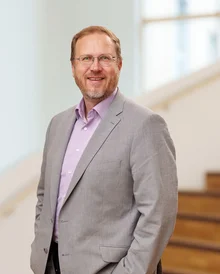
Dipl.-Pflegwiss. (FH)
Stefan Palmowski
Researcher
Faculty of Health (School of Medicine) | Chair for the Education of Personal and Interpersonal Competencies in Health Care
Alfred-Herrhausen-Straße 50
58448 Witten
Room number: C-2.331