What is the strategy behind Donald Trump's new peace council? A political science classification brings clarity.
Political scientist Prof Dr Nils-Christian Bormann from Witten/Herdecke University talks about the US President's interests and the consequences for Europe.
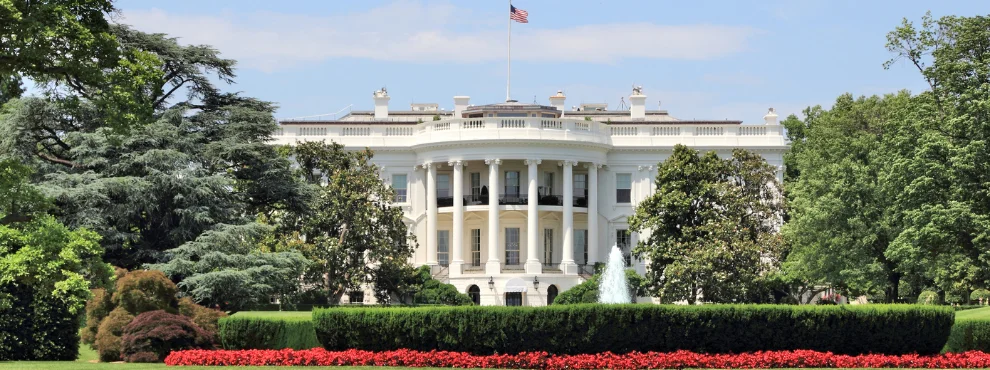
At the end of January 2026, US President Donald Trump launched his own peace council on the fringes of the World Economic Forum in Davos. Around 60 countries have received an invitation to join - including democratically and autocratically led states. With the establishment of the new administrative body outside the United Nations, Trump is once again causing irritation. The move is one in a series of initiatives - from interest in Greenland to controversial plans for the Gaza Strip - that jeopardise existing international structures. Political scientist Prof Dr Nils-Christian Bormann explains the strategic motives behind Trump's actions, why the Peace Council is not a real alternative to the UN and what challenges Europe must now face.
How should the founding of this new peace council be categorised in terms of political science? Is it a serious multilateral project or a strategic signal?
I do not believe that the Peace Council will develop into a serious alternative to existing international institutions. Economically significant and militarily important countries such as China, India, Brazil, Japan, Russia or members of the European Union have not yet joined it. Every relevant player in international politics also knows that the Peace Council will no longer have any significance after the end of Donald Trump's presidency. This severely limits the effectiveness of such an administrative body.
What strategic interests is Donald Trump pursuing by creating an administrative body outside the United Nations?
Donald Trump primarily wants to achieve two things with the Peace Council: On the one hand, he wants to keep attracting attention and thus distract attention from domestic political problems. On the other hand, he is creating a direct, personal bond with the members through the Peace Council, which he does not have in other administrative bodies such as the UN Security Council. Ambassadors sit there and the rules and customs of the Security Council are very formal.
What does the composition of the states invited or willing to join say about the direction and objectives of this Council - especially with regard to authoritarian countries?
Trump has invited democracies and autocracies. Many autocratic states have accepted the invitation. I think their main aim is to secure direct access to Trump and his goodwill.
What would be the significance of such a council if Russia is actually involved?
The main idea of the council is the reconstruction of the Gaza Strip and possibly peacemaking in the region. I consider Russia's influence in the region to be limited at the moment, so I don't believe that Russia's membership is decisive for this purpose. I also doubt whether Russia's possible accession would lead to greater goodwill towards Trump's position in the war with Ukraine. Trump is too fickle for that.
In your view, is there a recognisable link between earlier advances (e.g. Greenland) and the current Peace Council? Can an overarching strategy be derived from this?
Similarities: 1. Trump always wants to draw public attention in new directions. 2. trump wants to push through short-term, personal interests, which he passes off as national interests. Both the Peace Council and his plan for the Gaza Strip, which would enrich him personally, and his interest in Greenland should be seen from this perspective. In the short term, Trump is seeking personal glory through the expansion of US territory. Economic goals through the possible exploitation of natural resources may also play a role for him. In the long term, the annexation of Greenland would severely damage US interests as it would de facto finish off NATO. Trump can already achieve the security goals he has set for Greenland.
Does Trump stand for a break with the existing world order or for an attempt to reorganise it to suit US interests?
The two are not mutually exclusive. Trump clearly wants to break away from the multilateral order that the United States established after the Second World War. He is doing this with a determination that no actor before him has ever shown. From his perspective, he is doing this to pursue US interests. However, he is trading short-term benefits for long-term damage to the USA. After all, the USA benefits greatly from its international alliances.
Is there a risk of further fragmentation of international institutions and alliances?
Yes, but this is not only due to Trump. The Russian government has broken, allowed to expire or cancelled important disarmament treaties over the last ten years. For example, the New START Treaty on the Limitation of Nuclear Weapons expires on 5 February 2026. Putin cancelled Russia's membership in February 2023. The United States later followed suit. The Trump government has made no attempt to negotiate a new treaty. China has founded and financed the Asian Infrastructure Investment Bank (AIIB), an influential alternative to the World Bank. Since joining the World Trade Organisation in 2001, China has consistently undermined its rules.
What do these developments mean for Europe and the EU in concrete terms?
The European Union is a product of the liberal world order that was shaped by the USA after the Second World War. It has long relied on the United States as a military protecting power and as a guarantor of the liberal order and its institutions. This order is currently being severely, perhaps irreparably, damaged.
How should or should Europe react now - politically, diplomatically and institutionally?
Europe should a) become more integrated in order to avoid becoming a vassal of other major powers. Europe should b) continue to stand up clearly for the values of the liberal order and try to win over sceptical countries. Trade agreements are one way of doing this. Investments in the infrastructure of economically less developed countries and support in the fight against climate change can also help Europe to find new allies. Against this backdrop, the reduction of development aid in many European countries should be viewed critically. European citizens and politicians must also come to terms with the fact that many governments in the global South, which are often former European colonies, do not always share European values and views. This is a balancing act that requires painful compromises.
Where do you see room for manoeuvre, but also clear red lines for European players?
The EU is the second largest economic area in the world. This gives it and its member states a lot of influence in international disputes and negotiations. At the same time, the EU is heavily dependent on the United States in military and technological terms. As long as this dependence continues, the EU countries must be interested in a good relationship with the USA, otherwise they will become a pawn in the interests of others.
Contact person

Miriam Kreimeyer
Communications Officer
Administration | Communication & Marketing
Alfred-Herrhausen-Straße 48
58455 Witten
Room number: 2.F05