RMI Day of Management 2025
"Confrontation rather than cooperation in business and society"
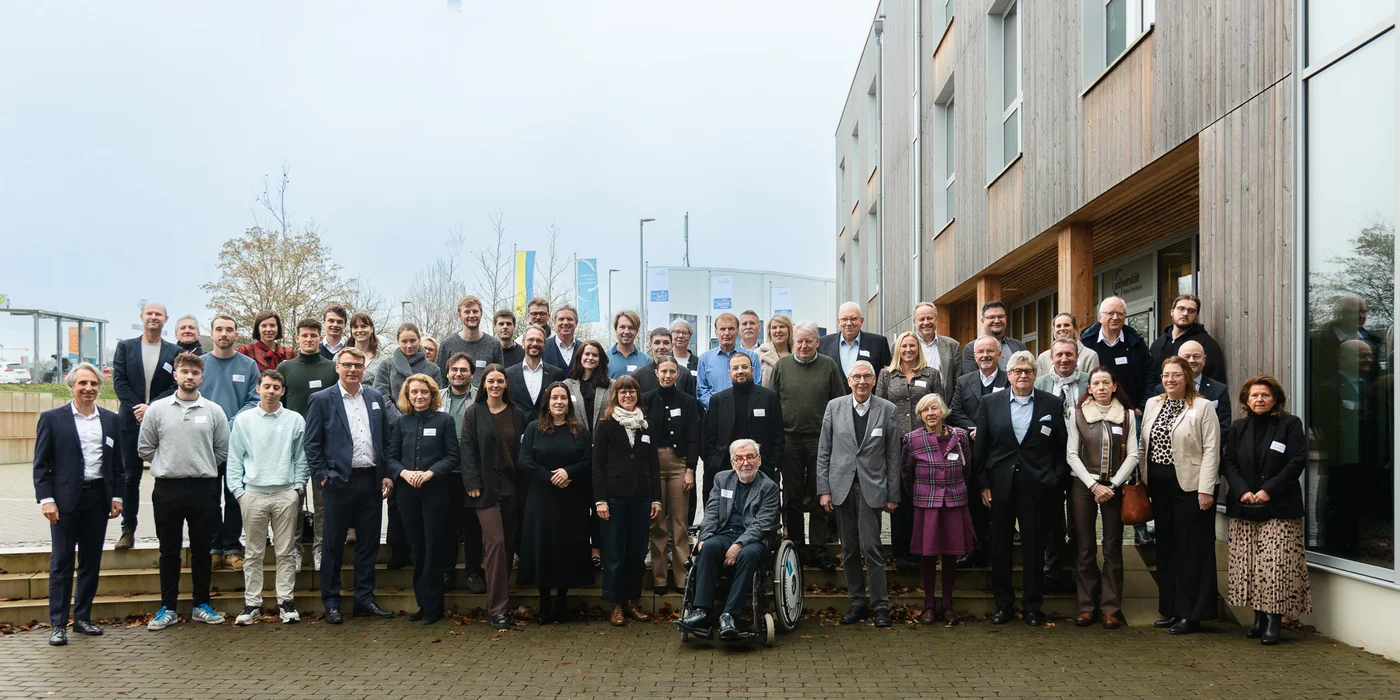
Featuring a keynote address by Daniela Schwarzer (Bertelsmann Foundation), a wide range of other presentations and panel discussions, the event explored the role that cooperative approaches can play in an era characterised by confrontation.
The Reinhard Mohn Institute of Management organises an annual forum on key issues of concern to executives, researchers, students and society as a whole. This year, the RMI Day of Management raised the question of whether ‘confrontation rather than cooperation in business and society’ is becoming the prevailing approach to problem-solving. This impression sometimes arises because, from global politics right through to everyday interactions, the tone seems to be becoming increasingly confrontational.
The pursuit of one’s own interests threatens to supplant cooperation aimed at achieving common goals. Those who bear responsibility and wish to fulfil it face the challenge of channelling conflicts and tensions into constructive directions. The conference aimed to offer new ideas and practical approaches in this regard.
In her keynote address, Prof. Dr Daniela Schwarzer, a member of the Bertelsmann Foundation’s Executive Board, placed various aspects of this topic within the broader context of political and economic developments. The political scientist consistently called for cohesion in Germany and Europe, particularly in the face of external pressure, especially from China, the USA and Russia. A strong, united stance can then help not only to counter confrontation but also to restore better relations between the blocs.
Earlier, UW/H President Martin Butzlaff and RMI Professor Hendrik Wilhelm had already provided valuable insights to set the scene. Drawing on empirical evidence, Prof. Wilhelm made it clear that relational tensions between people who are cooperating have a negative impact on the success of their collaboration. In the so-called “Open RMI Circles”, many topics raised by the approximately 80 guests were also taken up and discussed in small groups at round-table sessions. An overarching conclusion was that anyone who wishes to cooperate effectively must also be able to handle confrontation (or deal with it).