School of Dentistry
Chair of Special Care Dentistry
Treatment, prevention and dental care for patients with disabilities
According to the Federal Statistical Office, around eight million people in Germany live with an officially recognised severe disability. However, not all forms of disability affect oral health. Experience shows that this is only the case if the disability results in one or more of the following situations:
- it is not possible to maintain a balanced diet,
- chewing function is severely restricted for various reasons,
- it is very difficult to maintain oral hygiene independently,
- cooperation during dental treatment is severely impaired,
- the natural protective function of saliva is no longer guaranteed.
Our treatment is in line with the UN Convention on the Rights of Persons with Disabilities of 2006. Article 25 of that Convention stipulates that “Healthcare professionals shall provide people with disabilities with medical care of the same quality as that provided to people without disabilities, and shall make available to them affordable healthcare of the same scope, quality and standard as that provided to people without disabilities”.
We see the focus of our work as promoting the prevention of tooth decay, gum inflammation (gingivitis or periodontitis) or functional impairments in the oral and facial regions among patients with disabilities across all age groups. In many cases, we can only achieve this in collaboration with the people who support patients with disabilities when needed, such as parents, family members, carers or legal representatives.
Another key focus of our work is the early detection and treatment of oral and dental conditions. It is our sincere hope that our patients will be able to keep their teeth for as long as possible. That is why, in addition to prevention, we primarily carry out measures designed to preserve teeth. However, this can only succeed if patients with disabilities are regularly taken to see a dentist for check-ups and early detection, rather than only when they are already experiencing symptoms.
Chair holder
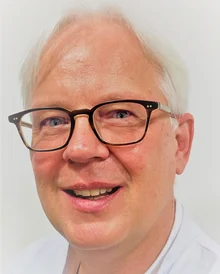
Prof. Dr.
Joachim Jackowski
Chair Holder
Faculty of Health (School of Dentistry, Oral and Maxillofacial Medicine) | Chair of Dental Surgery and Dental Emergency Care
Acting Chair
Faculty of Health (School of Dentistry, Oral and Maxillofacial Medicine) | Chair of Special Care Dentistry
Alfred-Herrhausen-Straße 44
58455 Witten
Room number: 12
Information for patients
The services include:
- Measures to build trust with the patient
- Assessment, diagnosis and treatment planning
- Regular, thorough dental cleanings carried out by our specialist staff
- Advice on preventative measures
- Implementation of preventative measures
- Advice on carrying out preventative measures at home
- Restoration of carious lesions using modern materials, for example special dental resins (composite)
- Restoration of defects caused by trauma (falls, accidents) using modern materials (for example, composite)
- Root canal treatments
- Periodontal treatment
- Prosthetic treatment (e.g. crowns, bridges, removable dentures)
- Implants (where appropriate, in collaboration with the Department of Oral Surgery)
- Orthodontic consultations in collaboration with the Orthodontics Department
We are frequently asked whether we are able to treat patients under general anaesthesia, that is, under general anaesthetic. In fact, we are able to treat most patients who visit our department whilst they are awake. However, if this is not possible, we can carry out dental treatment under general anaesthesia in consultation with one of the specialists who administer anaesthesia at our clinic. In such cases, we also liaise with the patient’s GP or paediatrician. At present, we can only carry out treatments under general anaesthesia on an outpatient basis. Inpatient admission is currently not possible at the Dental Clinic of Witten/Herdecke University.
Appointments for treatment can be made by telephone on +49 2302 926-600.
Email: bozm@uni-wh.de
We also offer treatment by dental students on Saturdays. Anyone interested can contact samstagsbehandlung@uni-wh.de for appointments and further information.
Research
The Department of Dentistry for People with Disabilities has a number of research specialisations. It collaborates with various institutions, such as public health authorities in North Rhine-Westphalia and Baden-Württemberg, as well as Special Olympics Germany. The aim of the research is to gain an overview of the oral health of people with disabilities and of the dental care provided to this group. The aim is to develop targeted preventive measures for use in dental practice and within the public health service. We are also investigating which dental treatments need to be adapted so that they can be used on patients with disabilities.
Current research projects
- Collection of data on the oral health of the entire group of children and adults with an intellectual disability and/or multiple disabilities
- Collection of data on the oral health of people with Down’s syndrome, cerebral palsy or autism spectrum disorders
- Collection of data on oral health in people with syndromic conditions (e.g. Rett syndrome, Angelman syndrome)
- Collection of data on the oral health of people with rare conditions
- Collection of data on the oral health of people with severe visual impairment
- Collection of data on the oral health of people with Sjögren’s syndrome
- Evaluation of preventive measures to improve the oral health of people with disabilities
- Clinical studies on dental treatment under general anaesthesia
- Clinical studies on prosthetic treatment for people with disabilities
- Clinical studies on endodontic treatment in patients with disabilities
- Scientific evaluation and analysis of routine data
- Scientific evaluation of the effectiveness of university teaching in dentistry for people with disabilities

Publications
All publications by the Chair of Special Care Dentistry are gradually being included in the university bibliography.
Teaching
The Dental Clinic at Witten/Herdecke University is the only university dental clinic in Germany with a Chair of Special Care Dentistry and a department dedicated to dentistry for people with disabilities. This means that those studying dentistry here have the privilege of learning, from their very first semester, how to address the specific needs of patients with disabilities or special needs as dentists. The focus is on prevention-oriented dentistry. The aim is to preserve as many teeth as possible for a lifetime.
Teaching in our subject comprises lectures, seminars and compulsory placements. We offer seminars and lectures in ‘Dentistry for People with Disabilities’ throughout all years of study, from the first semester right up to the state examination. Students in their third academic semester undertake a work placement as part of their career exploration, which currently covers five key areas. This enables them to gain a sound grounding in the specific aspects of communication and in dealing with people with various types of disability, such as severe visual or intellectual impairment, spastic paralysis or severe mobility impairment.
This prepares students for their clinical placements at an early stage. Here, the students primarily assist with the treatment of patients with disabilities. They can observe how the dentists in the Department of Dentistry for People with Disabilities build trust with their patients, examine them, and subsequently make a diagnosis and draw up a treatment plan.

Students also learn how important regular, thorough dental cleanings are and how to carry them out. A particular priority for staff in the Department of Dentistry for People with Disabilities is to train the carers of patients with intellectual and/or multiple disabilities so that they can provide thorough, supportive oral hygiene care.
Students can also observe how a filling is placed, periodontal treatment is carried out and dentures are made.
For some patients with disabilities, it is unavoidable that dental treatment must be carried out under general anaesthesia, i.e. under full anaesthesia. Students assist with this type of dental treatment.
A particular focus of the students’ clinical education is also on outreach dental care and treatment for patients with severe disabilities. For this reason, during their placements, students accompany staff from the department and the chair to the university outpatient clinic’s satellite centre (located within the community for people with disabilities of all age groups).
Chair of Special Care Dentistry
Dr.
Gisela Goedicke-Padligur
Senior Consultant
Faculty of Health (School of Dentistry, Oral and Maxillofacial Medicine) | Chair of Special Care Dentistry
Alfred-Herrhausen-Straße 44
58455 WittenRoom number: EG
Dr. med. dent.
Fabian Zurnieden
Dentist
Faculty of Health (School of Dentistry, Oral and Maxillofacial Medicine) | Chair of Special Care Dentistry
Alfred-Herrhausen-Straße 44
58455 WittenRoom number: EG

Peter Cichon
Lecturer
Faculty of Health (School of Dentistry, Oral and Maxillofacial Medicine) | Chair of Special Care Dentistry
Alfred-Herrhausen-Straße 44
58455 Witten
Leslie Crawford
Lecturer
Faculty of Health (School of Dentistry, Oral and Maxillofacial Medicine) | Chair of Special Care Dentistry
Alfred-Herrhausen-Straße 44
58455 WittenRoom number: EG
Leonie Jenter
Lecturer
Faculty of Health (School of Dentistry, Oral and Maxillofacial Medicine) | Chair of Special Care Dentistry
Alfred-Herrhausen-Straße 50
58455 WittenMauritz Knuffmann
Lecturer
Faculty of Health (School of Dentistry, Oral and Maxillofacial Medicine) | Chair of Special Care Dentistry
Alfred-Herrhausen-Straße 50
58455 WittenRoom number: EG
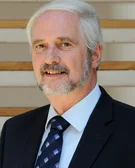
Prof. Dr.
Andreas Schulte
Staff Member
Faculty of Health (School of Dentistry, Oral and Maxillofacial Medicine) | Chair of Special Care Dentistry
Alfred-Herrhausen-Straße 44
58455 WittenRoom number: 2.190
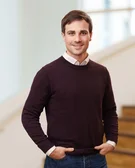
Dustin Fornefeld
Researcher
Faculty of Health (School of Dentistry, Oral and Maxillofacial Medicine) | Chair of Special Care Dentistry
Alfred-Herrhausen-Straße 44
58455 WittenRoom number: 2.186
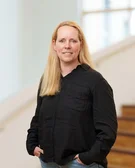
Nicole Katies
Secretariat
Faculty of Health (School of Medicine) | Chair for the Education of Personal and Interpersonal Competencies in Health Care
Alfred-Herrhausen-Straße 50
58455 WittenRoom number: C-1.040
Philipp Kofler
Study Assistance
Faculty of Health (School of Dentistry, Oral and Maxillofacial Medicine) | Department of Special Care Dentistry
Alfred-Herrhausen-Straße 44
58455 WittenRoom number: 2.186