School of Medicine
Chair for the Education of Personal and Interpersonal Competencies in Health Care
Profile of the Chair
The Chair has been appointed to promote the professional and personal development of students and practitioners in the healthcare professions. This involves acquiring and developing the personal and interpersonal skills necessary to contribute to patient-centred medicine.
The key focus of our work in teaching and research is to contribute to a better understanding of these skills, and to develop, test and implement innovative learning, teaching and assessment formats in the following areas:
- Medical communication
- Resilience
- Medicine & Society
- Teamwork
- Professional identity development
- Reflection & Feedback
Chair holder
Claudia Kiessling holds a chair.
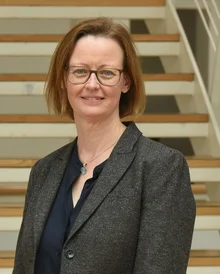
Prof. Dr.
Claudia Kiessling
Chair Holder
Faculty of Health (School of Medicine) | Chair for the Education of Personal and Interpersonal Competencies in Health Care
Alfred-Herrhausen-Straße 50
58455 Witten
Room number: C-2.319
Research
The research carried out at the Chair is guided, in terms of both content and methodology, by empirical educational research. A key focus is on designing, testing and providing academic support for teaching, learning and assessment formats that help students develop personal and interpersonal skills. These skills include, amongst other things, communication skills, teamwork, self-reflection and the professional management of stress.
Furthermore, the Chair is dedicated to exploring how patient-centred perspectives can be systematically integrated into medical education. In this context, both theoretical approaches and practical implementation strategies are examined in order to provide students with a deeper understanding of patient-centred care.
Through a combination of innovative teaching development and accompanying empirical research, the Chair contributes to the further development of medical education and to strengthening the professional competencies of future doctors.
Current research projects
Completed research projects

Publications
All publications from the Chair for the Education of Personal and Interpersonal Competencies in the Health Care System at UW/H are listed in the university bibliography.
Selected publications from the Chair: Download
Teaching
Teaching focuses on the longitudinal curriculum ‘Inner Work – Professional Personality Development (IAP)’ within the model degree programme in Medicine. The department also runs the simulation patient programme and the mentoring programme for medical students.
Curriculum: ‘Inner Work – Professional Personality Development (IAP)’
A medical degree is not just about acquiring the skills required for the medical profession; it is also always about ‘becoming and belonging’, that is, about gradually immersing oneself in a medical identity. At the heart of the IAP curriculum lies the promotion of medical students’ professional and personal development, which takes place as part of a socialisation process involving engagement with themselves, patients, relatives, peers, role models, multi-professional teams and the health care system.
The IAP curriculum comprises five areas of competence: medical communication, teamwork skills, ‘Staying healthy!’ (resilience training), ‘My path to becoming a doctor’ (Professional Identity Formation, PIF) and ‘Medicine & Society’.
Simulated Patient Programme (SP Programme)
One of the most important skills for doctors is communicating with patients, their relatives, fellow doctors and representatives of other healthcare professions. To train their communication skills in a targeted manner, students are given the opportunity to prepare for future conversations with real patients through so-called simulated patient encounters (SPEs). This allows them to experience how their behaviour is perceived by the person they are speaking to and what reactions it elicits. They are also shown appropriate alternative approaches for future conversations. Feedback and reflection, guided by trained lecturers, therefore play a central role in all practice situations. As part of the SPK, (non-professional) actors take on the roles of patients with specific concerns and clinical presentations and provide students with feedback on their perceptions and impressions.
Mentoring programme
Please note: The programme was discontinued as of the 2026 summer semester.
Medical students often begin their studies with great idealism and sometimes go on to experience highs and lows, euphoria, but also doubts and uncertainty. The latter is partly due to the structural conditions of the medical profession – such as a lack of time and economic pressure – and partly because there is often a lack of space for reflection on the medical profession itself, one’s own path, motivations and challenges.
The UW/H mentoring programme provides students with such a space for reflection from the very first semester. Students are divided into groups of nine to ten people, which ideally remain the same throughout their degree. Each group is supported by a doctor and a student who is already in the clinical phase of their studies. These groups then hold two to three evening meetings each semester, during which personal, ethical or even purely practical professional issues that arise during the course of study can be discussed together.
Team/Contacts
Nicole Katies
Secretariat
Faculty of Health (School of Medicine) | Chair for the Education of Personal and Interpersonal Competencies in Health Care
Alfred-Herrhausen-Straße 50
58455 WittenRoom number: C-1.040

Dipl.-Pflegwiss. (FH)
Stefan Palmowski
Deputy Head
Faculty of Health (School of Medicine) | Chair for the Education of Personal and Interpersonal Competencies in Health Care
Alfred-Herrhausen-Straße 50
58448 WittenRoom number: C-2.331
PD Dr.med. MCompSc
Inga Hege
Researcher
Faculty of Health (School of Medicine) | Chair for the Education of Personal and Interpersonal Competencies in Health Care
Alfred-Herrhausen-Straße 50
58455 Witten
Simone Hatebur , M. Sc.
Researcher
Faculty of Health (School of Medicine) | Chair for the Education of Personal and Interpersonal Competencies in Health Care
Alfred-Herrhausen-Straße 50
58448 WittenRoom number: 2.317

Katrin Hoffmann
Researcher
Faculty of Health (School of Medicine) | Chair for the Education of Personal and Interpersonal Competencies in Health Care
Alfred-Herrhausen-Straße 50
58455 WittenRoom number: 2.331

Dr. med.
Florian Kühme
Researcher
Faculty of Health (School of Medicine) | Chair for the Education of Personal and Interpersonal Competencies in Health Care
Alfred-Herrhausen-Straße 50
58455 WittenRoom number: 2.231
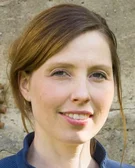
Dr. med. Dipl.-Psych.
Cornelia Ploeger
Researcher
Faculty of Health (School of Medicine) | Chair for the Education of Personal and Interpersonal Competencies in Health Care
Alfred-Herrhausen-Straße 50
58455 WittenDr. med.
Leonie Schröder
Researcher
Faculty of Health (School of Medicine) | Chair for the Education of Personal and Interpersonal Competencies in Health Care
Alfred-Herrhausen-Straße 50
58455 WittenRoom number: 2.331
Dipl.-Päd.
Laura Schwarz , M. A.
Researcher
Faculty of Health (School of Medicine) | Chair for the Education of Personal and Interpersonal Competencies in Health Care
Alfred-Herrhausen-Straße 50
58455 WittenLena Verst
Researcher
Faculty of Health (School of Medicine) | Chair for the Education of Personal and Interpersonal Competencies in Health Care
Alfred-Herrhausen-Straße 50
58455 WittenRoom number: 2.331
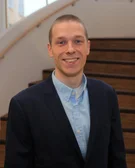
Hendrik Watermann , M. A.
Researcher
Faculty of Health (School of Medicine) | Chair for the Education of Personal and Interpersonal Competencies in Health Care
Alfred-Herrhausen-Straße 50
58455 WittenRoom number: 1.327a