School of Nursing Science
Chair of Nursing Science
Person-centred and evidence-based: Innovative interventions for the care of older people
Who we are
We are a motivated team of nursing science researchers committed to person-centred and evidence-based clinical care for older people with both simple and complex care needs. Our research specialisations focus on the care needs and requirements of older people, the demands placed on informal and formal carers, and societal developments.
What we aim to achieve
Working closely with, and drawing on, the experiences of nursing practice, we develop and evaluate effective nursing interventions and feed these back into nursing practice. We provide knowledge, concepts and interventions that enable and ensure the physical and psychosocial well-being of older people in need of care, as well as a high quality of care and support.
We continue to develop nursing science concepts and research methods that advance knowledge in the field of older people and are appropriate to the subject area. In this way, we contribute to carers’ ability to justify their decisions and take action, and to a theory-guided nursing practice.

Chair holder
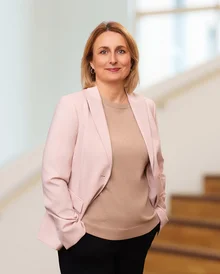
Univ.-Prof. Dr.
Margareta Halek
Department Management
Faculty of Health (School of Nursing Science)
Chair Holder
Faculty of Health (School of Nursing Science) | Chair of Nursing Science
Dean
Faculty of Health | Faculty Office
Alfred-Herrhausen-Straße 50
58455 Witten
Room number: C-1.197A / C-2.360
Research
How we conduct our research
- We conduct topic-specific research using exploratory and confirmatory methods to develop and evaluate person-centred and evidence-based interventions for older people requiring care.
- We use participatory approaches to work with people in need of care and their representatives, as well as with those working in the care sector, to identify relevant topics and to develop and test interventions.
- Our research and teaching are characterised by close collaboration with the nursing profession and relevant related disciplines.
What we research
- Basic care tasks
Basic care tasks encompass support for physical and psychological needs, as well as the need for good relationships. Successful communication and interaction are fundamental prerequisites for effective care relationships and, consequently, for good care. The Fundamentals of Care Framework serves as our theoretical framework. - Focus on dementia, behaviour and interaction
People with dementia and their families form an important group within the field of care for older people. Our work centres on managing the dementia-related changes in the behaviour of those affected. People with dementia themselves, their relatives and carers, as well as professional carers, should be empowered to take effective preventive action, to mitigate behavioural issues and to minimise negative consequences. - Care-based diagnostics
The starting point for professional care is an understanding of the person being cared for, their resources and limitations, and their specific care context. The further development of understanding-based diagnostics therefore forms a cornerstone of the department’s work. - The use of user-centred digital technologies in the care context
Digitalisation can support care if it delivers tangible benefits and is consistent with a person-centred approach to care. Technologies such as apps and artificial intelligence must be integrable into everyday care practice, and their use requires careful and critical development and evaluation.
Current research projects
Completed research projects
- MINDED.RUHR collaborative project – About the project
- Communio firmo prosperamus: Development of a concept to promote a sense of community in residential care homes – About the project
- HeiCO – Study to assess the impact of the Covid-19 pandemic on care in residential care homes for the elderly – About the project
- eDEM-CONNECT – Development of a communication and service platform for family carers of people with dementia experiencing behavioural difficulties – About the project
- S1 Guideline on social participation and quality of life in residential care for older people during the Covid-19 pandemic – About the project
- Opportunities for social participation in care homes despite Covid-19 – About the project
- MoNoPol-Sleep – About the project
Publications from the Chair of Nursing Science
Teaching
- We follow the principle of inquiry-based learning in order to develop and enhance students’ skills, critical reflection and theory-guided research practice.
- We teach methods and methodologies in the field of participatory and intervention-based nursing research and put their application into practice.
- We equip our students to use the methodological skills they have acquired to find solutions to the complex care situations faced by older people.
Courses
degree programme Master’s in Nursing Science – Practice Development
- M0: Introduction and Organisation
- M1/M2: Nursing Research I + II
- quantitative research methods, effectiveness evaluations, assessment tools in nursing, participatory research
- Qualitative research methods (interviews with vulnerable individuals, videography, video interaction analysis, collection and analysis of internet-based data)
- M4.3: Theory-Guided Nursing Practice and Research
- M9: Orientation placement
- M11: Specialisation in Nursing Research
- M14: Dissemination and scientific communication
- Writing academic articles; writing workshop
- Dissemination: social media; podcasts
- M15: Project Management and Data Protection
- M16: Core placement
- M17: Colloquium on the Master’s thesis
degree programme Community Health Nursing
- M2: Assessing health, health problems and health needs
- M5: Scientific and Nursing Theory
- Geriatric Dentistry: Caring for People with Dementia
PhD Programme
- A variety of lectures on current topics in nursing science, time and organisational planning, and research proposals in nursing science
Doctoral studies
Ongoing
- Dinand, Claudia: The development of psychosocial interventions for people with the behavioural variant of frontotemporal dementia, based on self-reports.
- Hartwig, Ina: Client-centred assessments of the suitability and appropriateness of care, as well as the stability of home-based care arrangements, within the context of a community-based integrated care approach.
- Dörner, Jonas: Sleep problems as a phenomenon among people with dementia in residential care for the elderly. Possibilities and limitations in diagnosis and treatment from the perspective of professional care in Germany.
- Jagoda, Franziska Anushi: The participation of family carers in research and development projects in the context of caring for people with dementia in their own homes.
- Lüttmann, Christin: Future Skills – Competence requirements and development needs of care workers
- Vetter, Nils: Coping strategies and resilience among families with an adult child with a so-called intellectual disability
Completed
- Peterwerth, Nina (2024): The influence of individual and system-inherent factors on risk assessment and decision-making among obstetric professionals.
- Wehner, Kathrin Elke Wehner (2023): Use of routine data for quality measurement in community care
- Stängle, Sabrina (2021): Occurrence, Experiences and Attitudes towards, and the Professional Management of, Voluntary Stopping of Eating and Drinking: A Convergent Mixed-Methods Study of People Involved in Switzerland
Master's theses
Ongoing
- Kiwitt, Jörn: What is known about the application of video feedback in nursing – a scoping review
- Preisinger, Wiebke: A qualitative interview study on the health needs of people without a fixed abode in Germany from the perspective of nursing staff working in homeless support services.
- Schöning, Mareike: Instruments for measuring the quality of relationships between people with dementia and their carers – a COSMIN-based systematic review.”
- Schäper, Thorsten: Prerequisites for the use of social robotics to reduce and manage loneliness among residents in residential care for the elderly. A realistic synthesis.
- Wöstehoff, Elena: What conditions must artificial intelligence in digital care documentation meet for successful implementation in a long-term care facility?
Completed
- Bartoldus, Regina: Comparison of quality of life among people with chronic kidney failure – haemodialysis versus peritoneal dialysis
- Berg, Pia Saskia: The role of nursing science in interdisciplinary technology development projects. (Literature review and analysis of expert interviews).
- Laser, Johannes: Outcomes for assessing the effectiveness of the use of assistive technology systems by older people – a systematic literature review.
- Roos, Marcelina: Individualised assessment of quality of life among people with dementia in long-term residential care – an investigation into the feasibility and acceptability of the Quality of Life Assessment Schedule (QOLAS).
Prizes/Awards/Scholarships
- Marcelina Roos received the ‘Best Master’s Thesis’ award from the Faculty of Health at UW/H on Research Day on 20 January 2023. The prize was worth €500.
- Franziska Anushi Jagoda has been a PhD fellow of the HBG Foundation since 1 July 2024.
The team at the Chair of Nursing Science

Dr. phil.
Dominique Autschbach
Researcher
Faculty of Health (School of Nursing Science) | Chair of Nursing Science
- +49 2302 926-3753
Orcid ID: 0009-0003-9999-2985
Alfred-Herrhausen-Straße 50
58455 WittenRoom number: C-1.199

Claudia Dinand , M. Sc. N.
Researcher
Faculty of Health (School of Nursing Science) | Chair of Nursing Science
Alfred-Herrhausen-Straße 50
58455 WittenRoom number: C-1.201

Franziska Jagoda , M. Sc.
Researcher
Faculty of Health (School of Nursing Science) | Chair of Nursing Science
Alfred-Herrhausen-Straße 50
58448 WittenRoom number: C-1.201

Dr.
Oezlem Köseoglu-Örnek
Researcher
Faculty of Health (School of Nursing Science) | Chair of Nursing Science
- +49 2302 926-3756
Orcid ID: 0000-0002-9101-6256
Alfred-Herrhausen-Straße 50
58455 Witten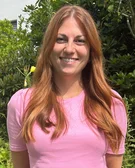
Manuela Malek , M. Sc.
Researcher
Faculty of Health (School of Nursing Science) | Chair of Nursing Science
Alfred-Herrhausen-Straße 50
58448 WittenRoom number: C-1.201