School of Medicine
Chair of Surgery I
Department of Visceral, Oncological, Transplant and Vascular Surgery
The Chair of Surgery I at Witten/Herdecke University is based at the Kliniken der Stadt Köln gGmbH, Cologne Merheim Medical Centre, Department of Visceral, Oncological, Transplant and Vascular Surgery. Information on the range of medical services, key partners, our treatment standards and objectives, and our staff can be found on the clinic’s website.
Chair holder
N. N.
Research groups led by the Chair
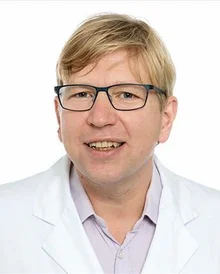
apl.-Prof. Dr. med.
Michael Ströhlein
Professor
Faculty of Health (School of Medicine) | Chair of Surgery I
Ostmerheimer Straße 200, Haus 38
51109 Köln
Research
The Chair of Surgery I works closely with the Institute for Research in Operative Medicine (IFOM) and the Centre for Clinical Trials (ZKS UW/H) within the Faculty of Health. This ensures the professional and high-quality management of translational research and clinical trials.
Current research projects
Participation in clinical trials
- COMPASS study: Decompressive stoma and two-stage elective resection versus emergency resection in patients with left-sided obstructive colorectal cancer (Sponsor: Dresden University Hospital)
- Dispact-2 study: Distal pancreatectomy – a randomised controlled trial comparing minimally invasive with open resection (Sponsor: Heidelberg University Hospital)
- PREVENT study: Preventive HIPEC in combination with perioperative FLOT versus FLOT alone in resectable diffuse adenocarcinomas of the stomach and the type II/III gastro-oesophageal junction (Sponsor: Frankfurt Institute for Clinical Cancer Research IKF GmbH)
- RECOPS study: The influence of the Braun foot-point anastomosis on postoperative outcomes following pylorus-preserving resection of the pancreatic head (Sponsor: Technical University of Munich)

Publications
All publications by the Chair of Surgery I at UW/H are gradually being included in the university bibliography.
Teaching
The surgical teaching programme is organised in close collaboration with staff from the Faculty of Health’s Office of Student Affairs and the students, and is constantly being optimised.
Theoretical foundations of surgery
We introduce students to the basic theoretical principles of surgery early on in their degree programme: in Problem-Based Learning (PBL), surgical content is integrated into the respective patient cases. This is followed later on by seminars during the theoretical term, which prepare students for the clinical practical teaching sessions, known as ‘core blocks’. During these sessions, too, there are seminars that help to underpin and contextualise what has been learnt in practice from a theoretical perspective.
Clinical and practical education
We teach the practical fundamentals of surgery in the two compulsory ‘core blocks on surgical disciplines’ (KBOF 1 and 2), as well as in additional compulsory-elective blocks.
We regularly discuss the catalogue of learning objectives in the Surgery Working Group and update it on an ongoing basis. The working group comprises the chairs of surgery, lecturers from affiliated hospitals, staff from the Office of Student Affairs, and students. The aim is to ensure that students attain as consistent a level of knowledge as possible. In addition, they have the opportunity to get involved, set priorities and request specific content to be included in the programme.
webop e-learning platform
At the Chair of Surgery I, Prof. Heiss and PD Dr Pape-Köhler have developed the ‘webop concept’ as a novel, innovative and constantly updated surgical teaching programme. Traditional textbooks lack the connection between text and illustrations and the real-life situation during an operation. The idea and vision was to make an operation an intuitive experience and make it available online.
Webop was developed ‘by surgeons for surgeons’. Whether for healthcare professionals, medical students, doctors on placement, or surgeons undergoing further training and preparing for their specialist qualification exams, webop is ideally suited to updating and expanding surgical knowledge.
Surgical instruction is also presented in the form of video sequences. These demonstrate the essential surgical steps, accompanied by text and images, as a single educational unit. The presentation of complex operations using multimedia ensures optimal learning outcomes and conveys all the essential information relating to the surgical procedure.
The key advantage over a ‘textbook’ is the constant updating and addition of new educational content. This ensures that webop remains up to date and innovative.
Practical year
The clinic has 7 clinical placement places available per tertial. The contact person is Mr Lukas Schäler (SchaelerL@kliniken-koeln.de).
PhD theses
If you are interested in pursuing doctoral studies in our department, please contact Dr Judith Knievel (KnievelJ@kliniken-koeln.de).
The team at the Chair of Surgery I
Secretariat
Stephanie Grohnert
viszeralchirurgie.merheim@kliniken-koeln.de
Other team members in the Department of Visceral, Oncological, Transplant and Vascular Surgery
- Prof. Dr Claus F. Eisenberger, Chief Physician of the Department of Visceral, Oncological, Transplant and Vascular Surgery
- Dr Alina Doppstadt, Specialist in Visceral Surgery
- Christian Fischer-Sille, Specialist in Visceral Surgery
- Mathias Formesyn, Specialist in Visceral Surgery
- Anita Haxhosaj, Junior Doctor
- Dr. rer. nat. Judith Knievel, Research Assistant
- Felix Köpfer, Junior Doctor
- Dr Jonas Lange, Senior Consultant
- Anne Linderer, Managing Senior Consultant
- Dr Robert Markworth, Junior Doctor
- Dr Jürgen Meyer-Zillekens, Senior Consultant
- Lukas Schäler, Junior Doctor
- Simone Seefeldt, Senior Consultant
- Franziska Uusitalo, Specialist in Visceral Surgery
- Johannes Volland, Senior Consultant
- Hyun Joo Yoo, Junior Doctor