School of Medicine
Chair of Neurosurgery
Neurosurgery – varied, complex, challenging and fascinating!
In neurosurgery, surgical techniques and neurological expertise are used to treat a wide range of conditions affecting the brain, the spine and the nervous system. Modern neurosurgery utilises a wide range of techniques and procedures which, through minimally invasive or, in some cases, robot-assisted methods, enable precise and gentle treatment.
The Chair of Neurosurgery is based at the Cologne Merheim Medical Centre, Clinics of the City of Cologne gGmbH, and its teaching programme is designed to provide students from Witten/Herdecke University, as well as external students on the medicine degree programme, with more than just the basic knowledge of neurosurgery. In addition to learning manual and practical skills, students gain first-hand insight into the neurosurgical operating theatre.
Chair holder
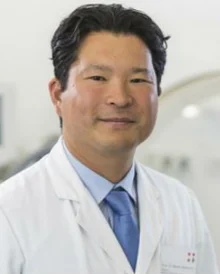
Prof. Dr. med.
Makoto Nakamura
Chair Holder
Faculty of Health (School of Medicine) | Chair of Neurosurgery
Research
- Anatomical studies on minimally invasive neurosurgical approaches for the treatment of skull base meningiomas
- Anatomical studies on endoscopically assisted approaches to the skull base
- Minimally invasive navigated neurosurgical approaches to the posterior fossa
- Intraoperative fluorescence-guided techniques for tumour visualisation and tissue imaging
- Virtual reality and mixed reality-based techniques for optimising neurosurgical planning
- Visual evoked potentials in intraoperative monitoring and visual field changes in perichiasmatic processes: impact on outcome
- Sensory-evoked potentials as markers of oxygen metabolism in subarachnoid haemorrhage
- Quantitative pupillary motility and intracranial pressure in space-occupying lesions: correlation of dynamics
- Troponin as a marker of clinical status in subarachnoid haemorrhage
- Ultrasound assessment of the papilledema and optic nerve perfusion: correlation with the course of intracranial pressure
- Adjunctive treatment of aphasia with transcranial magnetic stimulation
- Application of deep learning algorithms in neurosurgery
- EMG-sensor-based ergonomic analyses

Publications
All publications from the Chair of Neurosurgery at UW/H are listed in the university bibliography.
Teaching
Students on the medicine degree programme at Witten/Herdecke University have the opportunity to familiarise themselves with the field of neurosurgery at an early stage of their studies. The elective module in neurosurgery offers an initial insight into day-to-day clinical and surgical practice through involvement in the medical team.
As part of the clinical tracks, students can choose between the following tracks based on their own areas of interest: cranial neurosurgery, spinal surgery and the interdisciplinary ENT and neurosurgery track. Lecturers at the Chair of Neurosurgery are also heavily involved in POL teaching.
As part of the medical degree programme, some of the required clinical clerkships can also be undertaken in neurosurgery. Clinical placement students are integrated into the day-to-day ward routine in accordance with their level of knowledge and, as part of a neurosurgical team, care for their patients throughout the pre-operative, operative and post-operative phases. Students in their practical year (PJ) are assigned fixed tasks within the ward routine and, under supervision, are also introduced to practical duties. Participation in neurosurgical operations is a regular feature of the programme, as is attendance at consultations in the neurosurgery outpatient clinic. In addition, weekly continuing professional development sessions are held.
The Practical Year (PJ) in neurosurgery can be completed in two different ways:
- as a 16-week block as an elective in neurosurgery, or
- as a 2- to 4-week block as part of the compulsory surgery rotation.