School of Medicine
Chair of Anaesthesiology II
Shaping the future of anaesthesiology and intensive care medicine
The Chair of Anaesthesiology II is based at Cologne-Merheim Hospital, within the Department of Anaesthesiology and Surgical Intensive Care Medicine. Here, students learn everything there is to know about anaesthesiology; this field also plays a central role in research and within various scientific working groups.
Chair holder
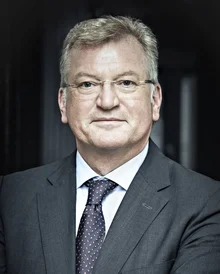
Prof. Dr.
Frank Wappler
Chair Holder
Faculty of Health (School of Medicine) | Chair of Anaesthesiology II
Ostmerheimer Straße 200, Haus 38
51109 Köln
Research in clinical and experimental anaesthesiology
The Director of the Department of Anaesthesiology and Surgical Intensive Care Medicine, Prof. Dr med. Frank Wappler, holds the Chair of Anaesthesiology II at Witten/Herdecke University. In addition to the broad clinical spectrum of a university hospital providing the highest level of care, the department offers a wide range of opportunities and a highly professional environment for research and teaching.
For many years, questions arising from clinical practice have led to successfully completed research projects at our clinic. We have set ourselves the aim of providing staff with an interest in independent scientific work and academic teaching with an excellent framework for realising their projects. For both internal and external candidates, there are opportunities to undertake doctoral studies and to obtain a postdoctoral university lecturing qualification, as well as to participate in national and international multicentre studies.
Scientific working groups:
- Interdisciplinary Shock & Burns Research Group
- Shock Research Group
- Thoracic Anaesthesia Research Group
- Big Data and AI Research Group – Digitalisation in Anaesthesiology
- Pain and Palliative Care Research Group
- Clinical Trials Working Group
- Sepsis Working Group

Publications
All publications by the Chair of Anaesthesiology II at UW/H are gradually being included in the university bibliography.
Teaching
We design the anaesthesiology teaching programme in close collaboration with staff from the Office of Student Affairs of the Faculty of Health and with the students. The teaching programme is constantly being optimised; it aims to spark students’ interest in anaesthesiology and to provide them with as consistent a level of knowledge as possible. In addition, we encourage students to set their own priorities or to request specific topics. Practical teaching takes place in the operating theatre and on the intensive care unit.
Theoretical foundations of anaesthesiology
Theoretical principles are covered early on in the degree programme through ‘problem-based learning’ (PBL). As anaesthesiology overlaps significantly with other medical disciplines, this patient-centred approach – given the breadth of the subject matter – provides a good introduction to the discipline. We cover the fundamentals of anaesthesiology later on in seminars during the so-called ‘theory periods’: we teach and discuss them in sessions during the clinical block placements. Here, we focus in particular on practice-relevant, overarching topics.
Clinical and practical education
We teach the practical fundamentals of anaesthesiology – which students are expected to acquire during their degree programme – in the two compulsory core modules on surgical subjects (KBOF) 1 and 2, as well as in compulsory elective modules.
Seminar topics in the core modules include, amongst others, pre-operative preparation, the pharmacology of anaesthetics, ventilation/airway management, paediatric anaesthesia, catecholamines, blood transfusion, fluid therapy, complications in anaesthesia and regional anaesthesia. In addition, the Department supervises final-year dissertations.
Furthermore, the Chair of Anaesthesiology II has an anaesthesia simulator. We incorporate this into our teaching to demonstrate the effects of medication, clinical parameters, decision-making and direct intervention in a realistic anaesthesiological setting.
In close collaboration with the Chair of Anaesthesiology I in Wuppertal and the affiliated hospital in Witten, we implement a standardised teaching programme. This is regularly updated within the ‘Anaesthesiology Working Group’. The working group comprises the chairs of anaesthesiology, lecturers from affiliated hospitals, staff from the Office of Student Affairs, and students.
Practical year
For students on their practical year (PJ) and clinical trainees, we offer weekly theory sessions covering the full spectrum of anaesthetology, intensive care medicine, emergency medicine and pain management. The focus areas can be adjusted by arrangement. All PJ students and clinical trainees from Witten/Herdecke University who are completing their placements in another specialist department at our hospital are also welcome to attend these sessions.
For the anaesthesiology rotation during the practical year, we provide for a two-month placement in the operating theatre and a two-month placement in the surgical intensive care unit.
In the operating theatre, students are expected to gain practical experience in the induction, maintenance and reversal of general anaesthesia. We also teach regional anaesthesia techniques.
During their placement in intensive care, they will gain initial practical experience of ventilation techniques, sedation protocols, and infusion and catecholamine therapy.
Clinic
The Department of Anaesthesiology and Surgical Intensive Care consists of a team of 83 doctors, 14 senior doctors and 60 nurses, led by Professor Dr Frank Wappler and anaesthesia nurse M. Bellendir.
Modern anaesthesiology is divided into the core areas of anaesthesia, intensive care medicine, emergency medicine, pain management and palliative care. These areas are also established at the Chair of Anaesthesiology II at Witten/Herdecke University and are complemented by the Department of Paediatric Anaesthesia at the Amsterdamer Straße Children’s Hospital in Cologne-Riehl. The range of services offered by the Cologne Anaesthesiology Department can be outlined in line with this structure.
Further information on the Department of Anaesthesiology and Surgical Intensive Care is available on the website of Cologne-Merheim Hospital.
Use of all standard anaesthetic techniques
In preparation for planned anaesthesia, all patients undergo a pre-operative assessment in accordance with the joint recommendations of the German Societies for Anaesthesiology, Surgery and Internal Medicine. An anaesthesia outpatient clinic has been set up for this purpose, which will also offer telemedicine consultations in future.
In the anaesthesia department at the hospital in Cologne-Merheim, all standard anaesthetic procedures (general anaesthesia, central and peripheral regional anaesthesia, combined anaesthesia, local blocks and (analgesic) sedation) are practised using state-of-the-art materials and anaesthesiological equipment. This includes, amongst other things, specialised instruments for establishing and securing difficult airways, ultrasound sonography, and advanced haemodynamic and neurophysiological monitoring.
We care for patients from all medical departments, in perioperative and peri-interventional settings, whether for outpatient or inpatient treatment. Patients in extreme age groups and those with severe pre-existing conditions also receive highly competent anaesthetic care, although children are generally treated at the children’s hospital (see Paediatric Anaesthesia).
Several recovery areas are attached to the clinic, where patients are monitored following anaesthesia. With adequate staffing levels and a monitoring protocol in line with clinical guidelines, patients are cared for until their vital functions have fully recovered before being transferred back to a peripheral ward.
Treatment tailored to patients’ needs
Following an operation or medical procedure, or as a result of an accident or an acute, life-threatening condition – such as an intracerebral haemorrhage – there may be a need for intensive care.
Köln-Merheim Hospital follows a multi-stage approach in this regard. Patients who require monitoring for less than 24 hours following surgery or a medical procedure are monitored in the Post-Anaesthesia Care Unit (PACU) and transferred to a general ward after this phase. Surgical patients who require intensive monitoring but do not require organ-replacement therapy are admitted to our Surgical Intermediate Care Unit (OIMC). Here, they can be cared for by highly competent specialist staff, even over a period of several days.
The Surgical Intensive Care Unit (OITS) treats acutely ill patients who require organ-replacement therapy, such as mechanical ventilation or cardiovascular support. All modern intensive care methods are employed here at appropriately equipped workstations.
Furthermore, a severe burns unit was established at Cologne-Merheim Hospital more than 40 years ago, where patients with (severe) burns, scalds, chemical burns and serious acute skin conditions (e.g. Stevens-Johnson syndrome). The unit differs from standard intensive care units in terms of its layout, structure and climate control, and requires in-depth specialist knowledge.
Rapid assistance in an emergency
The Department of Anaesthesiology and Surgical Intensive Care is closely integrated into both in-hospital and out-of-hospital emergency care. Within the hospital itself, the Anaesthesiology Department provides an emergency team that is called out to acute emergencies on the premises and ensures on-site emergency care, including resuscitation. In addition, the team is called upon to provide primary care for accident victims and patients with acute life-threatening conditions in the Central A&E Department.
For many years, there has been close cooperation with the City of Cologne Fire Brigade’s ambulance service. Under a six-month rotation scheme, anaesthetists are deployed as emergency doctors within the ambulance service and subsequently return to the department.
From acute pain management to the treatment of chronic pain
Another key area of the clinic is the Pain and Palliative Care Unit. Pain management is divided into two areas: acute pain management and the management of patients with chronic pain. Acute pain management is designed to provide immediate treatment for pain, particularly in patients following surgical procedures or the insertion of peripheral or central pain catheters. An Acute Pain Service (APS), staffed daily, visits patients at least once a day to monitor and, where necessary, optimise their pain management. Patients with chronic pain are cared for on the wards of the other specialist departments and on an outpatient basis by trained pain specialists.
The palliative care unit currently comprises 10 beds, which are to be gradually expanded. In addition, a palliative care service has been established to care for in-patient patients on the general wards of all specialist departments.
Anaesthetic care for children of all ages
The Department of Anaesthesiology and Surgical Intensive Care is affiliated with the Department of Paediatric Anaesthesia at the Amsterdamer Straße Children’s Hospital. Here, children of all ages, including newborns and premature babies, receive anaesthetic care from experienced specialists. The staff are also integrated into the hospital’s internal emergency care system, both on the respective wards and in the A&E department. In addition, where necessary, children are fitted with pain catheters, which are subsequently managed by an acute pain service.
The department also specialises in the diagnosis and treatment of congenital malformations and acquired conditions of the upper airways and the oesophagus. For example, children from across the region are examined and treated endoscopically following alkali burns. Furthermore, the department possesses extensive expertise in the endoscopic removal of ingested foreign bodies.
Use of all standard anaesthetic techniques
In preparation for planned anaesthesia, all patients undergo a pre-operative assessment in accordance with the joint recommendations of the German Societies for Anaesthesiology, Surgery and Internal Medicine. An anaesthesia outpatient clinic has been set up for this purpose, which will also offer telemedicine consultations in future.
In the anaesthesia department at the hospital in Cologne-Merheim, all standard anaesthetic procedures (general anaesthesia, central and peripheral regional anaesthesia, combined anaesthesia, local blocks and (analgesic) sedation) are practised using state-of-the-art materials and anaesthesiological equipment. This includes, amongst other things, specialised instruments for establishing and securing difficult airways, ultrasound sonography, and advanced haemodynamic and neurophysiological monitoring.
We care for patients from all medical departments, in perioperative and peri-interventional settings, whether for outpatient or inpatient treatment. Patients in extreme age groups and those with severe pre-existing conditions also receive highly competent anaesthetic care, although children are generally treated at the children’s hospital (see Paediatric Anaesthesia).
Several recovery areas are attached to the clinic, where patients are monitored following anaesthesia. With adequate staffing levels and a monitoring protocol in line with clinical guidelines, patients are cared for until their vital functions have fully recovered before being transferred back to a peripheral ward.
Treatment tailored to patients’ needs
Following an operation or medical procedure, or as a result of an accident or an acute, life-threatening condition – such as an intracerebral haemorrhage – there may be a need for intensive care.
Köln-Merheim Hospital follows a multi-stage approach in this regard. Patients who require monitoring for less than 24 hours following surgery or a medical procedure are monitored in the Post-Anaesthesia Care Unit (PACU) and transferred to a general ward after this phase. Surgical patients who require intensive monitoring but do not require organ-replacement therapy are admitted to our Surgical Intermediate Care Unit (OIMC). Here, they can be cared for by highly competent specialist staff, even over a period of several days.
The Surgical Intensive Care Unit (OITS) treats acutely ill patients who require organ-replacement therapy, such as mechanical ventilation or cardiovascular support. All modern intensive care methods are employed here at appropriately equipped workstations.
Furthermore, a severe burns unit was established at Cologne-Merheim Hospital more than 40 years ago, where patients with (severe) burns, scalds, chemical burns and serious acute skin conditions (e.g. Stevens-Johnson syndrome). The unit differs from standard intensive care units in terms of its layout, structure and climate control, and requires in-depth specialist knowledge.
Rapid assistance in an emergency
The Department of Anaesthesiology and Surgical Intensive Care is closely integrated into both in-hospital and out-of-hospital emergency care. Within the hospital itself, the Anaesthesiology Department provides an emergency team that is called out to acute emergencies on the premises and ensures on-site emergency care, including resuscitation. In addition, the team is called upon to provide primary care for accident victims and patients with acute life-threatening conditions in the Central A&E Department.
For many years, there has been close cooperation with the City of Cologne Fire Brigade’s ambulance service. Under a six-month rotation scheme, anaesthetists are deployed as emergency doctors within the ambulance service and subsequently return to the department.
From acute pain management to the treatment of chronic pain
Another key area of the clinic is the Pain and Palliative Care Unit. Pain management is divided into two areas: acute pain management and the management of patients with chronic pain. Acute pain management is designed to provide immediate treatment for pain, particularly in patients following surgical procedures or the insertion of peripheral or central pain catheters. An Acute Pain Service (APS), staffed daily, visits patients at least once a day to monitor and, where necessary, optimise their pain management. Patients with chronic pain are cared for on the wards of the other specialist departments and on an outpatient basis by trained pain specialists.
The palliative care unit currently comprises 10 beds, which are to be gradually expanded. In addition, a palliative care service has been established to care for in-patient patients on the general wards of all specialist departments.
Anaesthetic care for children of all ages
The Department of Anaesthesiology and Surgical Intensive Care is affiliated with the Department of Paediatric Anaesthesia at the Amsterdamer Straße Children’s Hospital. Here, children of all ages, including newborns and premature babies, receive anaesthetic care from experienced specialists. The staff are also integrated into the hospital’s internal emergency care system, both on the respective wards and in the A&E department. In addition, where necessary, children are fitted with pain catheters, which are subsequently managed by an acute pain service.
The department also specialises in the diagnosis and treatment of congenital malformations and acquired conditions of the upper airways and the oesophagus. For example, children from across the region are examined and treated endoscopically following alkali burns. Furthermore, the department possesses extensive expertise in the endoscopic removal of ingested foreign bodies.
The team at the Chair of Anaesthesiology II
Secretariat
Maren Peters
petersma@kliniken-koeln.de
+49 221 8907-3863
Department of Anaesthesiology and Surgical Intensive Care Medicine
Cologne-Merheim Hospital
Chair of Anaesthesiology II at Witten/Herdecke University
Ostmerheimer Straße 200
51109 Cologne
Other team members at the Department of Anaesthesiology and Surgical Intensive Care Medicine, Cologne-Merheim Hospital
- Prof. Dr Th. Annecke, Senior Lead Consultant and Head of the Intensive Care Unit
- PD Dr J. Defosse, Senior Lead Consultant
- PD Dr A. Böhmer, Senior Consultant
- Dr K. Hardt, Senior Consultant
- Dr R. Joppich, Senior Consultant and Head of the Palliative and Pain Medicine Section
- Dr D. Keipke, Senior Consultant
- Dr H. Niedmers, Senior Consultant
- Dr E. von der Leyen, Senior Consultant
- Dr U. Limper, Senior Consultant
- Dr L. Lindenbeck, Senior Consultant
- Dr R. Müller, Senior Consultant
- Dr M. Poels, Managing Senior Consultant
- Dr S. Raschke, Senior Consultant
- Dr A. Scheifes, Senior Consultant
- Dr S. Trojan, Senior Consultant
- Dr J Sufiani, Senior Consultant
Other team members at Cologne-Riehl Children’s Hospital
- Prof. Dr J. Kaufmann, Professor of Paediatric Anaesthesiology
- Dr A. Etspüler, Senior Consultant
- Dr S. Hubrich, Senior Consultant
- Ms P. Kindermann, Senior Consultant