School of Medicine
Chair of Neurology I
Inpatient and outpatient treatment of neurological conditions
The Chair of Neurology I at Witten/Herdecke University is based at the Department of Neurology and Clinical Neurophysiology at Helios University Hospital Wuppertal.
The clinic has 80 beds, including 16 places in the supraregional stroke unit. Neurological patients are also treated in the interdisciplinary intensive care unit. The department has access to a fully equipped, modern neurophysiological laboratory, including advanced autonomic diagnostics, as well as an ultrasound laboratory. Over 4,000 in-patients and over 8,000 out-patients are treated here each year. Treatment covers a wide range of conditions in patients ranging from young adults to the elderly.
The focus here is on
- optimal stroke treatment,
- the prevention and treatment of neurodegenerative diseases,
- tailored treatment of neuroimmunological disorders,
- neuroinfectiology,
- the latest treatments in neuro-oncology,
- personalised treatment of epilepsy and the
- diagnosis and treatment of peripheral neurological disorders.
Chair holder
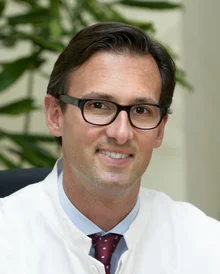
Prof. Dr. med.
Juraj Kukolja
Chair Holder
Faculty of Health (School of Medicine) | Chair of Neurology I
Director of the Clinic for Neurology and Clinical Neurophysiology, Helios University Hospital Wuppertal
Heusnerstraße 40
42283 Wuppertal
Research
Advances in the care of neurological patients are based on a constant stream of new findings in the neurosciences. In Germany, neurology is one of the clinical disciplines that is growing in scope and importance, and is one of the most scientifically productive.
The Chair of Neurology I and the Department of Neurology and Clinical Neurophysiology focus their research on the diagnosis and treatment of neurodegenerative diseases, acute stroke management and the treatment of neuroimmunological disorders. In addition to clinical trials, we carry out state-of-the-art imaging studies using functional and structural MRI.
We are currently investigating the following topics:
- Alzheimer’s dementia and vascular dementia: the influence of cortical atrophy and vascular pathology on functional connectivity
- Stroke: EEG correlates of neuropsychological deficits
- Parkinson’s disease: non-motor symptoms
- Autoimmune-mediated encephalitis
- Multiple sclerosis and associated conditions


Publications
All publications by the Chair of Neurology I at UW/H are listed in the university bibliography.
Teaching
The Chair of Neurology I contributes to the training of doctors on the model degree programme in medicine through its teaching modules. The educational aim of the model degree programme in medicine – and thus also of the Chair of Neurology – is to foster doctors who are capable of continuous learning. Lifelong learning, practical competence and personal development are to be promoted during the course of study – and beyond. Students are expected to recognise the standards required for their profession, and to understand how they can expand and update their knowledge and apply it in clinical practice. Engaging with scientific questions fosters the recognition of interconnections and critical reflection on them.
The term ‘medical professional’ emphasises not only specialist knowledge and skills but also human qualities: students learn to establish meaningful relationships and engage in constructive collaboration with patients and colleagues from all professional backgrounds. Furthermore, we aim to inspire and empower them to be active at all levels of society, to take on responsibility and to engage in lifelong professional development.
Neurology examination course
The neurology examination course takes place in the third semester. Students systematically learn, building on a foundation of neuroanatomy and neurophysiology, the key examination techniques and possible pathological findings in the field of neurology, as well as how to interpret them. Patient presentations complement the lectures and illustrate the course material. Intensive practice of what has been learnt takes place in small groups under the guidance of tutors.
Clinical block placements
In the seventh semester, four-week block placements take place, during which up to eight students are involved in clinical work on a full-time basis. Here, they learn how to work on the ward and, under supervision, are involved in patient care.
The clinical block placements focus on patient-centred training and working in small groups. Teaching methods include case vignettes, the presentation of typical and striking findings in small groups, and problem-based learning (PBL). Seminars are led by both lecturers and students – through presentations and patient case discussions. The learning objectives include taking a medical history, assessing findings, diagnosis, differential diagnosis and treatment.
Students have access to a range of multimedia teaching resources. These include direct access to the Helios Central Library in Berlin, specialist journals and textbooks, anatomical models and a video library.
Students can use the free time they have outside their block placements to take part in weekly rounds led by senior registrars and consultants, examine patients under supervision, and assist them with diagnostic and therapeutic procedures. There is also the opportunity to gain experience in the outpatient department of the interdisciplinary emergency centre and on the intensive care ward.
Practical year
During the practical year, the final stage of their degree programme, students learn to apply their knowledge in a practical setting. They develop their practical skills, deepen their understanding of examination techniques and, under supervision, carry out procedures such as lumbar punctures. In addition, they have the opportunity to gain initial experience in carrying out and interpreting findings from instrumental neurological diagnostic procedures, such as duplex sonography of the arteries supplying the brain, electroencephalography, and electroneurography and electromyography. The aim is for our students to be able to confidently recognise and treat the most common neurological conditions.
Conferences and training courses
Students take part in daily sessions such as case discussions at the Neurology and Neuroradiology Conference and during ward rounds. In addition, there are weekly training sessions on common and rare clinical conditions, electrophysiological topics and additional neurological diagnostic procedures.
In addition to its direct teaching activities, the Department organises clinical-scientific Wednesday colloquia on current topics featuring renowned speakers. The Department’s annual symposium takes place in the summer.
Details of the Chair’s events can be found in the course catalogue for the model degree programme in Medicine.