School of Medicine
Chair of Microbiology and Laboratory Medicine
Centre of Excellence for Infectious Disease Diagnostics and Quality Assurance
The Chair of Microbiology and Laboratory Medicine is based at the Helios University Hospital Wuppertal within the Institute for Medical Laboratory Diagnostics (IML). The IML provides laboratory medical services for numerous hospitals and doctors’ practices and serves as the reference laboratory for infectious disease diagnostics for the Reference Institute for Bioanalytics (RfB).
The laboratory of the Chair of Microbiology and Laboratory Medicine at Witten/Herdecke University establishes, organises and further develops more than 40 interlaboratory testing parameters.
Chair holder
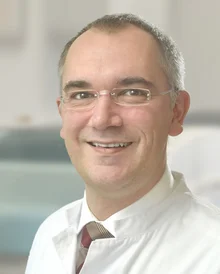
Prof. Dr. med.
Parviz Ahmad-Nejad
Chair Holder
Faculty of Health (School of Medicine) | Chair of Microbiology and Laboratory Medicine
Heusnerstraße 40
42283 Wuppertal
Research
Development, examination and implementation of interlaboratory tests
The Chair of Microbiology and Laboratory Medicine, together with the Institute for Medical Laboratory Diagnostics (IML) and in cooperation with the Reference Institute for Bioanalytics, is involved in the development, examination and implementation of interlaboratory trials. The German Medical Association’s guidelines for laboratory tests (RiliBäk) list, amongst other things, specific parameters which must be carried out by laboratories for quality assurance purposes and offered by proficiency testing organisations. Quality assurance for complex diagnostic procedures in molecular genetic and microbiological diagnostics is supported by the foundation for Pathobiochemistry and Molecular Diagnostics.
A global overview of the current situation
The department is involved in research into molecular genetic testing. In modern laboratory medicine, molecular genetic testing is a crucial cornerstone in the diagnosis and treatment of various diseases, particularly infectious diseases. Technological advances, such as so-called syndromic diagnostics using multiplex PCR, are opening up new diagnostic possibilities. The tests are carried out not only in the laboratory but also through point-of-care diagnostics.
To gain a better understanding of the current state of molecular genetic diagnostics on a global scale, the Committee on Molecular Diagnostics (C-MD) of the International Federation for Clinical Chemistry (IFCC) has conducted several surveys in recent years covering key aspects ranging from technology to quality assurance and reporting.
Big data analysis for quality assurance
One of the department’s research groups focuses on various topics at the interface between infectious diseases and hospital hygiene:
- incidence and mortality associated with multi-resistant pathogens and nosocomial infections,
- the impact of antibiotic stewardship measures and
- gender-specific differences in infectious diseases.
A key focus is the analysis of big data derived from group-wide routine quality assurance data.
Development, examination and implementation of interlaboratory tests
The Chair of Microbiology and Laboratory Medicine, together with the Institute for Medical Laboratory Diagnostics (IML) and in cooperation with the Reference Institute for Bioanalytics, is involved in the development, examination and implementation of interlaboratory trials. The German Medical Association’s guidelines for laboratory tests (RiliBäk) list, amongst other things, specific parameters which must be carried out by laboratories for quality assurance purposes and offered by proficiency testing organisations. Quality assurance for complex diagnostic procedures in molecular genetic and microbiological diagnostics is supported by the foundation for Pathobiochemistry and Molecular Diagnostics.
A global overview of the current situation
The department is involved in research into molecular genetic testing. In modern laboratory medicine, molecular genetic testing is a crucial cornerstone in the diagnosis and treatment of various diseases, particularly infectious diseases. Technological advances, such as so-called syndromic diagnostics using multiplex PCR, are opening up new diagnostic possibilities. The tests are carried out not only in the laboratory but also through point-of-care diagnostics.
To gain a better understanding of the current state of molecular genetic diagnostics on a global scale, the Committee on Molecular Diagnostics (C-MD) of the International Federation for Clinical Chemistry (IFCC) has conducted several surveys in recent years covering key aspects ranging from technology to quality assurance and reporting.
Big data analysis for quality assurance
One of the department’s research groups focuses on various topics at the interface between infectious diseases and hospital hygiene:
- incidence and mortality associated with multi-resistant pathogens and nosocomial infections,
- the impact of antibiotic stewardship measures and
- gender-specific differences in infectious diseases.
A key focus is the analysis of big data derived from group-wide routine quality assurance data.
Current research projects

Publications
All publications by the Chair of Microbiology and Laboratory Medicine at UW/H are listed in the university bibliography.
Teaching
The Chair of Microbiology and Laboratory Medicine regularly runs courses for students on the model degree programme in Medicine. These include tutorials based on problem-based learning (PBL), laboratory practicals and core curriculum modules. Students in their practical year (PJ) also receive teaching.
The Institute for Medical Diagnostic Testing offers a comprehensive range of services in clinical chemistry, transfusion medicine and microbiology, and is therefore fully authorised to provide specialist training in the field of laboratory medicine.
The team at the Chair of Microbiology and Laboratory Medicine
Mareike Röllinghoff
Secretariat
Chair of Microbiology and Laboratory Medicine
Faculty of Health (School of Medicine)
Tel.: +49 (0)202 / 896-25-25
Email: mareike.roellinghoff@helios-kliniken.de