Department of Management and Entrepreneurship (MUT)
WIFU Endowed Chair for Corporate Entrepreneurship and Digitalisation in Family Businesses

Research and teaching in the fields of entrepreneurship and digitalisation in family businesses
Dear research partners, students and business representatives,
A warm welcome to the website of the WIFU Endowed Chair for Corporate Entrepreneurship & Digitalisation in Family Businesses.
Since 2020, our chair team – as part of the Witten Institute for Family Businesses – has been dedicated to research and teaching in the fields of entrepreneurship and digitalisation in family businesses. Our main areas of focus are the successful execution of digital transformation, the implementation of digital technologies and the generation of various types of innovation within family businesses. In doing so, we adopt a research approach that examines phenomena both at the level of the institution and its framework conditions, and from the perspective of the individual and their perceptions. Our research is based on empirical data, much of which is sourced from our target group – family businesses. Depending on the research question, we employ a broad spectrum of qualitative and quantitative research methods to provide both theoretical scientific insights and relevant practical implications.
We are committed to research-based, practice-oriented teaching and actively involve students in ongoing research and practical projects. Further information on our courses, projects, staff and relevant topics can be found throughout this website.
If you cannot find the information you are looking for or have any suggestions, please do not hesitate to contact us directly.
Kind regards,
Thomas Clauß and the team of the Chair
Social media links

Latest news from the Chair
Research
In its research, the Chair primarily focuses on the three interlinked areas of ‘innovation’, ‘transformation’ and ‘digitalisation’ in the context of family businesses. Within this interplay, we investigate how family businesses can tackle current, disruptive challenges – such as new digital technologies – through active innovation and transformation management. The Chair’s research focuses, amongst other things, on the following questions:
- How should digital transformation projects be managed?
- What are the drivers and barriers to digital innovation and transformation in family businesses?
- What are the distinctive features (strengths and challenges) of family businesses compared with non-family-owned businesses in terms of digital transformation?
- What digital skills are required for a successful digital transformation, or need to be developed to achieve digital maturity?
- Which digital business models are suitable for family businesses?
- How should collaboration between family businesses and start-ups be structured?
- How are corporate entrepreneurship initiatives implemented in family businesses?
- How are family businesses integrated into ecosystems, and how can links be established or strengthened?

As our research examines the phenomena mentioned at both the institutional and individual levels, we combine perspectives and theories from institutional economics and behavioural science. Our research is primarily quantitative and empirical in nature. Nevertheless, we also emphasise methodological diversity and, depending on the research question, apply a broad spectrum of qualitative and quantitative research methods in order to provide theoretical scientific insights and to derive relevant practical implications. The Chair draws on extensive national and international collaborations and is closely integrated into the academic community. As a result, Prof. Dr Thomas Clauß was ranked among the top 2 per cent of all researchers worldwide in a recent study by Stanford University based on citation data from 2020, and is listed in the current *Wirtschaftswoche* ranking of the 100 best German-speaking researchers in business administration under the age of 40.
Current research projects
Publications of the Chair
Courses offered by the Chair
| Course | BA / MA / MBA | Summer / Winter | ECTS | Practical | Assessment method |
|---|---|---|---|---|---|
| Entrepreneurship | Bachelor's | Summer | 5 | Yes | Semester project |
| Start-Up Creation Lab | Bachelor's | Summer | 5 | Yes | Pitch presentation & written business plan |
| Generative AI in Practice | Bachelor’s | Summer / Winter | 5 | No | Practical project work |
| Corporate Entrepreneurship | Bachelor’s | Winter | 5 | No | Final dissertation, case presentation & written examination |
| Digital Transformation in Business | Bachelor’s | Winter | 5 | No | Group presentation & term paper |
| Strategies for Family Businesses | Master’s | Summer | 5 | Yes | Presentation |
| Business Model Innovation: Theory and Practical Application | Master’s | Winter | 5 | No | Term paper |
| Corporate Entrepreneurship | MBA | Summer | 6 | No | Group presentation, written documentation of the learning process |
Teaching – Bachelor’s
Entrepreneurship
Students acquire theoretical knowledge of the start-up process. In addition to fundamental topics such as identifying business opportunities, selecting a business idea, developing a viable business model and drawing up a strategy, marketing and financial plan, the course also covers specific topics such as team building, self-reflection on one’s own skills, competitive analysis, and legal and formal aspects for start-ups. This course provides the theoretical foundation for the ‘Business Creation Entrepreneurial Lab’ seminar, in which theory is put into practice.
The aim of this part of the module is to provide students with a theoretical and conceptual overview of the preparatory phases of starting and running a business. The various aspects of this topic are systematically explored throughout the start-up process. The theoretical insights are supplemented by guest lectures from experts in the wider field of business start-ups (e.g. founders, venture capitalists, etc.).
We strongly recommend attending the companion course: Start-up Creation Lab.
Start-up Creation Lab
Under the guidance of experts from the start-up sector and Prof. Clauß, students develop their own start-up concepts and business plans. This part of the module provides a practical guide through the start-up process, from developing a business idea through to creating a business model and translating this into a well-founded and convincing business plan. Input from experts across various disciplines, as well as regular reflection sessions, complement and round off the work. This seminar is a comprehensive complement to ‘Start-up Creation and Management’, as students apply theoretical concepts in practice and utilise tools such as Design Thinking, the Business Model Canvas and Value Proposition Design.
Generative AI in practice
This seminar focuses on the problem-oriented application of Large Language Models (LLMs) such as ChatGPT and is aimed in particular at students of business, economics and social sciences. At the start of the seminar, a theoretical foundation will be laid to understand the basics of LLMs. Potential areas of application will be identified and the capabilities of these models explored.
As the seminar progresses, various areas of application will be presented and tested in practice. Students will then develop their own application examples and demonstrate the concrete practical benefits of these technologies.
Corporate Entrepreneurship
In an era of constant technological progress and upheaval, companies face the challenge of renewing or even completely transforming their business models in order to remain profitable.
This course explores the topic of corporate entrepreneurship, i.e. how to build a new business within a company. This includes launching new business divisions or product lines, establishing new business units, opening branches in new regions, managing spin-offs or setting up new joint ventures, as well as introducing processes that ensure the successful development of new ventures. Using illustrative case studies, the theory is put into practice and discussed.
The topic of corporate entrepreneurship is particularly important for students who will, in future, be faced with tasks relating to change management, digital transformation, innovation and business model innovation within already established organisations.
Digital Transformation in Business
Digital transformation is now a key priority for many established companies. New technologies such as blockchain, AI, additive manufacturing, etc. offer new opportunities, but also challenge traditional business models. Digitalisation initiatives must reconcile technological and business perspectives in order to be successfully implemented.
This course therefore uses a combination of management theory and case studies to examine how the use of information technology and digitalisation tools is changing interactions and processes within organisations, between organisations and within industries.
Teaching – Master’s / MBA
Strategies for family businesses
Strategy development is an essential component of leadership and, at the same time, a key prerequisite for the company’s success. Strategies may be explicitly formulated or drawn up by experts, or they may exist implicitly and unspoken, rooted in the entrepreneur’s intuition. In any case, the aim is to deal creatively with unpredictability and to position the company for a range of possible future scenarios. Family businesses in particular exhibit a wide variety of approaches to strategy development and strategy formulation. Beyond traditional strategic considerations, the challenge in family businesses is to balance the interlinked systems of the business, the family and ownership through careful ‘boundary management’.
Business Model Innovation: Theory and Practical Application
The course examines business model innovation from the perspective of established companies seeking to transform their existing business models. It outlines business model innovation from a holistic perspective and equips students with an understanding of the concept and its various dimensions. Furthermore, business model innovation is linked to strategy, and the course discusses the means by which managers can achieve business model innovation. Through group work, students learn how to analyse and improve existing business models using real-world case studies.
Corporate Entrepreneurship (MBA)
This module examines corporate entrepreneurship as an approach to developing new business models and units within existing organisations in order to create sustainable competitive advantages. It combines theory and practice, highlights the challenges and resistance encountered in established organisations, and equips participants with the skills needed to successfully design and implement corporate entrepreneurship. Key topics include the fundamentals, forms, obstacles, stakeholder roles and starting points for the entrepreneurial transformation of organisations.
Lecture series featuring guest speakers
Each semester, Prof. Dr Thomas Clauß invites a variety of outstanding speakers and experts from the industry to provide insights into specific areas of digital transformation as part of a lecture series. The selection of speakers is based in particular on the courses offered in the respective semester, as this enables students to gain valuable insights and practical knowledge relevant to their current courses.

Theses
Students who are interested have the opportunity to undertake Bachelor’s and Master’s theses under the supervision of Prof. Dr Clauß or one of the research assistants.
The procedure for such theses and currently available topics can be found in the sub-sections below.
Download links: Thesis template & Thesis Guide
For enquiries regarding PhD theses, please contact Prof. Dr Clauß directly.
Bachelor's thesis
Bachelor’s theses are generally works in literary studies which aim to integrate the current state of research on a topic from a theoretical and conceptual perspective and, where appropriate, to develop models.
The diagram illustrates a typical process for completing a Bachelor’s thesis. In addition to supervision by Prof. Dr Clauß, other members of the department may also be consulted as points of contact and advisers.
Master's thesis
Master’s theses are generally empirical research projects in which theoretical relationships are either examined using qualitative data, such as interviews, or tested using quantitative data, such as questionnaires.
The diagram illustrates a typical process for completing a Master’s thesis. In addition to supervision by Prof. Dr Clauß, other members of the department can also be consulted as points of contact and advisers.
Bachelor's thesis
Bachelor’s theses are generally works in literary studies which aim to integrate the current state of research on a topic from a theoretical and conceptual perspective and, where appropriate, to develop models.
The diagram illustrates a typical process for completing a Bachelor’s thesis. In addition to supervision by Prof. Dr Clauß, other members of the department may also be consulted as points of contact and advisers.
Master's thesis
Master’s theses are generally empirical research projects in which theoretical relationships are either examined using qualitative data, such as interviews, or tested using quantitative data, such as questionnaires.
The diagram illustrates a typical process for completing a Master’s thesis. In addition to supervision by Prof. Dr Clauß, other members of the department can also be consulted as points of contact and advisers.
The team at the WIFU Endowed Chair for Corporate Entrepreneurship and Digitalisation in Family Businesses

Univ.-Prof. Dr.
Thomas Clauß
Chair Holder
Faculty of Management, Economics and Society (Department of Management and Entrepreneurship) | WIFU Endowed Chair for Corporate Entrepreneurship and Digitalisation in Family Businesses
Alfred-Herrhausen-Straße 50
58455 WittenRoom number: 1.054.2

Nicola Mehringer
Secretariat
Faculty of Management, Economics and Society (Department of Management and Entrepreneurship) | WIFU Endowed Chair for Corporate Entrepreneurship and Digitalisation in Family Businesses
Alfred-Herrhausen-Straße 48
58455 WittenRoom number: 1.048

Dr.
Felix Lorenz
Research Associate
Faculty of Management, Economics and Society (Department of Management and Entrepreneurship) | WIFU Endowed Chair for Corporate Entrepreneurship and Digitalisation in Family Businesses
Alfred-Herrhausen-Straße 50
58455 WittenRoom number: 1.050
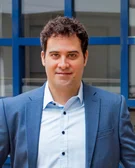
Dr.
Matheus Franco
Research Associate
Faculty of Management, Economics and Society (Department of Management and Entrepreneurship) | WIFU Endowed Chair for Corporate Entrepreneurship and Digitalisation in Family Businesses
Alfred-Herrhausen-Straße 50
58448 Witten
Jan Herwig
Research Assistant
Faculty of Management, Economics and Society (Department of Management and Entrepreneurship) | WIFU Endowed Chair for Corporate Entrepreneurship and Digitalisation in Family Businesses
Alfred-Herrhausen-Straße 50
58455 Witten
Maren Bendel , M. Sc.
Doctoral Student
Faculty of Management, Economics and Society (Department of Management and Entrepreneurship) | WIFU Endowed Chair for Corporate Entrepreneurship and Digitalisation in Family Businesses
Alfred-Herrhausen-Straße 50
58455 Witten
Dr. rer. pol., B.A.
Julius Velz , M. Sc.
Research Assistant
Faculty of Management, Economics and Society (Department of Management and Entrepreneurship) | WIFU Endowed Chair for Corporate Entrepreneurship and Digitalisation in Family Businesses
Alfred-Herrhausen-Straße 50
58455 Witten
Dr. rer. pol.
Rebecca Alguera Kleine
Research Project Associate
Faculty of Management, Economics and Society (Department of Management and Entrepreneurship) | WIFU Endowed Chair for Corporate Entrepreneurship and Digitalisation in Family Businesses

Hanne Wortmeyer , B. A.
Research Associate
Faculty of Management, Economics and Society (Department of Management and Entrepreneurship) | WIFU Endowed Chair for Corporate Entrepreneurship and Digitalisation in Family Businesses
Alfred-Herrhausen-Straße 50
58448 Witten