School of Psychology and Psychotherapy
Chair of Experimental Psychology
Adaptive mechanisms of information processing
At the Chair of Experimental Psychology, we investigate the processing and representation of relevant and irrelevant information in memory. A key focus of our research programme is the systematic investigation and description of adaptive mechanisms of distractor processing (statistical learning, habituation, cognitive control). We combine classical experimental and neurophysiological methods to investigate how the cognitive system constructs a predictive model of the near future based on regularities in the visual and auditory environment, and how it responds to violations of these regularities.
Chair holder
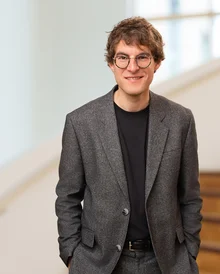
Univ.-Prof. Dr.
Jan Philipp Röer
Chair Holder
Faculty of Health (School of Psychology and Psychotherapy) | Chair of Experimental Psychology
Alfred-Herrhausen-Straße 44
58455 Witten
Room number: 1.124
Research
Working memory and auditory distraction
Every second, we process a multitude of stimuli, only a fraction of which are relevant to our current tasks and goals. We can effectively suppress irrelevant visual stimuli by looking away or closing our eyes, but in the auditory system, there is no such thing, which means that all incoming sounds have the potential to attract our attention and distract us. At the Chair of Experimental Psychology, we are interested in the cognitive modelling of the characteristics responsible for this distraction, in order to distinguish between controllable and uncontrollable aspects of processing irrelevant information in working memory.
Selective attention
Successfully managing everyday tasks requires focusing on relevant information and ignoring irrelevant information. Previous experiments show that older adults often find it more difficult to suppress the processing of irrelevant information than younger adults. With our research, we aim to contribute to a better understanding of whether a general deficit in inhibitory attentional control is responsible for age-related differences, or whether these differences depend on the modality and type of stimulus presentation. Preliminary results suggest that age-related differences are most likely to occur when target and distractor stimuli are presented in the same modality, while cross-modal selective attention processes remain intact well into old age.
Big Team Science
At the Chair of Experimental Psychology, we are particularly committed to open and big-team science. We strive for transparency and reproducibility in all our research projects (pre-registration, open data, open materials), and support international collaborative projects focusing on the replicability of psychological findings and meta-scientific questions. We are part of the Psychological Science Accelerator and the Framework for Open and Reproducible Research Training. Current research projects focus on the psychology of sustainability, the effects of misinformation, and the public perception of scientists.
The cocktail party phenomenon
The cocktail party phenomenon is one of the classic effects in cognitive psychology and refers to the finding that approximately one third of the participants report hearing their own name being presented in the irrelevant message during a selective listening task. Individual differences in working memory capacity seem to play an important role in this. Participants with low working memory capacity are more likely to notice their own name and make more errors in a masking task shortly after its presentation than participants with high working memory capacity. At what age the cocktail party phenomenon can be observed in children has not yet been systematically investigated. Deficits in attentional control suggest that older children are more likely to notice their own name compared with younger children, while age-related differences in working memory capacity, however, appear more consistent with the opposite pattern of findings.
Visual search
Searching for something in the visual environment is an everyday task in the real world and a classic paradigm for studying visual attention in the laboratory. To this end, several visual stimuli are presented on a computer screen, and the task for participants is to indicate as quickly as possible whether a specific target stimulus is present or not. Reaction time and accuracy typically depend on various factors, such as the similarity between target and distractor stimuli and the number of visual stimuli on the screen. At the Chair of Experimental Psychology, we investigate the influence of task interruptions on visual search performance and the conditions under which top-down processing can help to reduce the costs of such interruptions.

Publications
All publications by the Chair of Experimental Psychology at UW/H are listed in the university bibliography.
Teaching
In the Bachelor’s degree programme in Psychology, we teach Experimental Psychology through interactive lectures, seminars and practical sessions. In the Master’s degree programme in Psychology, specialising in Clinical Psychology and Psychotherapy, we are involved in the advanced study of sensation, perception, attention, and memory. In problem-based learning courses, students work independently with the support of student tutors.
The team at the Chair of Experimental Psychology
Dr. phil.
Lejla Alikadic
Researcher
Faculty of Health (School of Psychology and Psychotherapy) | Chair of Experimental Psychology
Alfred-Herrhausen-Straße 50
58448 WittenRoom number: 1.124
Jeroen Kufeld , B.Sc.
Researcher
Faculty of Health (School of Psychology and Psychotherapy) | Chair of Experimental Psychology
Alfred-Herrhausen-Straße 50
58448 Witten
Stefanie Richthofer , M. Sc.
Researcher
Faculty of Health (School of Psychology and Psychotherapy) | Chair of Experimental Psychology
Emily Seeligmüller , M. Sc.
Researcher
Faculty of Health (School of Psychology and Psychotherapy) | Chair of Experimental Psychology
Alfred-Herrhausen-Straße 50
58455 WittenRoom number: 1.119 B
Research assistants
Sophie Damm
Luc Florian
Alissa Teuber
Wolf Thiem
Student tutors
Simon Floreck
Carlota Hoffrogge
Felix Klein
Sarah Neukirchner
Eva Popfinger
Lea Ruhl
Malin Toepsch
Hannah Wehmeier