Department of Management and Entrepreneurship (MUT)
Chair of Management and Innovation in Health Care
Exploring innovation in healthcare
Within the Faculty of Management, Economics and Society, the Chair of Management and Innovation in Health Care conducts research into economic issues within and between organisations in the healthcare sector, focusing on innovation at the product, process and system levels.
In terms of teaching, in addition to healthcare management, we offer modules on innovation management, start-up management, social entrepreneurship, social policy, corporate social responsibility and democracy in business, amongst others.
The Chair has an interdisciplinary focus. We collaborate with research groups from various disciplines, as well as with hospitals, consultancy firms, industrial companies and professional bodies.
As a member of the Interdisciplinary Centre for Health Services Research (IZVF), the Chair aims in particular to contribute to the description, explanation, testing and evaluation of concepts that ensure high-quality healthcare.
It is characterised by its focus on topics at the interface between business and health, as well as by practice-oriented teaching and research. We carry out many of our projects in collaboration with partners from the healthcare sector.
Chair holder

Univ.-Prof. Dr.
Sabine Bohnet-Joschko
Chair Holder
Faculty of Management, Economics and Society (Department of Management and Entrepreneurship) | Chair of Management and Innovation in Health Care
Programme Coordinator Health Care Management (B. Sc.)
Faculty of Management, Economics and Society
Programme Coordinator M.A. General Management
Faculty of Management, Economics and Society
Alfred-Herrhausen-Straße 50
58455 Witten
Room number: C-1.159
Research
Managing knowledge and innovation in the healthcare sector
Demographic change, the population’s growing health awareness and advances in medical technology are making the healthcare sector the growth industry of the 21st century. However, as a labour- and knowledge-intensive sector, it is also affected by demographic change within its own organisational structures.
Making effective use of knowledge – a resource tied to individuals – developing it further, and distributing and retaining it within the organisation and across organisations is becoming a crucial competitive factor. Even more pressing are questions regarding how to deal with ‘non-knowledge’ and how to generate and disseminate new knowledge.
Healthcare Management in Healthcare Research
The Chair of Management and Innovation in Health Care is involved in describing, explaining, testing and evaluating concepts designed to ensure high-quality healthcare provision. Our research activities focus on issues relating to quality, risk, knowledge, process and innovation management, as well as leadership and motivation. In addition to contributing to the effectiveness and cost-effectiveness of healthcare, we investigate the transfer of knowledge between individuals and organisations within the healthcare sector.
Current research projects
Archive
Innovative Care for Acutely Ill Residents of Care Homes (IVA)
The aim of the project was to significantly reduce the number of care home residents admitted to hospital or to facilitate a swift return to their familiar surroundings. The care models being trialled took into account the declining number of GPs and specialists, as well as their ability to provide close support to people in care homes.
Four care homes in North Rhine-Westphalia took part in the project. Three care models were evaluated and tested, aimed at enabling the treatment of acutely ill care home residents to be carried out, at least in part, within the care home in future. This applied, for example, to procedures such as infusion therapy, wound care or readjustment of medication.
The Chair of Management and Innovation in Health Care conducted a complementary economic study integrated into the project.
Local support for family carers (Quart-UpA)
The aim of the project was to improve the situation of family carers at a local level and in a sustainable manner: through organisational innovations in care provision and through the development of innovative support services. Service providers were better connected with one another and empowered to develop and implement new services for family carers.
The project was guided by a neighbourhood-based approach, as family carers need local support. The care services were designed to be replicable in other towns and districts.
As part of the project, the Chair of Management and Innovation in Health Care produced a forecast of the development of local authority expenditure on basic security benefits for care assistance.
Healthcare Management Career Network (kamig)
The ‘Healthcare Management’ career network was established at Witten/Herdecke University as part of the ‘Strengthening Regions for Women’ programme. It was developed under the leadership of Dr Sabine Bohnet-Joschko. The aim was to present the healthcare sector as one of Germany’s growth markets, offering women opportunities for professional development. The career network was implemented on three levels:
- In the ‘Career Now! Women in Leadership’ series of events, women who have established themselves in innovative fields within the healthcare sector talk about their unusual career paths.
- Job-relevant expertise and personal skills are highlighted. The professional fields are diverse: medicine, preventive healthcare, therapy, nutrition, nursing, the pharmaceutical industry and health information.
- The ‘Management Skills in Healthcare’ training programme uses a combination of online modules and face-to-face learning to teach the fundamentals of management: aspects of human resources, project and time management, as well as basic business management knowledge.
The aim was to prepare participants for the complex challenges faced by managers and the self-employed in the healthcare sector. The guiding principle of the career network was to bring together various stakeholders in the healthcare sector: companies, women returning to work, experts and those seeking guidance. Career development in the healthcare sector and its promotion through networks was a central focus of the web-based forum.
Knowledge Communities in Medical Technology (KnowMore)
The aim of the project was to promote the exchange of knowledge in the field of medical technology within hospitals, thereby facilitating innovation and improving the use of medical devices.
Complex medical devices place high demands on developers, technicians and users. All three groups possess specific knowledge about the devices that can be of benefit to the others. The ‘KnowMore’ research project investigated how knowledge about medical devices is handled and shared.
KnowMore final report
Integrated into the project was a study on innovation behaviour and management among medical device companies in Germany:
Success through Innovation, Bohnet-Joschko Jandeck 2011
Witten Health Atlas
The Witten Health Atlas initially described and visualised the distribution and use of the German healthcare system’s provision structures, focusing on inpatient care in hospitals. It provided information and analyses on national, regional and local hospital markets, as well as on individual hospitals. In doing so, it contributed to greater transparency in healthcare provision.
DeMig
Demographic change, with an increasing number of older people, the population’s growing health awareness and advances in medical technology are making the healthcare sector the growth industry of the 21st century. Professional demographic management – ranging from an analysis of age structure to workplace health management – ensures sustainable competitive advantages.
The ‘Healthcare Management’ research group at Witten/Herdecke University organised a conference on the topic of ‘Demographic Management in the Healthcare Sector’. In presentations, experts shared their experiences and analyses from the healthcare sector and other industries. In workshops, they put tools and models of practical demographic management up for discussion and examined whether they could be applied to the participants’ organisations.
Knowledge Communities in Hospitals – Know-IT
As part of the ‘Knowledge Communities in Hospitals – Know-IT’ project, funded by the Federal Ministry of Economics and Technology, a transferable knowledge management system for hospitals was designed, implemented and evaluated. The research project offered a wide range of specialist perspectives and, through cooperation with a small hospital network in the Oberallgäu region and GWI AG / Agfa Healthcare, fostered a shift in perspective between academia and practice.
Key project findings were published in the edited volume *Science Management in Hospitals*.

Publications
All publications by the Chair of Management and Innovation in Health Care at UW/H are listed in the university bibliography.
Teaching
If we understand learning as a self-organised process of knowledge generation, and knowledge as a construction achieved by the students themselves, the role and function of teachers changes.
We see ourselves as designers of learning processes. Our teaching formats are based on the idea of problem-based learning; they are seminar-based and often project-oriented. We use complex and interlinked real-world problems as a starting point for learning experiences; we relate economic approaches to technological, environmental, social or medical contexts.
We regularly invite practitioners to contribute to our teaching: entrepreneurs, consultants, hospital managers and medical technicians, journalists and, frequently, alumni of the university.
Courses
Management Workshop
The Management Workshop marks the start of a shared learning journey for each year group; it provides first-semester students with a structured introduction to management topics and lays a foundation, based on insight and experience, for the business administration subjects they will study later on. To this end, classic works of management literature – from Taylor to Porter – are discussed within their historical context. Approaches and concepts from management theory are applied to current practical contexts through case studies and projects.
The Management Workshop imparts specialist knowledge and key competencies which, in the face of changing professional demands, will remain useful in the future – even in the age of AI – for solving problems and acquiring new skills.
Innovation Management (Master’s module)
In a dynamic and competitive environment, the ability to innovate is becoming a core competence for businesses. This module provides an introduction to the theories and practice of innovation management and demonstrates how management functions – ranging from strategy, planning and organisation to leadership, evaluation and controlling – can be explicitly designed to foster innovation.
Startup the future: Founder’s Workshop (Studium fundamentale)
Digitalisation, demographic change and sustainability are just three of the many ‘megatrends’ that will bring about lasting change to our society. Every change offers potential for innovative business ideas. ‘Startup the future’ is the start-up workshop – reloaded: through a structured process, students develop the business ideas of the future – from brainstorming, through market research, financing and legal frameworks, right through to pitching their ideas to a panel of experts.
Practical Reflection Module
At the heart of the practical reflection module is a work placement, organised by the students themselves, with a private or public-sector employer in Germany or abroad. The work placement is a prerequisite for taking part in a workshop which, in addition to subject-specific and methodological aspects, also addresses the development of social and personal skills as well as career prospects. As part of the workshop, students present and reflect on their experiences in the context of their degree programme and also comment on the experiences of their fellow students.
In addition to reflecting on specialist knowledge and methods, students also consider the technological and social context of the placement phase, as well as their potential for personal development, for example with regard to their future careers. Students can independently establish links between theory and practice, initially in a case-study format, and continue to develop these over the long term.
Healthcare Management (Master’s module)
Key players and concepts
The healthcare sector has grown to become one of Germany’s most important industries: around twelve per cent of gross domestic product is spent on goods and services aimed at maintaining and restoring health, and one in ten jobs is in the healthcare sector. The seminar covers the basic concepts of health economics and examines the management aspects of various stakeholders in the healthcare system within their institutional context.
Consultancy in the Healthcare Sector
The healthcare sector has grown to become one of Germany’s most important industries: around twelve per cent of gross domestic product is spent on goods and services aimed at maintaining and restoring health, and one in ten jobs is in the healthcare sector. In cooperation with partners from the healthcare sector (e.g. hospitals, medical technology manufacturers, consultancy firms, etc.), a practical project is carried out which enables students to apply business management concepts to organisations within the healthcare sector.
Social Entrepreneurship
Social Entrepreneurship
How can entrepreneurial skills and approaches help to develop innovative solutions to social problems? In the Social Entrepreneurship module, students gain an understanding of the areas of impact, business models, funding options and approaches to measuring the success of social entrepreneurship. The seminar also explores how social entrepreneurial activities impact education, health, environmental protection and development cooperation. Further information on social entrepreneurship at Witten/Herdecke University is available at social-entrepreneurship.uni-wh.de.
Social Entrepreneurship Camp
Tackling societal problems through an entrepreneurial approach and helping to shape the future – this, and nothing less, is what social entrepreneurs aim to achieve through their initiatives in health, education, environmental protection, inclusion, integration and development. The seminar is run in collaboration with two experienced practitioners. It highlights opportunities to help shape sustainable development for the future, promotes communication and social skills as well as entrepreneurial thinking and action, and is open to students from all faculties.
Corporate Social Responsibilities
As a result of economic globalisation and the ubiquity of information, the interdependencies between companies and their environment are increasingly viewed critically by society. The resulting challenges for strategy and leadership have been discussed under the heading of ‘corporate social responsibility’. This module provides a systematic overview of theoretical concepts, uses case studies to demonstrate the practical relevance of the topic for companies of various sizes and across different sectors, and offers insight into current trends.
Master’s Kick-off Project
Technological advances, such as big data, and the resulting societal changes – such as the increasing digitalisation of society – also have a significant impact on the framework conditions for entrepreneurial activity.
To prepare students for these new societal demands, the ‘Master’s Kick-Off Project’ module brings together key elements of the Witten degree programme:
- Real-world and future-oriented business projects are undertaken in collaboration with industry partners
- Methods (e.g. Design Thinking, Scrum) are introduced and implemented
- Teams are formed across degree programmes and disciplines; they must organise themselves and work closely together to achieve a common goal
- A high degree of freedom in project work is balanced against a significant responsibility to ensure the project is well-structured
- Knowledge from various fields and disciplines must be brought together by the teams and, where necessary, supplemented
- Solution strategies must also be assessed in terms of their social implications and ethical aspects
- Teamwork, communication and presentation skills are developed
- Feedback and reflection cycles are introduced as a starting point for continuous development
Independent Projects and Studies
Independent Projects and Independent Studies enable our students to explore topics of their own choosing and to personalise their studies beyond the options offered by the curriculum. In this module, students can either write academic papers on topics relating to entrepreneurship or carry out and reflect on practical projects focusing on aspects of entrepreneurship.
Witten Prize for Health Visionaries
For visionaries in the healthcare sector
The ‘Witten Prize for Healthcare Visionaries’ recognises digital healthcare and business ideas in the healthcare sector. It brings together young founders with stakeholders from the healthcare and care sectors as well as investors, facilitates dialogue and encourages innovation and reflection.
Professor Dr Sabine Bohnet-Joschko initiated the award; students organise the competition annually, and it is funded by the Board of Trustees of Witten/Herdecke University. With this award, we recognise innovative companies and business models from the healthcare sector focusing on a key theme:
- 2015: Mobile Health
- 2016: Games for Health
- 2017: Digital aids for older people
- 2018: Smart Prevention
- 2019: Everyday’s Health Heroes
- 2020: Let’s Talk About Gender!
- 2021: Fighting Chronic Diseases
- 2022: Start-up Mental Health
- 2023: Kids Rock!
The pitch competition is aimed at visionaries and start-ups with digitally-enabled innovations in the health sector. The prize is awarded at Witten/Herdecke University by a high-calibre jury of experts from the fields of health, science, business and politics. In addition to the pitch competition, all those interested were given the opportunity to attend keynote talks by fascinating figures from the worlds of medicine and business. With its interdisciplinary approach, the event highlights the university’s core strength in linking the disciplines of health, society and business.
Further information about the prize is available at
www.gesundheitsvisionaere.de or https://www.instagram.com/gesundheitsvisionaere/
The patron for 2021 was NRW Minister for Economic Affairs, Prof. Dr Andreas Pinkwart
“Digital innovations are a driver of growth for the entire healthcare sector and complement healthcare provision with digital and personalised services. I am delighted that Witten/Herdecke University is presenting the Witten Prize for Healthcare Visionaries for the seventh time this year, recognising forward-looking projects. The successful prize-winners of previous years demonstrate that there is a keen eye here for the innovations of tomorrow. Several of them have already been officially certified as digital health applications.” (NRW Minister for Economic Affairs Prof. Dr Andreas Pinkwart, 28 October 2021)
Team at the Chair of Management and Innovation in Health Care

Manja Kleffmann
Secretariat
Faculty of Management, Economics and Society (Department of Management and Entrepreneurship) | Chair of Management and Innovation in Health Care
Alfred-Herrhausen-Straße 50
58448 WittenRoom number: C-1.158
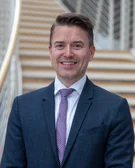
Oliver Gröne
Adjunct Professor
Faculty of Management, Economics and Society (Department of Management and Entrepreneurship)
Alfred-Herrhausen-Straße 50
58448 Witten
Carolin Berlich , M. Sc.
Research Associate
Faculty of Management, Economics and Society (Department of Management and Entrepreneurship) | Chair of Management and Innovation in Health Care
Wullener Feld 17
58455 WittenRoom number: 12

Lennart Flüß , M. Sc.
Research Associate
Faculty of Management, Economics and Society (Department of Management and Entrepreneurship) | Chair of Management and Innovation in Health Care
Alfred-Herrhausen-Straße 50
58448 WittenRoom number: 11
M.A.
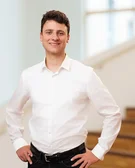
Bjoern Gostmann , B. A.
Research Associate
Faculty of Management, Economics and Society (Department of Management and Entrepreneurship) | Chair of Management and Innovation in Health Care
Wullener Feld 17
58455 WittenRoom number: 11

Dr. rer. pol.
Katharina Loboiko
Research Associate
Faculty of Management, Economics and Society (Department of Management and Entrepreneurship) | Chair of Management and Innovation in Health Care
Wullener Feld 17
58455 WittenRoom number: 10

Grigori Rogge , M. Sc.
Research Associate
Faculty of Management, Economics and Society (Department of Management and Entrepreneurship) | Chair of Management and Innovation in Health Care
Wullener Feld 17
58455 WittenRoom number: 12
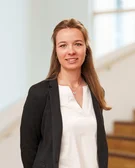
Lara Schmidt , M. Sc.
Research Associate
Faculty of Management, Economics and Society (Department of Management and Entrepreneurship) | Chair of Management and Innovation in Health Care
Alfred-Herrhausen-Straße 50
58455 WittenRoom number: 1.160

Dr.
Maarten Volkers
Research Associate
Faculty of Management, Economics and Society (Department of Management and Entrepreneurship) | Chair of Management and Innovation in Health Care
Wullener Feld 17
58455 WittenRoom number: 10

Jiming Yang , M. Sc.
Research Associate
Faculty of Management, Economics and Society (Department of Management and Entrepreneurship) | Chair of Management and Innovation in Health Care
Alfred-Herrhausen-Straße 50
58448 WittenRoom number: 9