School of Medicine
Chair of Cardiology
Cardiovascular Medicine in Research and Teaching
The Chair of Cardiology at Witten/Herdecke University is based at the Heart Centre of the Helios University Hospital Wuppertal (HUKW).
The Wuppertal Heart Centre is a specialist centre for cardiovascular diseases. All examinations and treatments in the fields of cardiology and cardiac surgery are carried out here, with the exception of heart transplants. Patients of all ages, including newborns, are treated here: 8,500 in-patients and over 7,000 out-patients each year. Further information on the services and the team can be found on the website of the Heart Centre at Helios University Hospital Wuppertal (HUKW).
Chair holder
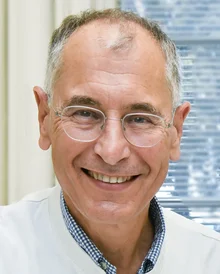
Prof. Dr.
Melchior Seyfarth
Chair Holder
Faculty of Health (School of Medicine) | Chair of Cardiology
Arrenberger Str. 20
42117 Wuppertal
Research
The Heart Centre is affiliated with an Institute for Cardiovascular Research, which conducts clinical trials (Phases II–IV). A trial doctor and trial assistants oversee numerous multicentre clinical trials and so-called investigator-initiated trials – that is, trials initiated by researchers – each year.
Medical Clinic 3 – Cardiology is also involved in research projects at the basic research laboratory of the Centre for Clinical Research in Medicine (ZFKM) and conducts translational research in the field of cardiovascular medicine.
The Chair of Cardiology comprises numerous academic with postdoctoral lecturing qualifications and professors who are actively involved in research. Clinical trials and the supervision of doctoral students take place at various specialist hospitals.
Research specialisations
Electrophysiology and Rhythmology
Treatment of atrial fibrillation
- Evaluation of state-of-the-art treatment methods, such as cardiac MRI, three-dimensional imaging techniques and various ablation methods, through multicentre national studies and local multicentre studies
- Evaluation of non-invasive predictive signals derived from ECG signal analysis to improve the assessment of patients at risk of sudden cardiac death
- Participation in multicentre studies aimed at optimising treatment for patients following atrial fibrillation (NOACs)
Non-invasive imaging (echocardiography and cardiac MRI)
Clinical evaluation of new echocardiographic methods in the diagnosis of coronary heart disease and heart failure
The focus is on measuring the systolic and diastolic function of the left ventricle, including the use of a new technique known as ‘acoustic quantification’. This technique automatically detects the blood-endocardial interface on the basis of backscatter analysis and helps to identify and treat functional disorders at an early stage.
Cardiac MRI is the subject of intensive research aimed at investigating structural heart diseases in the heart muscle (myocardium) with greater phenotypic and prognostic accuracy. This research evaluates topics such as obstruction of small blood vessels (microvascular obstruction) following revascularisation and the imaging patterns associated with Tako-Tsubo syndrome.
Heart failure
Heart failure is a chronic end-stage condition associated with many cardiovascular diseases, the significance of which is growing both from a medical and a societal perspective. In addition to diagnosis and treatment, the scientific focus is on investigating the pathophysiological links between cardiac remodelling and neurohumoral activation.
In collaboration with other institutes, research is being conducted into the role of various markers of the extracellular matrix – such as matrix metalloproteinases and their inhibitors – and various hormones, including natriuretic peptides, relacin, adrenomedullin and urotensin. These studies help to understand how heart failure arises and progresses, and are intended to enable a better assessment of its severity and prognosis.
Diagnostic methods for heart failure include:
- Echocardiography using conventional and experimental methods (acoustic quantification, Colour Kinesis, etc.)
- Spiroergometry, ergometry, body plethysmography
- Left heart catheterisation and infusion catheterisation
- Magnetic resonance imaging
- Measurement of circulating hormones (e.g. ANP, BNP, etc.)
Coronary heart disease: Interventional therapy
Treatment of heart attacks
Medicines are used here to prevent blood clots (antiplatelet medicines), the benefits and risks of which change over time. Studies conducted by Medical Clinic 3 – Cardiology are investigating how long and at what intensity these medicines should be administered following treatment.
Treatment of structural heart disease using minimally invasive methods
The minimally invasive treatment methods TAVI and Mitraclip are being systematically investigated and evaluated.
Prevention, sports medicine, sports cardiology
The Chair of Cardiology has long been conducting intensive research into prevention and sports medicine. In recent years, important studies have been carried out in Cologne (the PräFord study), in Hagen by Prof. Leischik, and at the Wuppertal Heart Centre (the Ex-DHF study). Prevention and sports medicine are becoming increasingly important for cardiology patients, as physical activity and lifestyle changes play a significant role in the treatment of cardiovascular diseases. The research focuses on providing scientific support for these changes.

Publication
All publications from the Chair of Cardiology at UW/H are listed in the university bibliography.
Teaching
Model Degree Programme in Medicine
The Chair of Cardiology – that is, the staff of Medical Clinic 3 – Cardiology – regularly run various teaching sessions for students on the Model Degree Programme in Medicine at Witten/Herdecke University:
- Problem-based learning (PBL) tutorials for the first to sixth semesters
- Pathophysiology of Internal Medicine for the fifth, sixth and eighth semesters
- Organisation of the Clinic.POL Week in Internal Medicine: ‘Cardiovascular System’ for the 5th semester
- Clinical block training in Internal Medicine 1 (5th semester) and Internal Medicine 2 (9th semester)
- TRACK elective in Cardiology at the Wuppertal Heart Centre
- Training during the practical year (PJ)
- Clinical clerkships
- ECG course
Further and Continuing Education
In Medical Clinic 3 – Cardiology, a rotation programme to other clinics within the Centre for Internal Medicine provides full authorisation to undertake further training in the following departments:
- Internal Medicine (Common trunk three years)
- Specialisation in Cardiology (two years)
- Specialist internal intensive care medicine.
Furthermore, Medical Clinic 3 – Cardiology is a certified training centre and meets the requirements for obtaining numerous specialist qualifications from the German and European Societies of Cardiology in the fields of
- Interventional Cardiology,
- Rhythmology and
- Cardiac MRI and Cardiac CT.
The team at the Chair of Cardiology

Prof. Dr. med.
Nadine Abanador-Kamper
Professorship of Cardiology with a Focus on “Cardiac Imaging”
Faculty of Health (School of Medicine) | Chair of Cardiology
Arrenberger Str. 20
42117 Wuppertal