School of Medicine
Chair of Virology and Microbiology
The Chair of Virology and Microbiology forms part of the Centre for Biomedical Education and Research (ZBAF) within the Faculty of Health. It focuses on the development of innovative therapeutic approaches for the treatment of genetic and infectious diseases, such as cancer.
Chair holder
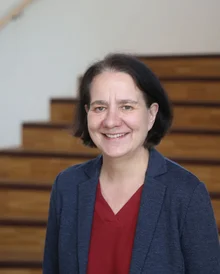
Univ.-Prof. Dr.
Anja Ehrhardt
Chair Holder
Faculty of Health (School of Medicine) | Chair of Virology and Microbiology
Stockumer Str. 10
58453 Witten
Room number: ST-E.031
Research
Through our basic research, we are developing new, virus-based gene therapies and subsequently testing their efficacy in mouse models. Our focus is on modern therapies for the treatment of genetic diseases affecting the muscles, immune cells, the heart and the endothelium, as well as HPV-related cancer and triple-negative breast cancer. In Experimental Virology, we investigate how viruses interact with their hosts in order to derive new therapies from this knowledge. We are conducting particularly intensive research into the measles virus and its vaccine strain, which we are specifically modifying to develop safe and effective cancer immunotherapies. In a dedicated research group, we are also investigating vaccines for the respiratory tract to improve the immune response against adenoviruses.
Current research projects

Publication
All publications from the Chair of Virology and Microbiology at UW/H are gradually being included in the university bibliography.
Teaching
The Institute’s staff teach on the model degree programme in Medicine and the degree programme in Dentistry. They are also involved in the Faculty of Health’s PhD programme in Biomedicine.
Microbiology course content
- Bacteriology: Students are given an overview of the diversity of microorganisms, bacterial evolution and infectiology. Topics such as cell morphology, metabolism, the spread of infection, antibiotics, resistance, as well as hygiene and nosocomial infections are covered in depth.
- Virology: The course defines the concept of a virus, covers the evolution and classification of viruses, and examines specific clinically relevant viruses such as HIV, hepatitis and herpes viruses, as well as infections during pregnancy.
- Mycology: The focus is on fungi as microbial life forms, their significance in food production, the typical clinical presentations of fungal infections, the modes of action of antifungal agents, and the risks posed by mycotoxins.
Dentistry lecture ‘Medical Microbiology’
The dentistry lecture ‘Medical Microbiology’ is held exclusively in the summer semester. It covers the fundamentals of medical microbiology, focusing on the clinically relevant topics within this discipline. The lecture is divided into a bacteriological, a virological and a mycological section.
Block placements
We offer the following block placements:
- Medical Microbiology for medical students (two weeks)
- Medical Microbiology for dental students (one week)
The placements are divided into a theoretical and a practical part. The accompanying seminar covers the theoretical principles underlying the practical sessions. In the practical section, participants learn general laboratory techniques for working with bacteria, fungi and viruses. The aim is to acquire fundamental knowledge and skills in handling microorganisms. A general introduction covers methods of disinfection and sterilisation.
Bacteriology section
The bacteriology section covers fundamental techniques such as microscopy. Students also learn to distinguish between typical representatives of the bacterial flora of the throat, respiratory tract, gastrointestinal tract and urogenital tract. Experiments illustrate bacterial infectiology and the effects of antibiotic drugs.
Mycology section
The mycology section of the practical course introduces typical examples of fungi. It teaches basic mycological techniques for their differentiation and diagnosis.
Virology section
The virology section of the practical course covers the topics of serology and molecular virus diagnostics. For example, the anti-hepatitis B antibody titre is determined following vaccination, and a haemagglutination inhibition test (HIT) is carried out. There are also seminars on hepatitis infections and infections during pregnancy.
The team at the Chair of Virology and Microbiology

Fatima Arakrak
Technical Assistant
Faculty of Health (School of Medicine) | Chair of Virology and Microbiology
Stockumer Str.10
58453 WittenRoom number: ST-E.030
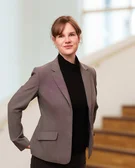
Dr. rer. nat.
Lisa-Marie Dawson
Researcher
Faculty of Health (School of Medicine) | Chair of Virology and Microbiology
Stockumer Straße 10
58453 WittenRoom number: E030
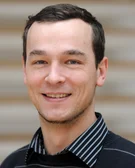
Dr. rer. nat.
Eric Ehrke-Schulz
Researcher
Faculty of Health | Chair of Virology and Microbiology
Stockumer Str.10
58453 WittenRoom number: ST-E.032
Dr. med.
Julius Knierer
Researcher
Faculty of Health (School of Medicine) | Chair of Virology and Microbiology
Stockumer Straße 10
58448 WittenRoom number: E032
Ryan Lampe
Researcher
Faculty of Health (School of Medicine) | Chair of Virology and Microbiology
Stockumer Straße 10
58453 WittenRoom number: E.032
Michael Lechleitner
Technical Assistant
Faculty of Health (School of Medicine) | Chair of Virology and Microbiology
Stockumer Straße 10
58448 WittenRoom number: E 032

PD Dr. rer. nat.
Christian Opländer
Researcher
Chair of Virology and Microbiology
Ostmerheimer Str. 200, Haus 38
51109 Köln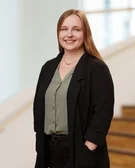
Dr. rer. nat.
Katrin Schröer
Researcher
Faculty of Health (School of Medicine) | Chair of Virology and Microbiology
Alfred-Herrhausen-Straße 50
58448 WittenRoom number: ST-E.030
Angela Ravi Rajan
Technical Assistant
Faculty of Health (School of Medicine) | Chair of Virology and Microbiology
Stockumer Straße 10
58448 WittenRoom number: E 002
Karen Wittmers
Secretariat
Faculty of Health (School of Medicine) | Chair of Virology and Microbiology
Stockumer Str. 10
58453 WittenRoom number: ST-1.038

Dr. rer. nat.
Wenli Zhang
Researcher
Faculty of Health (School of Medicine) | Chair of Virology and Microbiology
Stockumer Str. 10
58453 WittenRoom number: ST-E.030