- University life
- Management, Economics and Society
July 2026
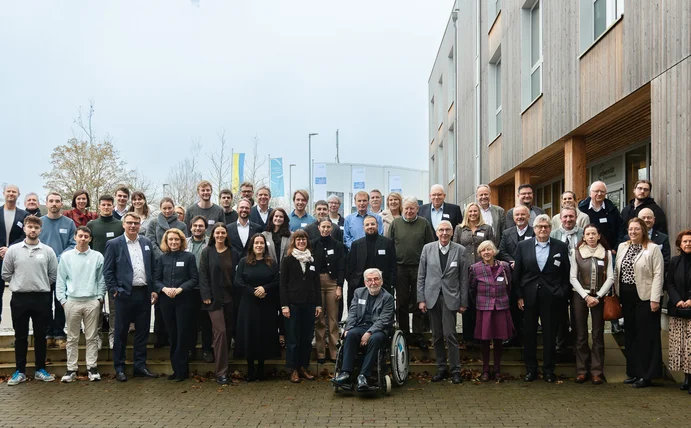
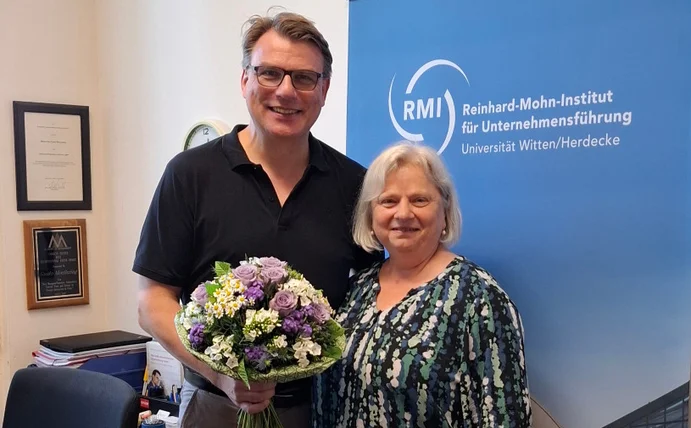
The RMI team congratulates Guido Möllering on his 10th anniversary at the RMI
Professor Guido Möllering has been Director of the Reinhard Mohn Institute for 10 years
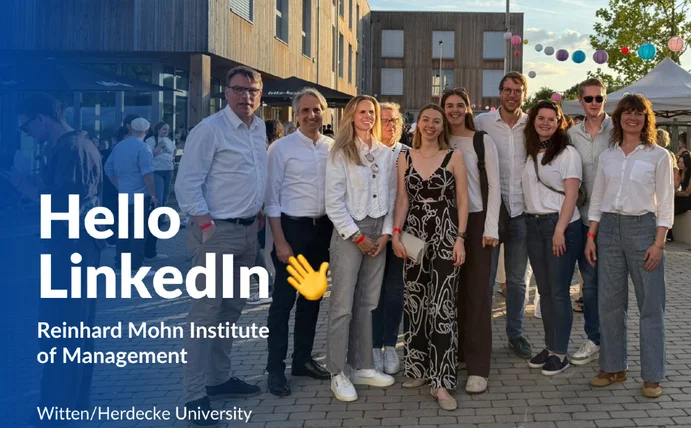
The Reinhard Mohn Institute of Management (RMI) is committed to reforming corporate governance in theory and practice, both nationally and internationally. It follows Reinhard Mohn’s leadership philosophy, which is based on practical experience and a responsible approach to people.
The Institute attaches great importance to practical relevance and dialogue with businesses. It regards strategy, management, organisation and governance as cross-organisational tasks and promotes cooperative corporate governance within networks.
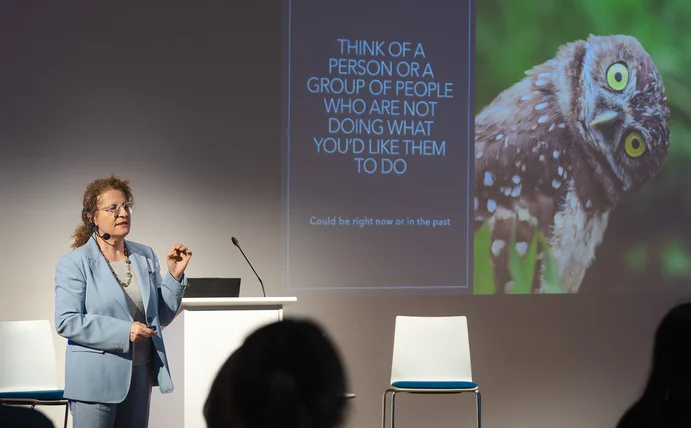
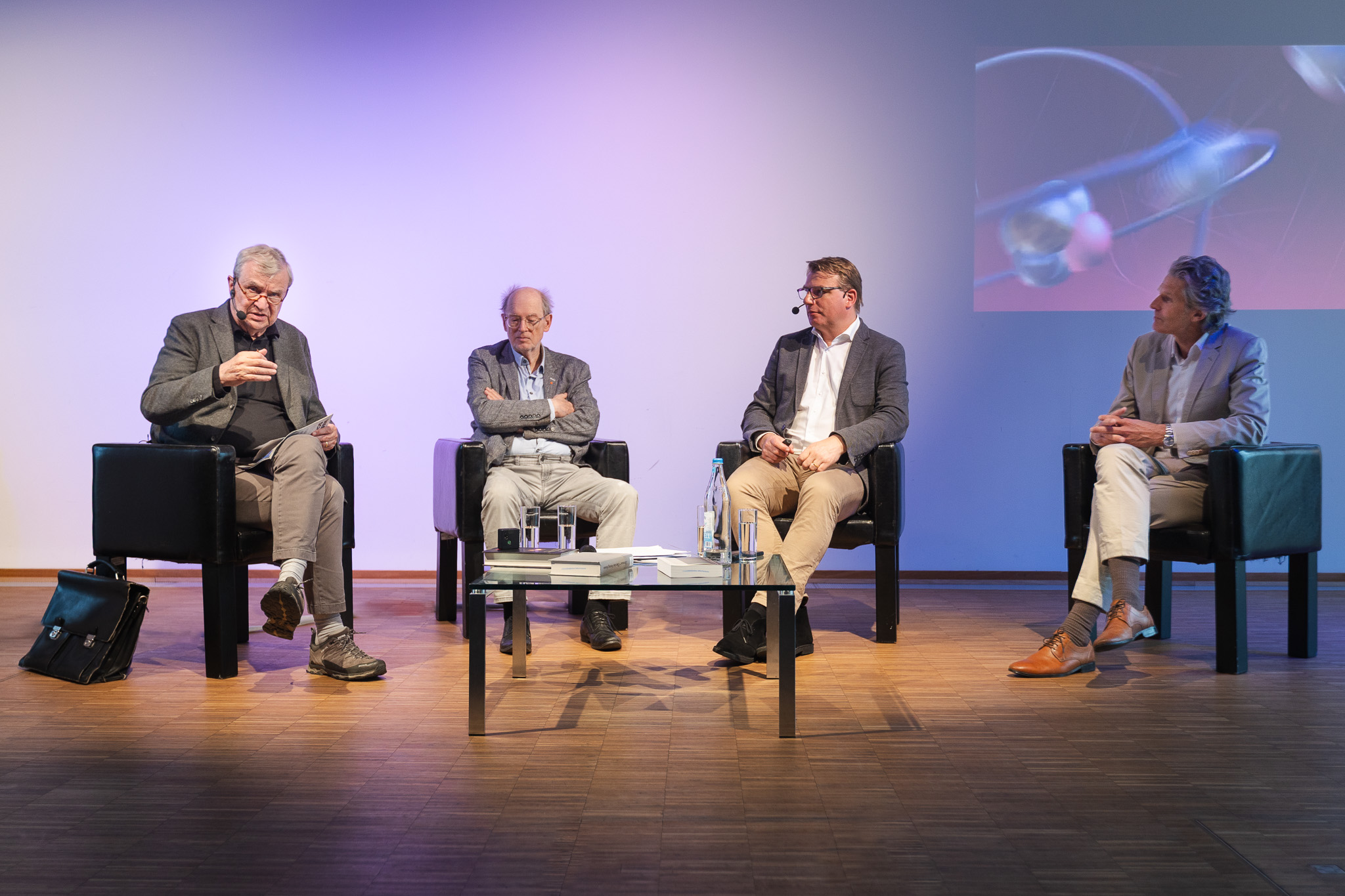
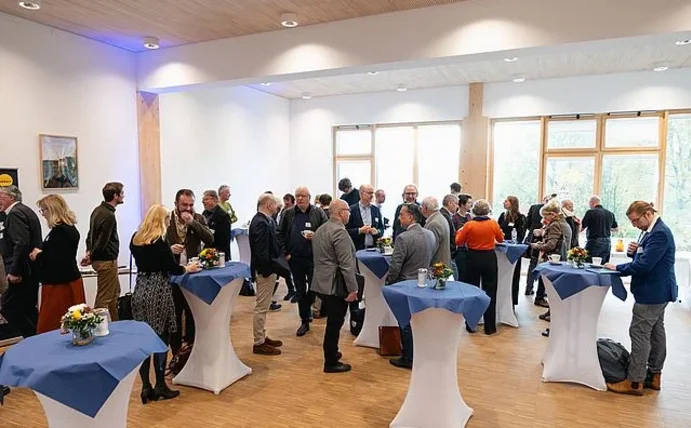
The ‘RMI Corporate Governance Day’ is a renowned annual symposium held on the campus of Witten/Herdecke University, featuring leading speakers.
The Institute has been funded by the Bertelsmann Foundation since its foundation.
The Reinhard Mohn Institute is once again hosting an event on a timely topic featuring high-caliber presentations.
The Institute bases its research on Reinhard Mohn’s philosophy of partnership. ‘Cooperation’ is a central theme in all its projects. For example, the RMI investigates how to manage innovation networks or how collaboration within teams works. Every year, the institute, in collaboration with the Bertelsmann Foundation, collects data on leadership conditions in Germany using the ‘Leadership Radar’.

All publications by the Reinhard Mohn Institute at UW/H are gradually being included in the university bibliography.
The RMI forms part of the teaching programme at the Faculty of Economics and Society. It offers practice-oriented courses and supports several academic departments. Students are able to contribute their own experiences and ideas, as the groups are small and there is close interaction with the lecturers. In practical seminars, students work on real-world business problems and present their solutions to company executives. In addition, experts from well-known companies, start-ups and ‘hidden champions’ regularly give lectures on management challenges and work together with students to develop solutions. The RMI also places great emphasis on the ethical responsibility of managers. In the field of business ethics, students use real-life case studies to learn how to understand ethical issues and develop an appropriate sense of responsibility.
Cultural diversity has become a key asset and challenge for successful value-based management in a globalised world. Concepts of culture have been evolving, and rudimentary forms of cultural sensitivity are no longer sufficient. This is why this module invites students to learn about cutting-edge cross-cultural management ideas and the practical applications of key concepts. Cross-cultural competence involves continuous learning and creative cooperation. (Prior or concurrent enrolment in ‘Organisational Culture and Leadership’ is recommended.)
Lecturers: Prof. Dr Guido Möllering, Johanne Moll von Danwitz
Language: English
Module numbers: BM-WWM-1609; BM-WFW-2209; BW-WFW-2309; BS-WMa-2324; BG-WSG-2333; BY-WMV-2303
This seminar will deepen your understanding of current research in the field of strategic management. Building on my introductory course ‘Strategy’, it explores contemporary strategy research in greater depth. This insight can serve as a crucial foundation for your future studies or work in management practice. In your studies, knowledge of current strategy research and the ability to analyse empirical research can help you choose a thesis topic and give you a significant advantage in more advanced courses. For your future career in management, both the knowledge gained from primary research and the ability to synthesise abstract information can provide a competitive edge for you and your company. Our discussions will highlight the contributions of different authors and perspectives. You will be assigned to one of four key areas: industry, resources, competitive strategies and culture. The course will focus on the current state of theoretical development and empirical research in each of these areas. Please note that the main part of the seminar will take place over two days, so the preparatory reading will be extensive.
Lecturer: Prof. Dr Hendrik Wilhelm
Language: English
Module numbers: BM-WUn-1608; BM-WFW-1601; BM-WUn-2206
Today, companies must hold their own in a competitive environment in which environmental and social sustainability are becoming increasingly important. Managers specialising in sustainability management not only possess excellent business management skills, which enable them to strengthen sustainable practices across their functional areas, but they also have a deep understanding of the social context that sustainable corporate governance requires. In this seminar, you will learn how a partner company tackles this challenge in practice. Once you have developed a conceptual and methodological framework, you will conduct interviews with practitioners from the partner company to document selected value-added processes, develop ways to enhance the sustainability of these processes, and critically assess their feasibility. You will present your findings to decision-makers within the company. As part of your work, you will draw on current research in business and natural sciences to underpin your proposals with evidence and arguments.
Lecturer: Prof. Dr Hendrik Wilhelm
Language of instruction: German
Module codes: BM-WWM-1602; BM-WNW-2201; BS-WMa-2309
Organisation is a key management activity, and organisations are both the context and the object of managerial work. This seminar introduces students to fundamental ideas regarding why organisations exist, how people behave within organisations, how organisations can be strategically designed and changed, and how they evolve within their environments. Moving from the individual level to the societal level as the semester progresses, this seminar also fosters a critical perspective on organising as an ongoing creative, collective and contested practice that entails limitations on managerial control. Through in-class exercises, students explore the practical relevance of abstract concepts from organisational research.
Lecturer: Dr. Carolin Müller
Language: English (primary; German)
Module numbers: BM-PBG-2207; BP-WFW-2207; BS-WMa-2307; BG-WSG-2327; BY-PGM-2307; Part 1 of BM-PMa-1601 and BP-WMa-1601
Building on the ‘Organisation’ module, the aim of this module in the second half of the semester is for students to link their more abstract and theoretical knowledge of managing organisations to the real-life experiences of people who work in organisations. The tool used for this is called an organisational narrative. To ‘narrate’ means to tell a story, in this case about events taking place within an organisation. Students will write stories about a person’s organisational life, as recounted by that person and transcribed by the students, guided by topics from the ‘Organisation’ module taught in the first half of the semester.
Lecturers: Prof. Dr Guido Möllering, Johanne Moll von Danwitz
Language: English (primarily, German)
Module numbers: BM-WFW-2221; BS-WFW-2308; BG-WFW-2307; Part 2 of BM-PMa-1601 and BP-WMa-1601
This module prepares future leaders to manage their organisations’ complex relationships with society responsibly. Drawing on stakeholder theory, students will reflect on the embeddedness of management in relation to, for example, investors, industrial relations, supply chains, consumers, communities and public authorities. They will also examine the cultural and institutional factors that influence the work of managers. They will study exemplary cases of responsible corporate citizenship. In the practical component of this module, students will develop specific initiatives designed to enhance an organisation’s stakeholder strategy and practice in relation to current issues such as sustainability, diversity or digital transformation.
Lecturer: Prof. Dr Guido Möllering
Language: English
Module numbers: BM-WWM-1607; BM-WFW-2211; BP-WFW-1601; BP-WFW-2207; BS-WMa-2326; BG-WSG-2334; BY-WIV-2309
This module provides an initial understanding of the relationship between organisational culture and leadership. After examining the conceptual foundations and definitions, we will distinguish between two different levels of organisational culture: artefacts, espoused beliefs and values, and underlying assumptions. We will discuss how these shape behaviour, perceptions, thoughts and feelings within organisational contexts.
Lecturer: Prof. Dr Guido Möllering
Language: English
Module numbers: BM-WWM-1603; BM-WFW-2210; BP-WFW-1601; BP-WFW-2207; BY-WIV-2308; BS-WMa-2325; BG-WSG-2333
Strategy—the long-term direction of an organisation—is essential to understanding a firm’s performance and survival. Because strategy lies at the heart of management, it is essential for management students to understand how strategies are conceptualised, designed and executed effectively. This seminar will introduce you to strategy using a combination of management concepts, engaging case studies and cutting-edge research. You will learn how to analyse an organisation’s strategic position and how to approach strategic choices. In keeping with the Witten tradition, you will also explore critical perspectives on strategy informed by sociology (e.g., strategy-as-practice). Upon successful completion of this module, you will be able to apply concepts and ideas from strategic management commonly used in organisations, critically discuss traditional heuristics for strategy formulation, and reflect on the practice of strategy formulation itself. This seminar will not only help you prepare for a career in management by introducing you to strategic concepts, but will also hone your skills in working in teams and solving tasks within tight timeframes as you tackle the challenges of your coursework.
Lecturer: Prof. Dr Hendrik Wilhelm
Language: English
Module numbers: BM-PMa-1603; BP-WMa-1603; BM-PBG-2206; BS-WMa-2305; BG-WSG-2325; BY-PGM-2306
Cultural diversity has become a key asset and challenge for successful value-based management in a globalised world. Concepts of culture have been evolving, and rudimentary forms of cultural sensitivity are no longer sufficient. This is why this module invites students to learn about cutting-edge cross-cultural management ideas and the practical applications of key concepts. Cross-cultural competence involves continuous learning and creative cooperation. (Prior or concurrent enrolment in ‘Organisational Culture and Leadership’ is recommended.)
Lecturers: Prof. Dr Guido Möllering, Johanne Moll von Danwitz
Language: English
Module numbers: BM-WWM-1609; BM-WFW-2209; BW-WFW-2309; BS-WMa-2324; BG-WSG-2333; BY-WMV-2303
This seminar will deepen your understanding of current research in the field of strategic management. Building on my introductory course ‘Strategy’, it explores contemporary strategy research in greater depth. This insight can serve as a crucial foundation for your future studies or work in management practice. In your studies, knowledge of current strategy research and the ability to analyse empirical research can help you choose a thesis topic and give you a significant advantage in more advanced courses. For your future career in management, both the knowledge gained from primary research and the ability to synthesise abstract information can provide a competitive edge for you and your company. Our discussions will highlight the contributions of different authors and perspectives. You will be assigned to one of four key areas: industry, resources, competitive strategies and culture. The course will focus on the current state of theoretical development and empirical research in each of these areas. Please note that the main part of the seminar will take place over two days, so the preparatory reading will be extensive.
Lecturer: Prof. Dr Hendrik Wilhelm
Language: English
Module numbers: BM-WUn-1608; BM-WFW-1601; BM-WUn-2206
Today, companies must hold their own in a competitive environment in which environmental and social sustainability are becoming increasingly important. Managers specialising in sustainability management not only possess excellent business management skills, which enable them to strengthen sustainable practices across their functional areas, but they also have a deep understanding of the social context that sustainable corporate governance requires. In this seminar, you will learn how a partner company tackles this challenge in practice. Once you have developed a conceptual and methodological framework, you will conduct interviews with practitioners from the partner company to document selected value-added processes, develop ways to enhance the sustainability of these processes, and critically assess their feasibility. You will present your findings to decision-makers within the company. As part of your work, you will draw on current research in business and natural sciences to underpin your proposals with evidence and arguments.
Lecturer: Prof. Dr Hendrik Wilhelm
Language of instruction: German
Module codes: BM-WWM-1602; BM-WNW-2201; BS-WMa-2309
Organisation is a key management activity, and organisations are both the context and the object of managerial work. This seminar introduces students to fundamental ideas regarding why organisations exist, how people behave within organisations, how organisations can be strategically designed and changed, and how they evolve within their environments. Moving from the individual level to the societal level as the semester progresses, this seminar also fosters a critical perspective on organising as an ongoing creative, collective and contested practice that entails limitations on managerial control. Through in-class exercises, students explore the practical relevance of abstract concepts from organisational research.
Lecturer: Dr. Carolin Müller
Language: English (primary; German)
Module numbers: BM-PBG-2207; BP-WFW-2207; BS-WMa-2307; BG-WSG-2327; BY-PGM-2307; Part 1 of BM-PMa-1601 and BP-WMa-1601
Building on the ‘Organisation’ module, the aim of this module in the second half of the semester is for students to link their more abstract and theoretical knowledge of managing organisations to the real-life experiences of people who work in organisations. The tool used for this is called an organisational narrative. To ‘narrate’ means to tell a story, in this case about events taking place within an organisation. Students will write stories about a person’s organisational life, as recounted by that person and transcribed by the students, guided by topics from the ‘Organisation’ module taught in the first half of the semester.
Lecturers: Prof. Dr Guido Möllering, Johanne Moll von Danwitz
Language: English (primarily, German)
Module numbers: BM-WFW-2221; BS-WFW-2308; BG-WFW-2307; Part 2 of BM-PMa-1601 and BP-WMa-1601
This module prepares future leaders to manage their organisations’ complex relationships with society responsibly. Drawing on stakeholder theory, students will reflect on the embeddedness of management in relation to, for example, investors, industrial relations, supply chains, consumers, communities and public authorities. They will also examine the cultural and institutional factors that influence the work of managers. They will study exemplary cases of responsible corporate citizenship. In the practical component of this module, students will develop specific initiatives designed to enhance an organisation’s stakeholder strategy and practice in relation to current issues such as sustainability, diversity or digital transformation.
Lecturer: Prof. Dr Guido Möllering
Language: English
Module numbers: BM-WWM-1607; BM-WFW-2211; BP-WFW-1601; BP-WFW-2207; BS-WMa-2326; BG-WSG-2334; BY-WIV-2309
This module provides an initial understanding of the relationship between organisational culture and leadership. After examining the conceptual foundations and definitions, we will distinguish between two different levels of organisational culture: artefacts, espoused beliefs and values, and underlying assumptions. We will discuss how these shape behaviour, perceptions, thoughts and feelings within organisational contexts.
Lecturer: Prof. Dr Guido Möllering
Language: English
Module numbers: BM-WWM-1603; BM-WFW-2210; BP-WFW-1601; BP-WFW-2207; BY-WIV-2308; BS-WMa-2325; BG-WSG-2333
Strategy—the long-term direction of an organisation—is essential to understanding a firm’s performance and survival. Because strategy lies at the heart of management, it is essential for management students to understand how strategies are conceptualised, designed and executed effectively. This seminar will introduce you to strategy using a combination of management concepts, engaging case studies and cutting-edge research. You will learn how to analyse an organisation’s strategic position and how to approach strategic choices. In keeping with the Witten tradition, you will also explore critical perspectives on strategy informed by sociology (e.g., strategy-as-practice). Upon successful completion of this module, you will be able to apply concepts and ideas from strategic management commonly used in organisations, critically discuss traditional heuristics for strategy formulation, and reflect on the practice of strategy formulation itself. This seminar will not only help you prepare for a career in management by introducing you to strategic concepts, but will also hone your skills in working in teams and solving tasks within tight timeframes as you tackle the challenges of your coursework.
Lecturer: Prof. Dr Hendrik Wilhelm
Language: English
Module numbers: BM-PMa-1603; BP-WMa-1603; BM-PBG-2206; BS-WMa-2305; BG-WSG-2325; BY-PGM-2306
Managers rely on implicit theories to guide their day-to-day decision-making, for example, on how to implement a sustainability programme. Because these theories often stem from personal experiences, they are based on limited and biased data. To provide you with a systematic foundation for tackling management problems, this seminar introduces you to major classical and contemporary management theories covering a broad spectrum of organisational phenomena. To achieve this aim, the seminar combines conceptual input, student presentations on case studies illustrating the application of each theory, and cutting-edge research advancing management theories.
Lecturer: Prof. Dr Hendrik Wilhelm
Language: English
Module numbers: MS-PSO-1803; MM-PTM-2501
This seminar offers a hands-on learning experience in strategy formulation and execution. In a multi-round web-based simulation, you and your team members will lead a fictional company in the electronic sensors industry. As senior decision-makers, your task is to ensure that your company survives and thrives in a dynamic, competitive environment. To achieve this, you will analyse your firm and the competitive environment, and then formulate, implement, monitor and adjust your strategy. Your decisions will cover key business functions, such as R&D, procurement, production, marketing and finance. As socially responsible managers, you will also take into account the community in which your company operates. Apply the strategic knowledge, teamwork skills and business insights you have gained from previous Strategy & Organisation seminars, and demonstrate your ability to outperform other companies. Accompanying seminar sessions serve as a recap of strategic management concepts and as a forum for reviewing and analysing your firms’ performance.
Lecturer: Prof. Dr Hendrik Wilhelm
Language: English
Module numbers: MS-WSt-1806; MS-WOr-1806; MS-WFW-1808; MM-WF-2502; MG-WFW-1805
This module complements the study of business ethics and corporate responsibility more broadly, focusing on ethical issues that arise within organisations. It emphasises students’ own ethical awareness and personal development. We cover ethical foundations in philosophy, ethical decision-making, communication, leadership, diversity and organisational implications. Students learn how to identify and deal with the many ethical dilemmas that arise in organisations in practice. They work on a project exploring real-life ethical issues and develop their moral standpoint as well as their ethical management skills.
Lecturer: Prof. Dr Guido Möllering
Language: English
Module numbers: MS-WOr-1802; MG-WFW-1804; MP-EFE-1805; EO-C3
International Strategy examines the opportunities and challenges arising from doing business across borders and within a globalised economy. This seminar provides an introduction to the theories and concepts of international management—such as approaches to organising and managing international operations—with a focus on real-world examples and case studies. In doing so, it raises awareness of the diversity that characterises an international competitive environment. It also develops an understanding of the nature of existing and emerging threats and opportunities that define business success, and how to compete effectively in international markets.
Lecturer: Prof. Dr Hendrik Wilhelm
Language: English
Module numbers: MS-WSt-1802; MP-EFE-1803; MG-WFW-1802
This module examines cutting-edge leadership concepts and issues in organisational contexts. Whilst classic approaches to leadership are briefly revisited (e.g. trait, behavioural, situational), the emphasis is on more recent developments and current debates in this field (e.g. authentic, transformational, servant, shared, virtual). From a research perspective, various theories and concepts of leadership help to understand how leadership emerges, the role played by followers, and the individual and social factors that influence leadership. From a practical perspective, the latest insights from leadership research will be applied to relevant topics such as creativity, change, conflict, crisis, culture, ethics, emotions and work-life balance.
Lecturers: Prof. Dr Guido Möllering, Johanne Moll von Danwitz
Language: English
Module numbers: MS-WOr-1803; MM-WLT-2503; MP-ELT-2503
Organisation is a key management activity, and organisations are both the context and the object of managerial work. This seminar introduces students to fundamental ideas regarding why organisations exist, how people behave within organisations, how organisations can be strategically designed and changed, and how they evolve within their environments. Moving from the individual level to the societal level as the semester progresses, this seminar also fosters a critical perspective on organising as an ongoing creative, collective and contested practice that entails limitations on managerial control. Through in-class exercises, students explore the practical relevance of abstract concepts from organisational research.
Lecturers: Prof. Dr Guido Möllering, Johanne Moll von Danwitz
Language: English (primary; German)
Module numbers: BM-PBG-2208; BP-WFW-2207; BS-WMa-2307; BG-WSG-2327; Part 1 of BM-PMa-1601 and BP-WMa-1601
Managers often highlight two issues when speaking candidly about their organisations: problems relating to their organisation’s culture and failed organisational change. In this seminar, we will explore what makes these two phenomena so important and problematic for managers. We will critically evaluate the concept of organisational culture and its implications for management. To do so, we will examine the mechanisms through which culture emerges and is transmitted, and explore how researchers measure organisational culture. Building on these insights, we will link culture to organisational change. We will discuss different approaches to change management and critically examine managers’ efforts to drive cultural change.
Lecturer: Prof. Dr Hendrik Wilhelm
Language: English
Module number: MS-WOr-1801
Lecturers: Prof. Dr Guido Möllering, Prof. Dr Joachim Zweynert
Language: English
Module numbers: MS-PSO-1801; MM-PLT-2501; MG-PGM-1801; MP-CLT-2501
Corporate Social Responsibility (CSR) has become a broad subject encompassing a range of topics, from ownership, profit, stakeholder relationships and accountability, to sustainability and the general role of business in society. The seminar examines the origins of the CSR debate, its theoretical foundations, driving forces, underlying tensions, various practical manifestations and, in particular, its strategic implications. Special attention is given to the question of how CSR becomes ‘strategic’ in the first place and how businesses collaborate with stakeholders through various forms of partnerships and initiatives. Students work on case studies that illustrate and deepen their understanding of CSR-driven strategies as a means of sustainable value creation within organisations, organisational networks and sectors.
Lecturer: Prof. Dr Guido Möllering
Language: English
Module numbers: MS-WSt-1805; MM-WSM-2503; MP-EFE-1804; MP-EI-2504
This seminar provides an overview of the key concepts and applications of strategic management, with a particular focus on international management strategies. It examines general issues relating to strategic analysis, design and implementation. Building on this, the focus shifts to the opportunities, forms and challenges of corporate internationalisation. Strategic and international management are also examined as areas of responsibility that link the organisation to its diverse environment.
Lecturer: Prof. Dr Hendrik Wilhelm
Language of instruction: German
Module code(s): MG-PGM-1808
The megatrends of demographics and digitalisation are having a massive impact on human resources management (HR management) in many companies. On top of this, the pandemic is creating massive challenges in terms of people management. Strategic HR management is becoming a key factor. The seminar will focus in particular on the following aspects: Basic Elements of a Human Resources Strategy, Demographic Risk Management, Strategic Workforce Planning, Performance Management, Incentive Programmes, Recruitment and Employer Branding, Talent Management, Leadership, Retention Management, Managing Human Capital, HR Analytics, Diversity, Digital HR, Digital Talent Management, the Future of Work and New Ways of Working.
Lecturer: Hon.-Prof. Dr Rainer Strack
Language: English
Module numbers: MS-WOr-1806; BM-WWM-1607; BM-WFW-1601; BM-WFW-2208; BS-WMa-2323; BY-WIV-2311
This module explores the theoretical foundations of strategy (such as competitive forces, resources and capabilities) and key strategic issues within organisations (such as innovation, collaboration, internationalisation, governance and change). We will also examine the latest developments in strategic management theory concerning strategy as a process and a practice. Throughout the course, theoretical concepts will be explored in terms of their practical and organisational implications, drawing on numerous real-life cases discussed in class.
Lecturer: Prof. Dr Guido Möllering
Language: English
Module number: MS-PSO-1802
Managers rely on implicit theories to guide their day-to-day decision-making, for example, on how to implement a sustainability programme. Because these theories often stem from personal experiences, they are based on limited and biased data. To provide you with a systematic foundation for tackling management problems, this seminar introduces you to major classical and contemporary management theories covering a broad spectrum of organisational phenomena. To achieve this aim, the seminar combines conceptual input, student presentations on case studies illustrating the application of each theory, and cutting-edge research advancing management theories.
Lecturer: Prof. Dr Hendrik Wilhelm
Language: English
Module numbers: MS-PSO-1803; MM-PTM-2501
This seminar offers a hands-on learning experience in strategy formulation and execution. In a multi-round web-based simulation, you and your team members will lead a fictional company in the electronic sensors industry. As senior decision-makers, your task is to ensure that your company survives and thrives in a dynamic, competitive environment. To achieve this, you will analyse your firm and the competitive environment, and then formulate, implement, monitor and adjust your strategy. Your decisions will cover key business functions, such as R&D, procurement, production, marketing and finance. As socially responsible managers, you will also take into account the community in which your company operates. Apply the strategic knowledge, teamwork skills and business insights you have gained from previous Strategy & Organisation seminars, and demonstrate your ability to outperform other companies. Accompanying seminar sessions serve as a recap of strategic management concepts and as a forum for reviewing and analysing your firms’ performance.
Lecturer: Prof. Dr Hendrik Wilhelm
Language: English
Module numbers: MS-WSt-1806; MS-WOr-1806; MS-WFW-1808; MM-WF-2502; MG-WFW-1805
This module complements the study of business ethics and corporate responsibility more broadly, focusing on ethical issues that arise within organisations. It emphasises students’ own ethical awareness and personal development. We cover ethical foundations in philosophy, ethical decision-making, communication, leadership, diversity and organisational implications. Students learn how to identify and deal with the many ethical dilemmas that arise in organisations in practice. They work on a project exploring real-life ethical issues and develop their moral standpoint as well as their ethical management skills.
Lecturer: Prof. Dr Guido Möllering
Language: English
Module numbers: MS-WOr-1802; MG-WFW-1804; MP-EFE-1805; EO-C3
International Strategy examines the opportunities and challenges arising from doing business across borders and within a globalised economy. This seminar provides an introduction to the theories and concepts of international management—such as approaches to organising and managing international operations—with a focus on real-world examples and case studies. In doing so, it raises awareness of the diversity that characterises an international competitive environment. It also develops an understanding of the nature of existing and emerging threats and opportunities that define business success, and how to compete effectively in international markets.
Lecturer: Prof. Dr Hendrik Wilhelm
Language: English
Module numbers: MS-WSt-1802; MP-EFE-1803; MG-WFW-1802
This module examines cutting-edge leadership concepts and issues in organisational contexts. Whilst classic approaches to leadership are briefly revisited (e.g. trait, behavioural, situational), the emphasis is on more recent developments and current debates in this field (e.g. authentic, transformational, servant, shared, virtual). From a research perspective, various theories and concepts of leadership help to understand how leadership emerges, the role played by followers, and the individual and social factors that influence leadership. From a practical perspective, the latest insights from leadership research will be applied to relevant topics such as creativity, change, conflict, crisis, culture, ethics, emotions and work-life balance.
Lecturers: Prof. Dr Guido Möllering, Johanne Moll von Danwitz
Language: English
Module numbers: MS-WOr-1803; MM-WLT-2503; MP-ELT-2503
Organisation is a key management activity, and organisations are both the context and the object of managerial work. This seminar introduces students to fundamental ideas regarding why organisations exist, how people behave within organisations, how organisations can be strategically designed and changed, and how they evolve within their environments. Moving from the individual level to the societal level as the semester progresses, this seminar also fosters a critical perspective on organising as an ongoing creative, collective and contested practice that entails limitations on managerial control. Through in-class exercises, students explore the practical relevance of abstract concepts from organisational research.
Lecturers: Prof. Dr Guido Möllering, Johanne Moll von Danwitz
Language: English (primary; German)
Module numbers: BM-PBG-2208; BP-WFW-2207; BS-WMa-2307; BG-WSG-2327; Part 1 of BM-PMa-1601 and BP-WMa-1601
Managers often highlight two issues when speaking candidly about their organisations: problems relating to their organisation’s culture and failed organisational change. In this seminar, we will explore what makes these two phenomena so important and problematic for managers. We will critically evaluate the concept of organisational culture and its implications for management. To do so, we will examine the mechanisms through which culture emerges and is transmitted, and explore how researchers measure organisational culture. Building on these insights, we will link culture to organisational change. We will discuss different approaches to change management and critically examine managers’ efforts to drive cultural change.
Lecturer: Prof. Dr Hendrik Wilhelm
Language: English
Module number: MS-WOr-1801
Lecturers: Prof. Dr Guido Möllering, Prof. Dr Joachim Zweynert
Language: English
Module numbers: MS-PSO-1801; MM-PLT-2501; MG-PGM-1801; MP-CLT-2501
Corporate Social Responsibility (CSR) has become a broad subject encompassing a range of topics, from ownership, profit, stakeholder relationships and accountability, to sustainability and the general role of business in society. The seminar examines the origins of the CSR debate, its theoretical foundations, driving forces, underlying tensions, various practical manifestations and, in particular, its strategic implications. Special attention is given to the question of how CSR becomes ‘strategic’ in the first place and how businesses collaborate with stakeholders through various forms of partnerships and initiatives. Students work on case studies that illustrate and deepen their understanding of CSR-driven strategies as a means of sustainable value creation within organisations, organisational networks and sectors.
Lecturer: Prof. Dr Guido Möllering
Language: English
Module numbers: MS-WSt-1805; MM-WSM-2503; MP-EFE-1804; MP-EI-2504
This seminar provides an overview of the key concepts and applications of strategic management, with a particular focus on international management strategies. It examines general issues relating to strategic analysis, design and implementation. Building on this, the focus shifts to the opportunities, forms and challenges of corporate internationalisation. Strategic and international management are also examined as areas of responsibility that link the organisation to its diverse environment.
Lecturer: Prof. Dr Hendrik Wilhelm
Language of instruction: German
Module code(s): MG-PGM-1808
The megatrends of demographics and digitalisation are having a massive impact on human resources management (HR management) in many companies. On top of this, the pandemic is creating massive challenges in terms of people management. Strategic HR management is becoming a key factor. The seminar will focus in particular on the following aspects: Basic Elements of a Human Resources Strategy, Demographic Risk Management, Strategic Workforce Planning, Performance Management, Incentive Programmes, Recruitment and Employer Branding, Talent Management, Leadership, Retention Management, Managing Human Capital, HR Analytics, Diversity, Digital HR, Digital Talent Management, the Future of Work and New Ways of Working.
Lecturer: Hon.-Prof. Dr Rainer Strack
Language: English
Module numbers: MS-WOr-1806; BM-WWM-1607; BM-WFW-1601; BM-WFW-2208; BS-WMa-2323; BY-WIV-2311
This module explores the theoretical foundations of strategy (such as competitive forces, resources and capabilities) and key strategic issues within organisations (such as innovation, collaboration, internationalisation, governance and change). We will also examine the latest developments in strategic management theory concerning strategy as a process and a practice. Throughout the course, theoretical concepts will be explored in terms of their practical and organisational implications, drawing on numerous real-life cases discussed in class.
Lecturer: Prof. Dr Guido Möllering
Language: English
Module number: MS-PSO-1802
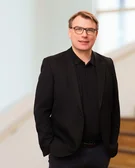
Univ.-Prof. Dr.
Director
Faculty of Management, Economics and Society (Department of Management and Entrepreneurship) | Reinhard Mohn Institute of Management (RMI)
Orcid ID: 0000-0003-1157-7289
Alfred-Herrhausen-Straße 50
58455 Witten
Room number: E.095
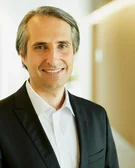
Univ.-Prof. Dr.
Deputy Director
Faculty of Management, Economics and Society (Department of Management and Entrepreneurship) | Reinhard Mohn Institute of Management (RMI)
Alfred-Herrhausen-Straße 50
58455 Witten
Room number: E.096


Dr.
Research Project Associate
Faculty of Management, Economics and Society (Department of Management and Entrepreneurship) | Reinhard Mohn Institute of Management (RMI)
Alfred-Herrhausen-Straße 50
58448 Witten
Room number: 1.193
Dr. phil.
Research Project Associate
Faculty of Management, Economics and Society (Department of Management and Entrepreneurship) | Reinhard Mohn Institute of Management (RMI)
Alfred-Herrhausen-Straße 50
58455 Witten
Room number: E.100

Research Associate
Reinhard Mohn Institute of Management (RMI)
Alfred-Herrhausen-Straße 50
58448 Witten
Room number: C-E.098
Assistant
Faculty of Management, Economics and Society (Department of Management and Entrepreneurship) | Reinhard Mohn Institute of Management (RMI)
Alfred-Herrhausen-Straße 50
58455 Witten
Room number: E.094

Research Associate
Faculty of Management, Economics and Society (Department of Management and Entrepreneurship) | Reinhard Mohn Institute of Management (RMI)
Alfred-Herrhausen-Straße 50
58455 Witten
Room number: E.097

Dr.
Research Associate
Faculty of Management, Economics and Society (Department of Management and Entrepreneurship) | Reinhard Mohn Institute of Management (RMI)
Alfred-Herrhausen-Straße 50
58448 Witten
Room number: E.093

Dr.
Research Project Associate
Faculty of Management, Economics and Society (Department of Management and Entrepreneurship) | Reinhard Mohn Institute of Management (RMI)
Alfred-Herrhausen-Straße 50
58455 Witten
Room number: E.093

Dr.
Research Associate
Faculty of Management, Economics and Society (Department of Management and Entrepreneurship) | Reinhard Mohn Institute of Management (RMI)
Alfred-Herrhausen-Straße 50
58455 Witten
Room number: E.097
Hon.-Prof. Dr.
Honorary Professor
Reinhard Mohn Institute of Management (RMI)
Alfred-Herrhausen-Straße 50
58455 Witten

Dr.-Ing. Hon.-Prof.
Honorary Professor
Reinhard Mohn Institute of Management (RMI)
Alfred-Herrhausen-Straße 50
58455 Witten

Research Associate
Faculty of Management, Economics and Society (Department of Management and Entrepreneurship) | Reinhard Mohn Institute of Management (RMI)
Alfred-Herrhausen-Straße 50
58455 Witten
Room number: C-E.098

Assistant
Faculty of Management, Economics and Society (Department of Management and Entrepreneurship) | Reinhard Mohn Institute of Management (RMI)
Alfred-Herrhausen-Straße 50
58455
Room number: E.094
The Reinhard Mohn Institute has a Board of Trustees with advisory, consultative and supervisory functions. It comprises the following members:
Dr Brigitte Mohn (Chair), Chair of the Executive Board of the Bertelsmann Foundation
Prof. Dr med. Martin Butzlaff (Deputy Chair), President of Witten/Herdecke University
Dr Immanuel Hermreck, Chief Human Resources Officerat Bertelsmann SE & Co. KGaA
Liz Mohn, Honorary Member of the Board of Trustees of the Bertelsmann Foundation
Dr Monika Olivo, Head of Administrationat the Faculty of Management, Economics and Society, Witten/Herdecke University
Professor Dirk Sauerland, Dean of the Faculty of Management, Economics and Society, Witten/Herdecke University
Wilhelm-Friedrich Uhr, Member of the Executive Boardof the Bertelsmann Foundation
Katharina Weghmann, Memberof the Supervisory Board of UW/H