Transformation Literacy: Why we need to cultivate the social soil
A conversation with Katrin Käufer about "Theory U", ethical banking and the question of how we remain capable of acting in times of disruption.
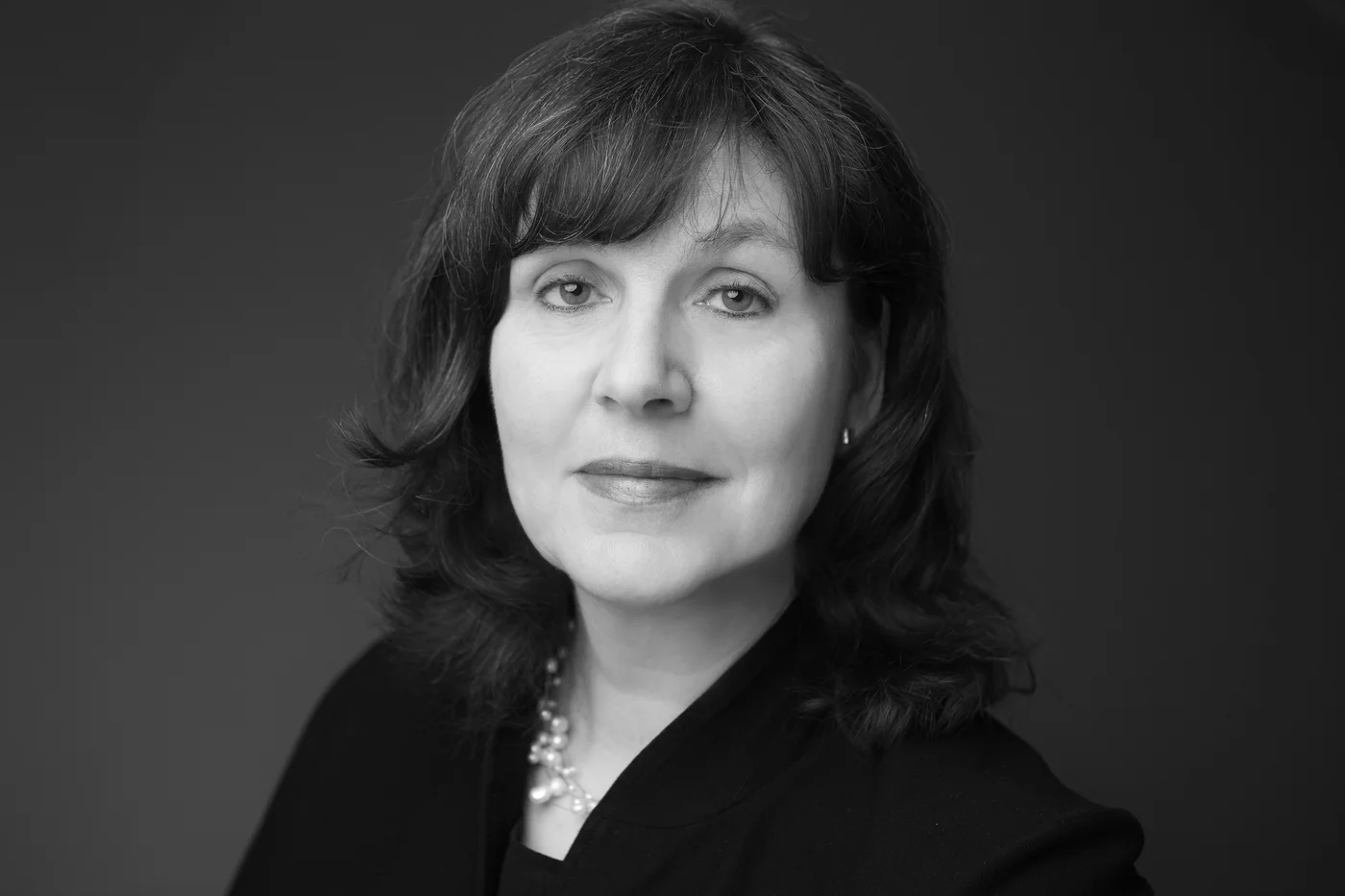
Dr Katrin Käufer is co-founder of the Presencing Institute at MIT and a member of the Supervisory Board of Witten/Herdecke University. Her current book "Just Money: Mission-Driven Banking in Transition" examines how the financial system can be used as a force for positive social change.
Professional Campus: Dear Katrin, you have a long history with the University of Witten/Herdecke (UW/H). Today you are a researcher at MIT in Boston and co-founder of the Presencing Institute. What influence did your alma mater have on your career?
Katrin Käufer: For me, Witten/Herdecke was "life changing". I came there to study economics after completing a banking apprenticeship. I still remember exactly how my thinking really woke up. In the first two semesters, this joy of thinking triggered a real feeling of happiness - the power of reflection could be physically experienced.
A second formative factor was the invitation to take action. Through the mentoring companies and the invitation to initiate our own projects, we learnt: If you have an idea, then realise it - with everything that goes with it. This combination of deep thinking and entrepreneurial initiative has defined my CV. Today, I am on the UW/H Supervisory Board because I feel I want to give something back to this institution.
Professional Campus: Can you recall a particular experience from your student days - was there something of an "aha" moment?
Katrin Käufer: A key experience in Witten laid the foundation for my later work. In a seminar by Johan Galtung - the pioneer of "structural violence" - we went on an excursion to East Berlin shortly before the fall of the Wall. In a church basement, Galtung made a bet in front of the opposition movement that the Wall would fall before the end of the year. We thought that was impossible - everyone bet against it.
When the Wall actually fell shortly afterwards, it was a huge wake-up call. I asked myself: how could he see what we were all overlooking? This experience opened up the central question of my life: how do you learn in moments of disruption, when the experiences of the past are no longer enough to understand the present?
Professional Campus: Together with Otto Scharmer, you founded the Presencing Institute at MIT and, among other things, published the book "Presencing. Seven Practices for the Transformation of the Self, Companies and Society", which was recently published in German. What does it actually mean to lead "from the future"?
Katrin Käufer: "Leading from the future" does not mean scenario planning for the next ten years. It is the question: What do I feel and see now? How do I interpret what is happening right now? It's about developing a new form of awareness in moments when past experiences are no longer helpful. We call this "presencing" - a neologism made up of presence and sensing. It is about finding your own role in a changing whole: What is my role in bringing the future into the world?
We collectively experience how the future happens to us instead of shaping it. Theory U is a way back to the ability to act.
Professional Campus: We often talk about a "polycrisis" these days. Many people feel powerless in the face of climate change and social division. How does "Theory U" help to combat this collective depression?
Katrin Käufer: That is precisely the key point. The lack of capacity to act is often more shocking than the crisis itself. Theory U offers methods to get to this point of "agency" - the moment when one's own will and intention become tangible again. We need to radically change our understanding of learning. In a world of artificial intelligence, the pure input-output model ("teaching for testing") has become irrelevant. Transformation literacy - the ability to shape change processes - is now a key interdisciplinary qualification, regardless of whether you are studying medicine, philosophy or business
Professional Campus: In your latest publication, you recur to the image of agriculture to explain profound social processes. What does soil quality have to do with leadership?
Katrin Käufer: Everything that grows visibly is a function of something invisible: the quality of the soil. In social contexts - whether family, university or company - the "social field" is the soil. The invisible level is the quality of our relationships and our attention.
We are currently seeing this in the USA: if the business model of social media is based on hate and polarisation, the social ground will be destroyed. A democracy can then no longer function because the minimum level of trust is missing. Transformation literacy basically means "social ground maintenance". We need to improve the quality of our interactions so that we can recognise what is emerging and implement it together.
Professional Campus: One focus of your work is the financial sector. Your book "Just Money" deals with ethical banking. How can a system that is so heavily dominated by profit maximisation be reformed from within?
Katrin Käufer: I used to believe that all you had to do was point out the structural problems and then everyone would come to the same realisation. Today I realise that it's all about intentionality. I work with banks around the world, such as BRAC Bank in Bangladesh. They have developed an AI-driven product that creates credit scores for people who can neither read nor write. It's a profitable product that transforms lives.
Why isn't a mainstream bank doing this? Because the idea that impact focus and profitability go together is not, or rarely, in their mental models. You can destroy the best value-oriented bank if the inner attitude of the management is not right - and you can turn conventional banks around if the intentionality changes.
Professional Campus: Even with the best intentions, an organisation quickly reaches its own limits when it comes to structural reforms or legislation - at a certain point, political action is required...
Katrin Käufer: Obama once said after his term in office, "Politicians don't lead, they follow." That's a remarkable statement from the once most powerful man in the world. It shows us that we massively underestimate the role of civil society.
Universities like Witten/Herdecke can offer spaces in which shared visions of the future can be developed. We need a democratisation of methods. That is why we at the Presencing Institute make our methods freely available to everyone as "Creative Commons". Over 300,000 people have already used our online-offline courses and are using these tools to tackle the specific challenges they face. Social change does not happen by staring at top management, but through local initiatives that practically test new ways of working together.