The University of Witten/Herdecke achieves its emissions reduction target and offsets remaining emissions
By reducing emissions and offsetting residual emissions on its main campus under Scopes 1 and 2, UW/H has reached an important milestone in its sustainability strategy and is taking responsibility for future generations.
Note: This press release has been updated.
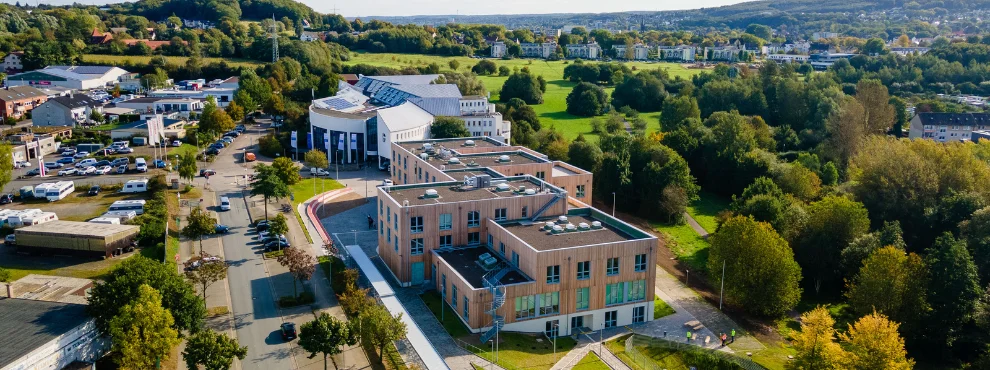
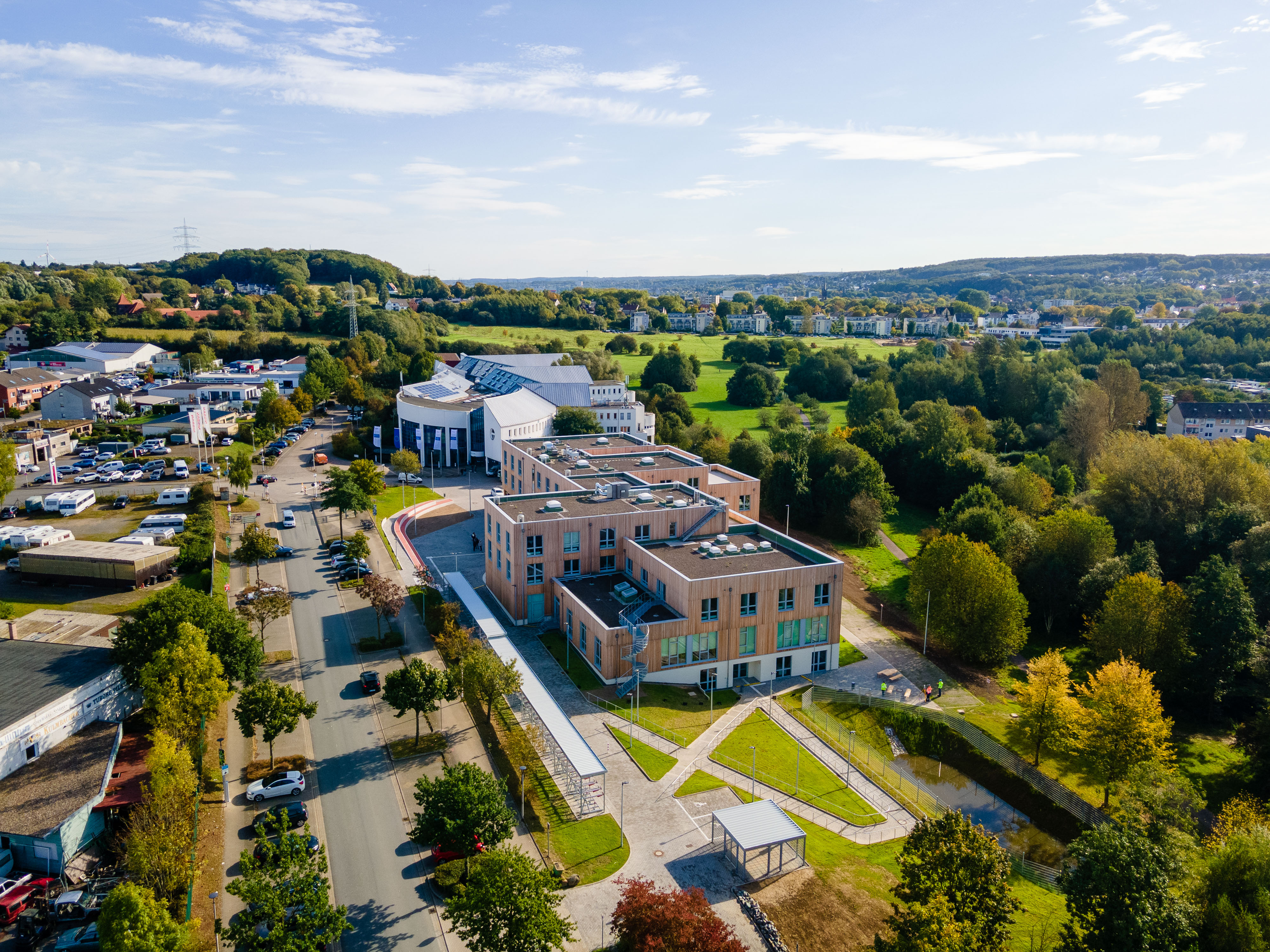
The universities in North Rhine-Westphalia are to be climate-neutral by 2035 - as stated in the state government's coalition agreement. Witten/Herdecke University (UW/H) is also facing up to this responsibility and, after five years of intensive work, has reached an important milestone: As of the end of 2025, the main campus (Alfred-Herrhausen-Straße 48, 50 and 50a) has been made carbon-neutral on a balance-sheet basis for the first time. This means that UW/H has reduced its direct emissions (gases and fuels) and its indirect emissions through the consumption of electricity here as much as possible. The remaining, unavoidable emissions are offset by a contribution to a climate protection project in Brazil. The main campus is therefore not emission-free, but its carbon footprint is, on paper, balanced. This target does not take into account upstream and downstream emissions caused by mobility, procurement or waste, for example (Scope 3).
Combination of different measures shows success
In order to reduce its emissions on the main campus, the university has implemented numerous measures in recent years. For example, the climate targets were taken into account when designing and planning the timber hybrid building, which opened in 2021; this planning is already paying off. The building binds around 1,200 tonnes of CO2 in wood in the long term. In addition, the energy consumption is significantly lower than in other buildings thanks to intelligent architecture in conjunction with a combined heat and power plant and energy generation from renewable sources, e.g. a photovoltaic system on the roof.
Further steps were and are, among others
- Switching to green electricity and green gas
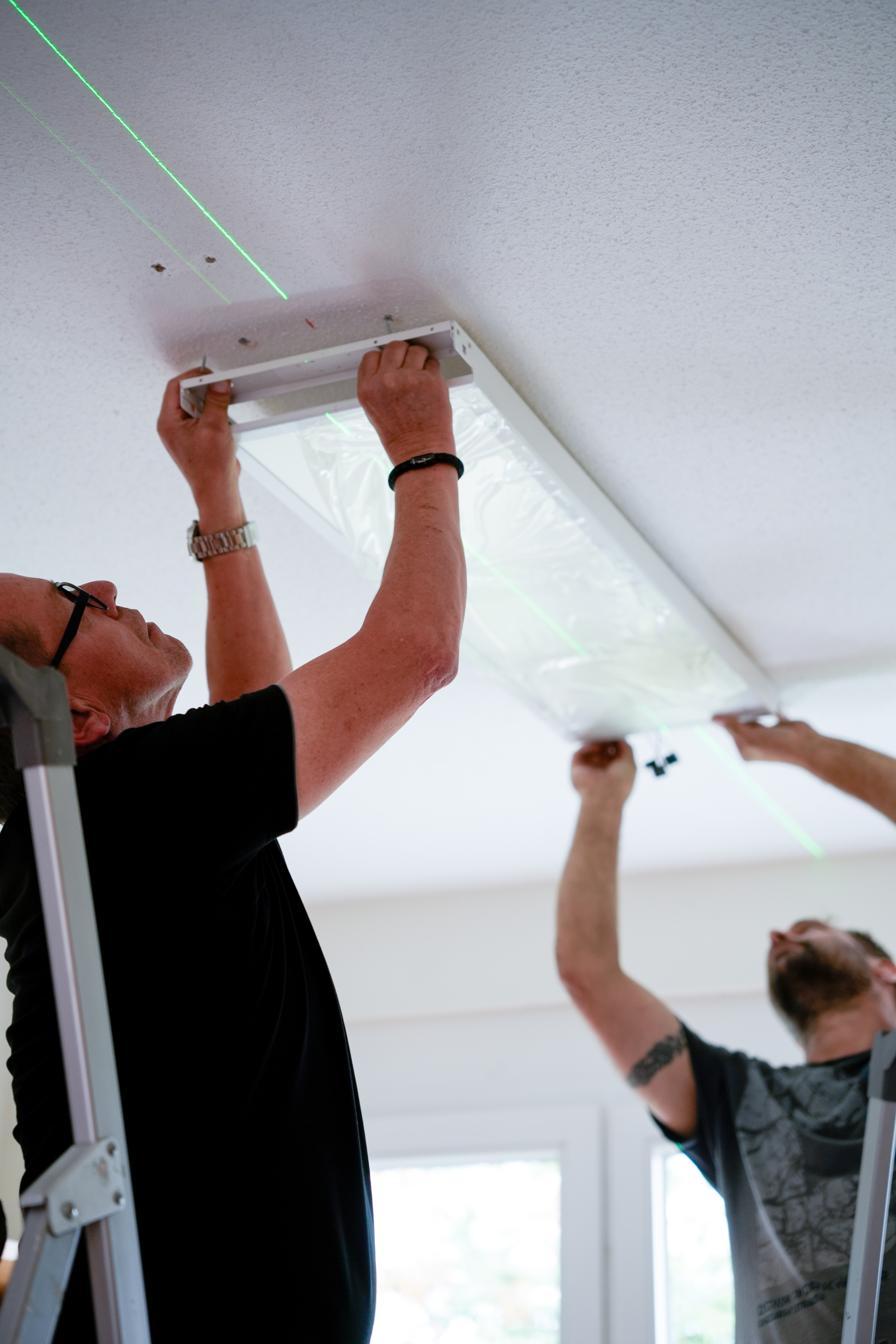
- permanently lowering the room temperature, converting to LEDs and installing three high-performance air heat pumps (early 2026) in the main building
- the development of an integrated climate protection concept
- Certification according to the "ZNU Standard for Sustainable Management" to make sustainability measurable at the university, develop key figures and anchor processes
Further details and a comprehensive carbon footprint can be found in the current sustainability report.
As a result of these measures, annual emissions of 567 tonnes of CO2e (CO2equivalents1) were continuously reduced in 2022 - in 2024, unavoidable emissions at the main campus still amounted to 501 tonnes of CO2e. By purchasing “green gas” and green electricity from Stadtwerke Witten, 416 tonnes of CO2e (market-based) have already been offset. This means that Stadtwerke Witten invests in climate protection projects and has certificates of origin for electricity from renewable sources. UW/H offsets the remaining 85 tonnes of CO2e by purchasing Gold Standard certificates, which are used to finance a climate protection project in Brazil. This contributes to the protection of forests and avoids illegal deforestation by converting kilns in the local ceramics industry from wood to biomass waste.
Promoting education for sustainable development and making an active contribution
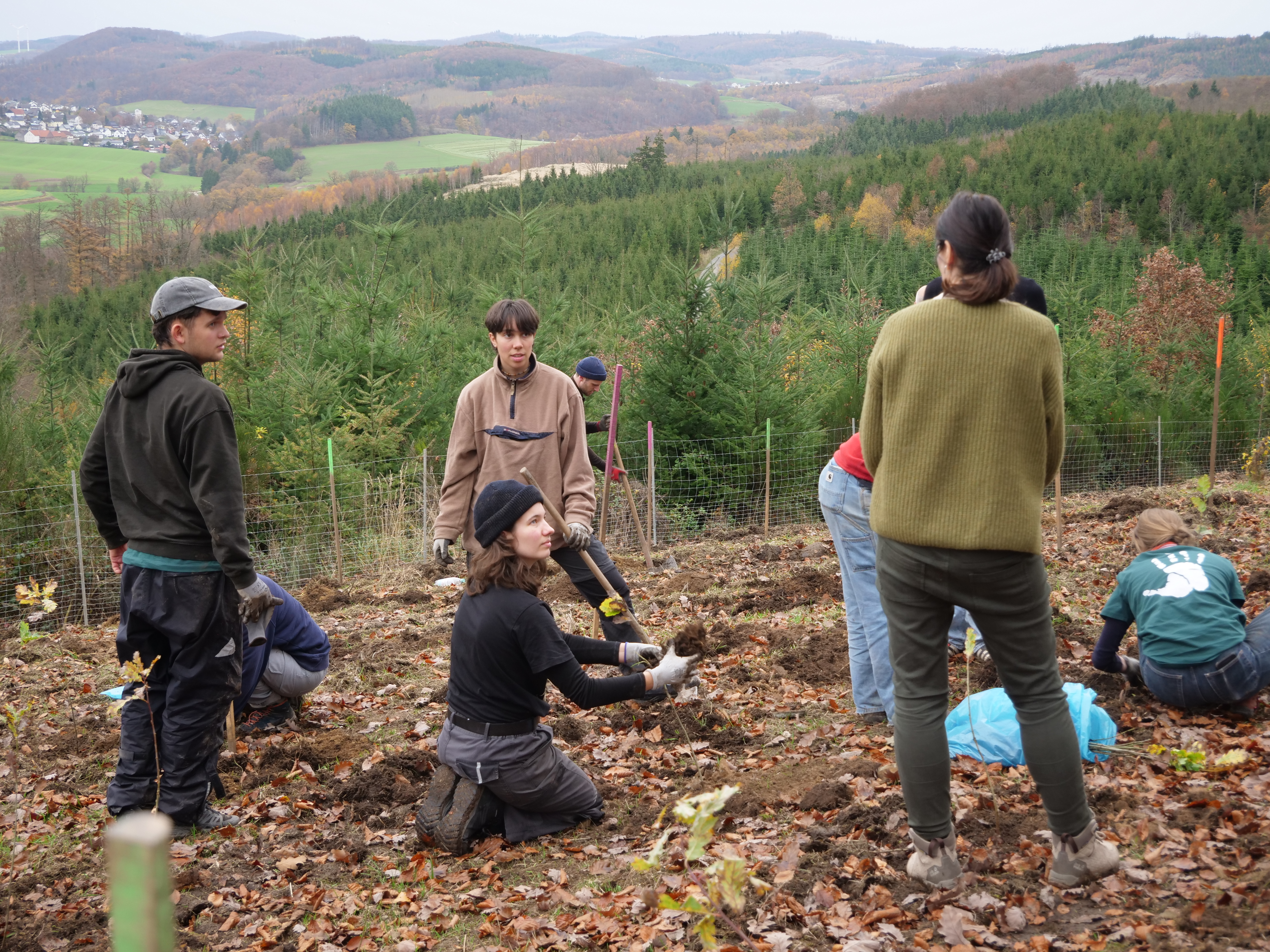
University members have also become involved in local climate protection: students, staff and trainees have planted 700 sessile oaks in Neuenrade in the Sauerland region together with the Bergwaldprojekt - an organisation that works nationwide to preserve and restore ecosystems. Dr Dirk Jakobs, vice president for organisational development, emphasises: "It is important to us not to stop at compensation, but to live up to our mission as an educational institution. We want to raise awareness of the effects of climate change in our region, encourage active participation and strengthen self-efficacy and the ability to act in terms of education for sustainable development."
UW/H President Prof Dr Martin Butzlaff: "The fact that we have achieved our goal and that our main campus will be climate-neutral on a balance sheet basis by the end of 2025 shows that we as a university take our responsibility seriously - in operations as well as in research and teaching. For us, climate neutrality is not a prestige project, but part of a long-term transformation process in which many people inside and outside UW/H are involved. This joint commitment shows what is possible when we pursue sustainability in a consistent, transparent and academically sound manner."
Further measures are being planned
The foundation stone has been laid. In order to remain on this path in the coming years, emissions will, on the one hand, be further reduced (in Scope 1 by 35 per cent by 2030 compared with 2022) and, on the other hand, offset through investment in climate protection projects (see the Sustainability Report for details). In addition, further locations - for example at the Gleiwitzer, Stockumer or Pferdebachstraße - and areas - such as business travel, waste, wastewater and purchased goods and services - are to follow after the main campus.
1The calculation in CO2 equivalents (CO2e) makes it possible to compare the impact of different greenhouse gases (e.g. CO2, methane or nitrous oxide) on global warming. This involves looking at how much each of these gases contributes to global warming compared to CO2. This makes the overall effect of different gases on the climate measurable and transparent.
Photos for download


Contact person
Svenja Kurth , M. A.
Team Leader Communication
Administration | Communication & Marketing
Alfred-Herrhausen-Straße 48
58455 Witten
Room number: 2.F05 | 2.028