
HeLiS
Health literacy and self-management in long-term cancer survivors - participatory development and evaluation of a digital, diversity-sensitive support service to promote development of self-management skills
Project overview
Due to medical advances, more and more people are surviving cancer. In Germany, around 3.1 million people are considered to be long-term cancer survivors. However, many of them have to deal with the late or long-term effects of the disease and treatment, which can affect their physical, mental and social well-being. Dealing successfully with these challenges requires strong self-management skills, which are closely linked to health literacy.
Our aim is to develop and evaluate a digital, diversity-sensitive support service for long-term survivors that strengthens health literacy and promotes self-management. Specifically, the digital service is intended to help users
- identify, use, and evaluate relevant health information,
- utilise exisiting support services in a targeted and needs-oriented manner,
- actively shape their own health in a self-determined way.
Participants wanted for an online study
How can people who have survived cancer be supported in taking control of their own health? As part of the HeLiS research project, the multilingual web app ‘Kompass fürs Leben’ was developed in collaboration with cancer survivors. It offers information and support for life after cancer.
We now want to find out whether using the web app improves health literacy and helps people to find, understand, evaluate and apply health information more effectively in their daily lives. We are also investigating the effects on quality of life, self-efficacy and mental wellbeing.
For our study, we are looking for people who have survived cancer and would like to support our research.
Here’s how participation works:
- Duration: The study will run for around six months and will take place entirely online.
- Surveys: You will complete a total of three online questionnaires – at the start of the study, and after three and six months.
- Use of the web app: Participants will be randomly assigned to two groups. One group will receive immediate access to the web app, the other after three months. You decide for yourself how often you use the web app.
- Flexibility: You can take part from home. There is no need to attend any in-person sessions.
Interested or have any questions?
You can sign up online. If you have any questions, please feel free to contact us by email (helis@uni-wh.de) or by telephone via project team member Kübra Annac (02302 92678674). We look forward to your support!

Project goals
Our research project pursues the central goal of strengthening the health literacy of long-term cancer survivors and supporting them in coping with the consequences of their illness in a self-determined way. Specifically, the digital service is intended to help users
- identify, use and evaluate relevant health information.
- utilise existing support services in a targeted and needs-oriented manner.
- actively shape their own health in a self-determined way.

Methodological approach
The project is based on a multi-stage mixed-methods approach and is being developed using a participatory co-design with affected individuals, patient advocates and other experts.
- Needs analysis: Qualitative research methods help us to identify the needs and requirements of the target group.
- Co-creation: The digital platform is designed together with long-term survivors, experts and advisory board members.
- Adaptive learning: A dynamic approach ensures that the service is customised to users.
- Evaluation: The platform is tested with regard to effectiveness and usability by means of a randomised controlled trial.
Co-operation partner
- Frauenselbsthilfe Krebs Bundesverband e. V.
- Haus der Krebsselbsthilfe – Bundesverband e. V.
- Krebsinformationsdienst des Deutschen Krebsforschungszentrums
- Interkulturelles Beratungs- und Begegnungs Centrum e. V.
- Gesundheitstreffpunkt Mannheim
- Salzetalklinik der Deutschen Rentenversicherung Westfalen
- Selbsthilfebüro Osthessen, Bereich Gesundheitsselbsthilfe und Zuwanderung
- MINA Leben in Vielfalt e. V.
Further information
- Duration: 01/2025 - 12/2027
- Funding: German Cancer Aid (Deutsche Krebshilfe)
- Responsible:Health Services Research Unit
- Project partners: The project is jointly conducted by three universities. In addition to the UW/H, the University Medicine Greifswald and the University of Siegen are involved.
Project management
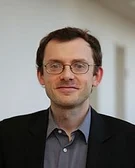
Prof. Dr. PH
Patrick Brzoska
Chair Holder
Faculty of Health (School of Medicine) | Chair of Health Care Research
Alfred-Herrhausen-Straße 50
58455 WittenRoom number: 1.002
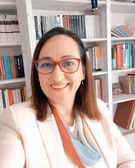
Dr.
Yuece Yilmaz-Aslan
Research Associate
Faculty of Health (School of Medicine) | Chair of Health Care Research
Alfred-Herrhausen-Straße 50
58455 WittenRoom number: 1.004
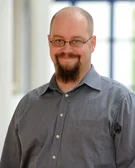
Fabian Erdsiek
Research Associate
Faculty of Health (School of Medicine) | Chair of Health Care Research
Pferdebachstraße 11
58455 WittenRoom number: 1.004
Project management of the partner universities
Prof Dr Corinna Bergelt
University Medicine Greifswald
Institute of Medical Psychology
Head of Institute
Contact and further information
Prof Dr Christoph Dockweiler
University of Siegen
Chair of Digital Public Health
Chair
Contact and further information
Contact UW/H

Kübra Annac
Research Associate
Faculty of Health (School of Medicine) | Chair of Health Care Research
Pferdebachstraße 11
58455 WittenRoom number: Raum 4

Anna Audia
Research Associate
Faculty of Health (School of Medicine) | Chair of Health Care Research
Gerhard-Kienle-Weg 4
58313 HerdeckeRoom number: 4

Diana Wahidie
Research Associate
Faculty of Health (School of Medicine) | Chair of Health Care Research
Pferdebachstraße 11
58455 WittenRoom number: Raum 004