Assistive Device Reform Falls Short: Many Families Continue to Struggle to Obtain Wheelchairs and Orthotics for Their Children
A study by Witten/Herdecke University shows that three out of four parents have not seen any improvement since the law was changed.
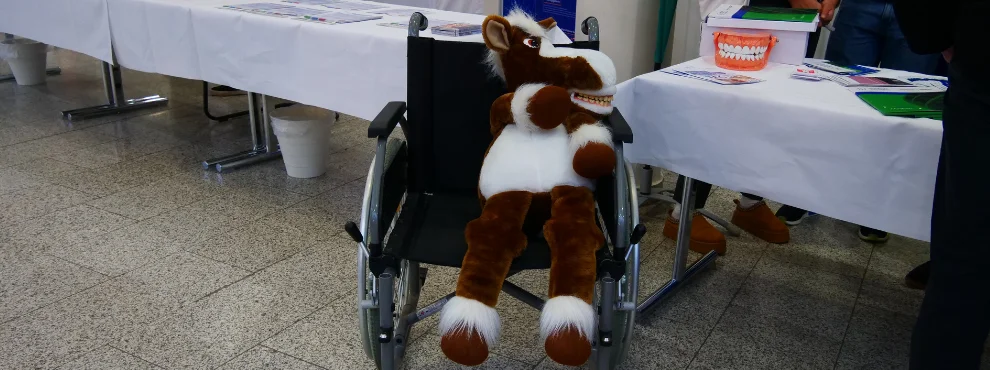
A wheelchair, an orthosis or a communication aid often determines whether a child with a disability can participate in everyday life or not. This is precisely why a change in the law is intended to speed up the provision of assistive devices. From February 2025, health insurance funds are to largely dispense with additional checks for prescriptions issued by social paediatric centres. The aim of the legislation was to avoid duplicate checks, speed up procedures and ease the burden on families. However, 1.5 years later, a study by the University of Witten/Herdecke (UW/H) shows that this objective has so far hardly been achieved.
Three out of four parents surveyed do not see any improvement in the provision of assistive devices as a result of the reform. Only a few report faster approval procedures. At the same time, more than half of the families continue to find the application process extremely burdensome. Around three-quarters organise applications themselves, follow up on the processing status or lodge an appeal. Some of the remaining families are supported in this by social paediatric centres (SPZs), which handle communication with health insurance providers or draft appeals. Some even refrain from applying for necessary assistive devices because they can no longer cope with the bureaucratic burden.
The reform has so far failed to be implemented
For the study, Prof. Dr Peter Borusiak, Professor at the Chair of Paediatrics at the University of Münster (UW/H), and Fleming Caje, a medical student at the UW/H, interviewed staff from socio-paediatric centres, parents and other stakeholders in the healthcare system. The result: it is not the reform itself that is holding back care, but its implementation. Communication problems, bureaucratic hurdles and unclear responsibilities often prevent the acceleration of care provided for by law from reaching families.
“Care must not depend on how tenaciously parents can fight for their child,” says Borusiak. “Assistive devices enable participation. That is why they must reach those who need them – without months of red tape.”
Better communication rather than new rules
The researchers do not attribute the causes to any single party. Rather, several problems are simultaneously holding back provision. Prescriptions from social paediatric centres are often not clearly recognisable to health insurance funds. There is widespread uncertainty about how the new statutory regulations are to be applied in practice.”
Added to this are time-consuming approval procedures, a lack of digitalisation and staff shortages in the provision of assistive devices. Furthermore, cooperation between social paediatric centres, health insurance funds and other stakeholders is not running smoothly in many places.
The researchers recommend that health insurance company staff across the board be informed about the new legal situation, that prescriptions from social paediatric centres be clearly labelled, and that dedicated contact persons be appointed for the provision of medical aids to children and young people. Furthermore, the Federal Ministry of Health should further clarify the legal provisions to ensure they are implemented uniformly across the country.
Further information: The study ‘Provision of assistive devices for children and young people following the legislative change – a review’ by Fleming Caje and Prof. Dr Peter Borusiak was published in the *Bundesgesundheitsblatt – Gesundheitsforschung – Gesundheitsschutz*: https://link.springer.com/article/10.1007/s00103-026-04264-0
In addition to Witten/Herdecke University, the German Society for Social Paediatrics and Adolescent Medicine (DGSPJ) and the Federal Association rehaKIND e. V. were also involved in the study.
Contact person

Svenja Malessa
Press Officer
Administration | Communication & Marketing
Alfred-Herrhausen-Straße 48
58455 Witten
Room number: 2.F05