The medicine of the future: prevention rather than treatment
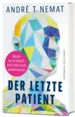
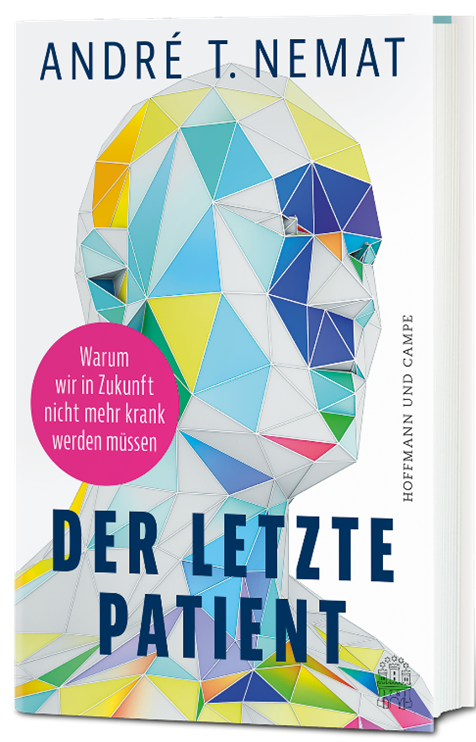
In his new book, 'The Last Patient', Dr André T. Nemat of Witten/Herdecke University describes how artificial intelligence will transform our healthcare system.
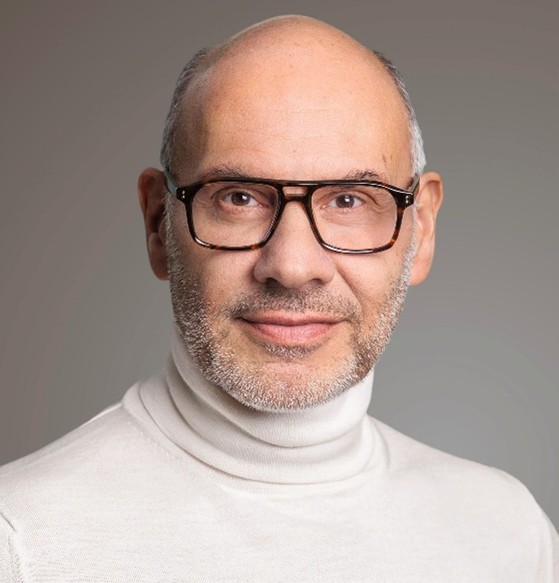
Dr André T. Nemat from the Faculty of Health and Medicine at Witten/Herdecke University is the founder of the Centre for Digital Innovation and Transformation in the health care system. For many years, his work has focused on medical and technological innovations, as well as the ethical implications of digital advances in medicine. In his new book, ‘The Last Patient’, Nemat discusses the concept of the ‘digital twin’, the impending paradigm shift in medicine and the threat of a ‘bio-score’.
What exactly is a ‘digital twin’ of a human being – and how does it differ from the data we already collect on smartphones or smartwatches today?
A human digital twin is a virtual representation and a real-time, dynamically changing model of our body, which not only stores data but also enables us to perform calculations on it and run through future scenarios. And this is precisely where the difference lies compared to a smartwatch. Today, AI on your wrist collects snapshots: your heart rate, a few steps, occasionally an ECG. Valuable but isolated data points, lying side by side like postcards in a drawer. A digital twin combines genetic data, lab results, the microbiome and movement patterns into a single entity that ages alongside you. It allows you to virtually fall ill and respond to a treatment long before you experience the first symptom in real life.
Your book describes the shift from a form of medicine that cures diseases to one that prevents them. Why is this such a radical upheaval for our healthcare system?
Because it reverses the fundamental logic of our healthcare system. From time immemorial to the present day, the system has operated according to a pattern I call ‘Find & Fix’, and it works like a fire brigade: We wait until there’s a fire – until the pain, the tumour or the fever sets off the alarm – then we turn out and put it out. We excel at this; our treatments are becoming ever gentler and more personalised. But the major diseases of our time do not blaze fiercely. Cancer, diabetes, dementia, calcified arteries – they smoulder silently for years, chronically, and by the time the flames finally become visible, the tissue is often already destroyed.
‘Predict & Prevent’ turns this paradigm on its head: we prevent the fire from starting in the first place. This vision is so radical because almost every pillar of the healthcare system hinges on it. Prevention thus becomes possible only in the sense of proactive medicine.
The most profound shift, however, is a cultural one. Medicine that heals accepts fate. Medicine that prevents declares it to be malleable. And the moment illness is regarded as avoidable, something shifts in the way we live together. That is where the real transformative power lies.
If technology and artificial intelligence can accurately calculate the risk of illness, who will bear responsibility for our health in future?
That is the question that has preoccupied me the most whilst writing. When Bismarck introduced health insurance in 1883, it worked because nobody could say who would be the next to fall ill. We all pay into a common pot because misfortune is blind. This uncertainty is the real social glue; for a moment, it makes the department head and the parcel delivery driver equals. It also has a soothing side-effect: fate takes the pressure off. A diagnosis of lung cancer was a tragedy, not a sentence.
The digital twin dissolves this social glue. Imagine an algorithm telling you, in black and white after a heart attack, that half an hour’s exercise a day would have reduced your risk by thirty per cent. In that very instant, misfortune is transformed into a failure. The illness loses its innocence. Almost imperceptibly, the victim becomes a suspect who has ‘mismanaged their biological capital’.
What do you see as the problem with this?
I’m concerned about the subtle erosion of solidarity driven by the market. The first ‘pay-as-you-live’ insurance policies are already rewarding those who dutifully track their steps. I believe a ‘bio-score’ is on the horizon – a health equivalent of the Schufa credit bureau that plays a part in determining whether you get the job, the loan or the flat. Then things take a cynical turn: data protection becomes a luxury for the wealthy. Those who can afford it will forego the discount and retain their privacy. Those who are short of cash will sell it. In the end, it would be the chronically ill and those with a genetic predisposition, of all people, who would find themselves doubly penalised – by their illness and by the blame attributed to them for it. My aim is to issue a warning: we must renegotiate solidarity in the 21st century; otherwise, we will lose it without ever having voted on the matter.
Photos to download

contact
Lennard Halfmann
Communications Officer
Administration | Communication & Marketing
Alfred-Herrhausen-Straße 48
58455 Witten
Room number: 2.F05