Viktoria Schutschmann: “I feel at home wherever I can be myself.”
Viktoria, a psychology student, explains what equality and diversity mean to her and how she has found her place at UW/H.
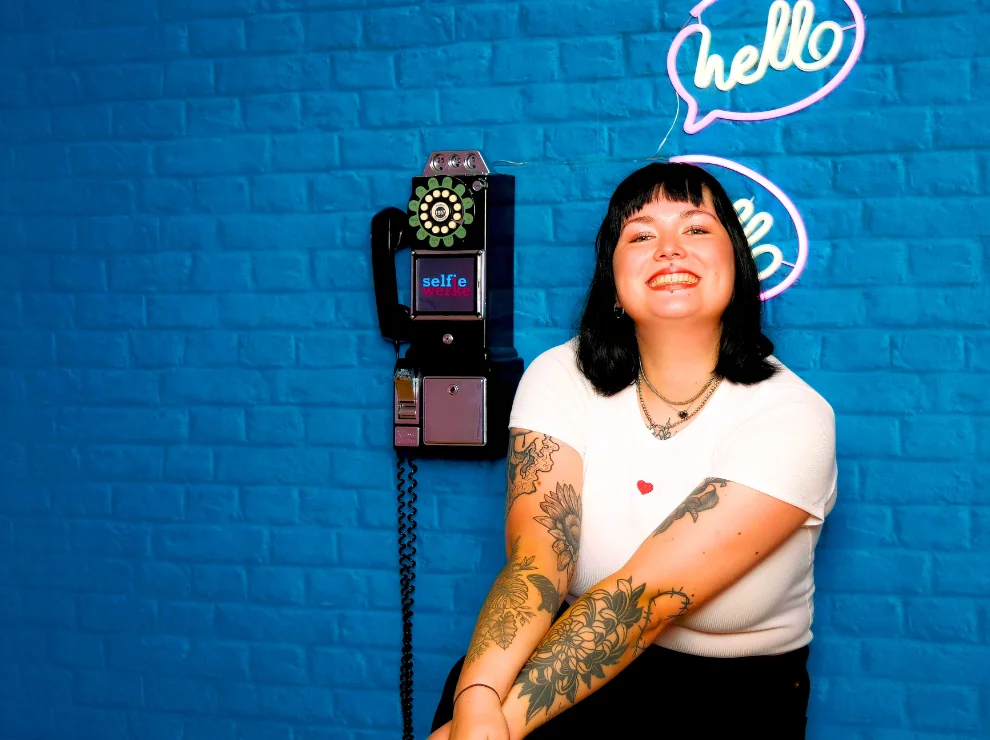
Viktoria Schutschmann has recently joined the Equality and Diversity Team at Witten/Herdecke University (UW/H) as a student assistant. At the same time, she was elected Deputy Equality and Diversity Officer for the ‘students’ status group. The psychology student brings a wealth of qualities to her new role: specialist knowledge, a strong sense of commitment and personal experiences that have shaped her. In this interview, she explains why issues such as mental health, feminism, diversity and a sense of belonging are particularly close to her heart, and why she wants to be an approachable point of contact for students.
You’re studying psychology now. Your path to getting here wasn’t a straight one, though. How did you end up at the UW/H?
I previously studied Communication Studies and Anglophone Studies in Essen. Even back then, I mainly chose courses with a psychological focus. Two years ago, I also completed further training and started working in a psychiatric ward. The desire to help other people – whether through my specialist knowledge or my own experiences – has always been there.
As the first woman in my family to go to university, however, I had hardly any guidance or support when it came to choosing a career or a degree course. I had to figure out a lot of things for myself. Despite a good A-level average, my marks weren’t high enough to secure a place on a psychology degree course at the time. But the desire to study this subject never really left me and grew with every day I spent working in psychiatry. When I turned 30, I thought to myself: if I don’t take the plunge now, I’ll end up unhappy. At the University of Münster (UW/H), I had the opportunity to fulfil this dream after all – and today I know that it was exactly the right decision.
You’ve been campaigning on social issues for years. What drives you to do this?
On my social media account, I have regularly raised awareness about mental health and the stigma surrounding mental illness. But feminism and inclusion have also been topics there, because they are issues close to my heart and need much more attention in society.

It is particularly important to me to raise awareness of chronic and invisible illnesses and to break down existing prejudices. We should not just talk about those affected, but above all talk to them, listen to them and take their experiences seriously. This also involves asking what it actually means to live with and study whilst having a condition such as migraine or an obsessive-compulsive disorder – and what barriers one encounters in doing so, even though, or perhaps precisely because, the condition is often not visible to others. I know from my own experience how stressful it can be to have to explain – or even justify – one’s own limitations time and time again.
However, we encounter prejudice not only in connection with health conditions, but also in many other areas of society – for example, when it comes to feminism. Many people still associate feminism with misandry or believe it dictates how women should live their lives. For me, however, it’s about equality for all genders and being able to freely choose the way of life that suits you – there isn’t just one ‘right’ way; what matters is that people have a choice.
Micro-feminism is right up my street. I think it’s powerful that we can bring about change through small actions and decisions in everyday life – even if these might seem insignificant at first glance. For me, this also includes being mindful of how we use language. It’s no coincidence that I studied communication studies. I don’t want to judge people for every thoughtless choice of words. Rather, my aim is to make people aware that language has an effect on us and can indeed hurt, exclude or discriminate against others. You don’t have to get everything perfect or know everything – who does, anyway? What’s important is to engage consciously with these issues and to reflect on oneself and one’s own privileges.
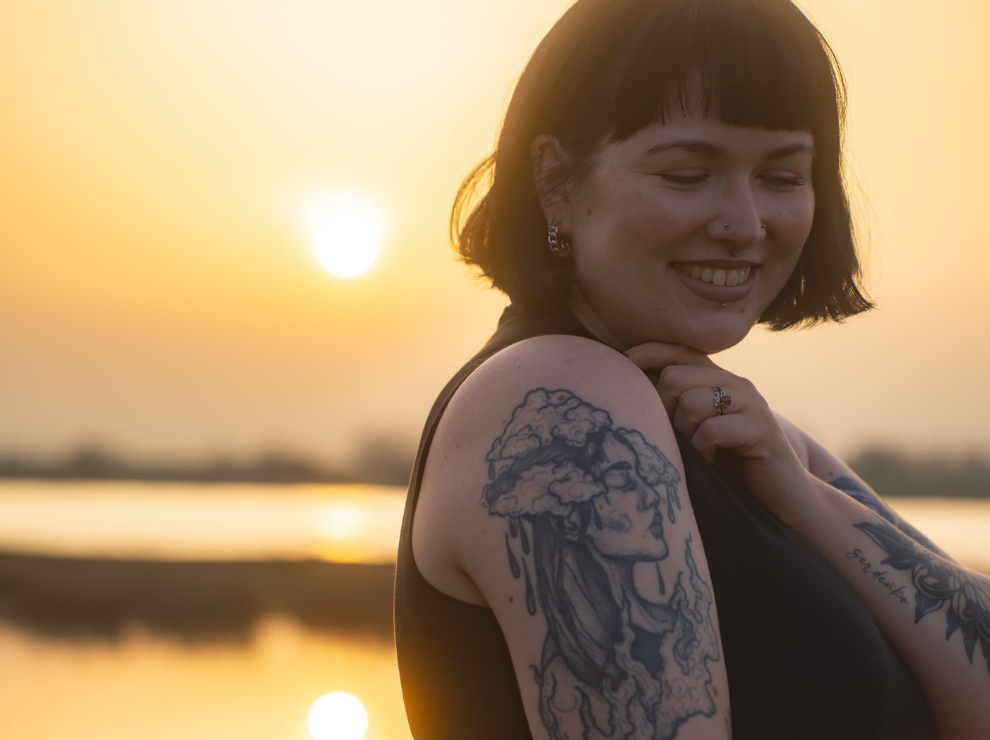
How did you eventually end up working in the area of equality and diversity?
I met Elisa Mura, our Equality Officer, at the ‘Market of Opportunities’ event at the start of the semester in October 2025. She told me that they were planning to advertise an SHK position in the department shortly and were looking for a student representative. Even then, I knew I’d love to work in this area. The issues tied in perfectly with what I’ve long been interested in and committed to. And Elisa is simply brilliant – both as a person and professionally. When the vacancy was finally advertised, I applied straight away. I’m absolutely delighted that it worked out! I’m looking forward to my new responsibilities and to being able to make a real difference in the area of equality and diversity.
What exactly are your responsibilities, and what advice would you give to students?
I support Elisa in her work and focus primarily on making equality at UW/H even more visible and accessible. For example, I manage the Equality and Diversity department’s Instagram channel. I believe this is a great way to reach lots of students and raise awareness of various issues.
It’s important to me that students know they can come to me with their problems and that I’ll listen to them. If, for instance, someone feels disadvantaged, wants to talk about a boundary being crossed, or is experiencing an equality-related conflict with another person at the university, we can work together to see what next steps or support services might be helpful.
Some may not feel confident enough to approach a member of university staff directly and open up to them. That’s why I’m here as a student representative, to help break down that barrier. I also bring a wealth of experience in supporting people, as well as empathy and sensitivity.
You’re currently reflecting a lot on your own background as the daughter of Polish parents. What does a sense of belonging mean to you?
My parents are from Poland, but I myself was born and brought up in Germany. As a toddler, however, I spoke only Polish, and I’m still fluent in the language today – apart from the odd difficulty finding the right word. I’ve always felt as though I was living with two identities. And at some point, the question arose: where do I actually feel I belong? Among my Polish relatives, I was always ‘the German’, and amongst my friends at school, ‘the Polish girl’ who sometimes mixed the two languages together. And of course there were prejudices too, though as a child I couldn’t always quite make sense of them. It’s only now, as an adult, that I’ve begun to reflect on what these experiences have actually done to me.
In 2024, I returned to Poland for the first time in eleven years and went on holiday to Gdańsk with my friends. There, I was able to organise a lot of things for us because I speak and understand Polish. At moments like these, I realise just how much this language and culture have shaped me – and that my Polish roots are something that enriches me. I like to call them my personal Polish ‘special effects’. For me, therefore, a sense of belonging isn’t necessarily tied to a specific country or a fixed place. It arises wherever I feel safe and accepted. Wherever I can be myself without having to explain myself, fit in or pretend to be someone else. For me, it’s above all the people around me, shared experiences and all the different things that make me who I am.

Coming to terms with your sexual orientation has also played an important role in your life. Would you like to share your experiences?
I grew up in a very Catholic and conservative family. When I realised that I was attracted not only to men but also to women, at first I hoped it wasn’t true.
My worries were heavily influenced by societal prejudices and the ideas I’d grown up with. I was afraid of what my sexual orientation would mean for my life and how those around me would react to it.
Now I think: I know best who I am and what defines me. I simply hope that diversity and the motto ‘love is love’ are embraced as a matter of course. But it was a process before I reached that point and accepted myself. Luckily, I’ve always had my best friend by my side. She’s been with me my whole life and has been through all my phases with me – the good, the bad, or just pure chaos. She, too, was taken aback at first when I spoke to her about sexuality, but she simply accepts me as I am, and anything else was never an option for her.
Overall, I’m very grateful for my friendships and today I have a close circle of friends with whom I feel a strong bond. Many of them also work in the social sector. We’re united by similar values, and social issues play a major role in our conversations and our everyday lives. We can speak openly with one another, even about feelings and difficult topics. There are really no taboos – and for me, that’s exactly what belonging means.
How do you experience diversity and tolerance at the UW/H?
Before I came to UW/H, I already wanted to make a difference in society, but I didn’t know how. However, in Witten there are so many student initiatives tackling important current issues. I joined the ‘Mit Sicherheit Verliebt’ (MSV) initiative, which campaigns for sex education on an equal footing in schools. I really enjoy helping (young) people understand things better and learning something myself in the process. I believe we can benefit a great deal from one another.
Because the university is smaller, the sense of community is much more personal and you feel more closely connected to one another – not just with fellow students, but also with the lecturers. Here, I don’t feel like I’m getting lost in the crowd; instead, I feel seen.
