People at the UW/H – Sophia Johnson: Women’s health needs new perspectives
Sophia Johnson offers insights into integrative women’s health and explains why it is important to allow more scope for creativity.
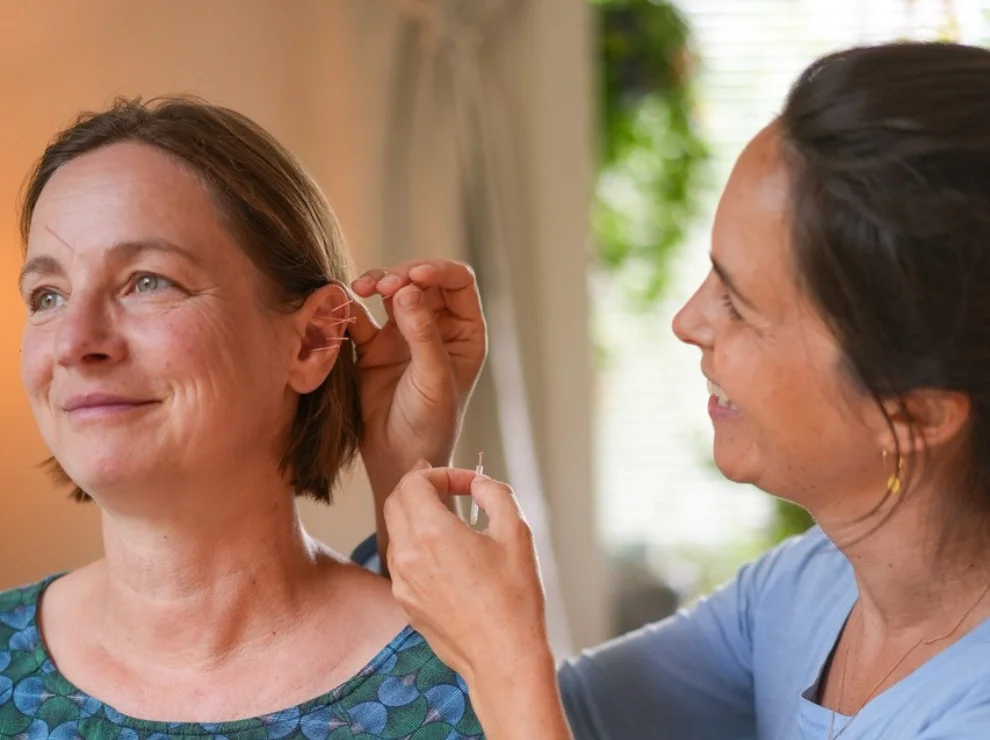
What shaped me during my studies was the freedom.
Dr Sophia Johnson, MDResearch Associate at the Institute for Integrative Medicine (IfIM)
Who are you and what do you do at the UW/H?
Since January 2026, I have been employed as a part-time research assistant at the Institute for Integrative Medicine – and am thus back at the UW/H, where I studied medicine as part of the 23rd intake of the degree programme in human medicine. I am now a specialist in general practice. The focus of my work is integrative women’s health – this is the area in which I would like to complete my habilitation.
I often have to explain what ‘integrative women’s medicine’ actually is. Many patients initially think I’m a gynaecologist. That’s understandable, as I completed my PhD on the placenta in the Department of Obstetrics at Jena University Hospital. In fact, however, I’m interested in gender-sensitive medicine – that is, recognising both biological and socio-cultural gender – along with the corresponding individual predispositions to disease and treatment options.
On the one hand, I work in a practice in Weimar, where I see many female patients seeking holistic treatment (such as acupuncture for cycle-related migraines or homeopathy for perimenopausal symptoms) and gain valuable experience. On the other hand, as part of my academic work, I engage intensively with the current body of research (e.g. how ear acupuncture or homeopathy can reduce hot flushes) and thus practise evidence-based, integrative medicine.
What do you particularly enjoy about your work, and which projects or topics are you currently working on?
When it comes to research projects, it’s important for me to think ‘outside the box’. That’s something I learnt at the UWH. I also find it very enriching to exchange ideas with students or PhD candidates: what are their thoughts, ideas and research questions? I love this exchange on an equal footing and am myself very curious and open to all kinds of research ideas or therapies in the field of women’s health (#alwayslearning).
At the moment, I’m working with colleagues to develop protocols for clinical trials that I’d like to conduct in the future, for example on ear acupuncture according to the NADA protocol and its potential effects on menstrual health. Ear acupuncture following the NADA protocol is a simple, standardised and effective method for stimulating the body and mind to regulate themselves. It is administered with care and respect and typically takes place as a group acupuncture session.
I am also involved in planning a symposium on women’s health at the UW/H for the summer term of 2027 – though I can’t reveal too much about that just yet.
What are your hopes for the future at UW/H, and is there anything you’d like to change?
What shaped my time as a student was the freedom: having time to play music with Ingo in the orchestra, to go on excursions with IBAM, and to attend seminars in wonderful locations (such as the rhythmic massage course in Graz).
I’d like the degree programme to offer more scope again for personal development, creativity and reflection – rather than being such a crammed, rigidly structured catalogue of learning and exams, as is the case at conventional universities.
What do you get up to when you’re not working at the UW/H?
Music continues to play a big part in my life: I regularly meet up with my 100-plus friends from the STÜBA Philharmonic for rehearsals and concerts, and sometimes we even go on tour together. That’s what I sometimes use my annual leave for. I might be a bit less rested afterwards – but I’m filled with so many special experiences and encounters.
At the weekends, I also enjoy teaching ear acupuncture according to the NADA protocol. I’m so enthusiastic about this therapeutic tool that the joint seminars with people who want to learn the technique are really enjoyable, fulfilling – and, of course, incredibly relaxing, as we practise on each other and activate the vagus nerve through the acupuncture.
I also love being out in nature – the busier my mind is, the more often I go. When I’m out walking in the countryside, I can sort through my thoughts; often, this leads to lots of good ideas, or the ‘knot in my head’ just unravels.
What’s the strangest or most remarkable thing you’ve ever experienced at UW/H?
I remember the large concerts with choir and orchestra in the main hall as particularly memorable experiences: when music fills the university and brings so many people together (whether they’re listening or playing). The splendour of the Christmas concerts is a wonderful memory.