Assisting Refugees to Access Psychological Support (ARAP)

The problem
Between 1953 and 2025, the Federal Office for Migration and Refugees (BAMF) recorded a total of 7.3 million asylum applications, of which around 4.8 million were lodged in North Rhine-Westphalia. People fleeing from crisis and conflict zones often endure life-threatening journeys and, in the vast majority of cases, are exposed to considerable stress. According to estimates, around 80 per cent of these individuals have experienced potentially traumatic events.
Such experiences rarely fail to have psychological consequences. They frequently result in persistent psychological distress and can contribute to the development of mental health conditions. Various studies show that around 40–50 per cent of people with refugee backgrounds have mental health conditions requiring treatment. Without adequate care, there is an increased risk of these conditions becoming chronic, which significantly complicates and prolongs subsequent treatment.
In addition to the already severely strained outpatient psychotherapeutic services, there are further structural barriers for people with refugee backgrounds. In particular, the lack of funding for language and cultural mediation (SKM), as well as the scarcity of expertise in migration and trauma-related issues among healthcare professionals, hinders access to appropriate care. This results in a significant treatment deficit, which can, not least, have a lasting negative impact on integration processes.
Our project
The ARAP (Assisting Refugees to Access Psychological Support) project aims to specifically address the gaps in care described above. External funding has enabled Witten/Herdecke University to implement this project in North Rhine-Westphalia.
The service is aimed, on the one hand, directly at people with refugee backgrounds who require treatment. On the other hand, it involves both psychotherapists in private practice who are registered with health insurance funds and psychotherapists in training (PiA).
- For people experiencing psychological distress, we provide access to qualified, culturally sensitive and compliant psychotherapeutic care. To begin with, we offer structured assessment interviews (clearing) in which we jointly clarify needs and the scope of treatment – either online or on-site at Witten/Herdecke University. In doing so, we take into account any prior assessments carried out by specialist organisations (e.g. psychosocial centres for survivors of torture, war and displacement).
- For psychotherapists registered with health insurance funds and psychotherapists in training (PiA), we offer further training and supervision regarding migration- and trauma-specific expertise and are available as points of contact. To support successful treatment, the project team organises and funds language and cultural mediation services (SKM) for the duration of the therapy. Particularly complex cases, such as those involving difficult immigration status, are managed directly by the project team.
- For professionals who are in regular contact with children and young people (e.g. teachers, staff in after-school care programmes), we offer training courses and educational materials on the manifestations of mental health disorders, as well as guidance on addressing related issues in a culturally sensitive manner. This enables those affected to be identified at an early stage and referred to the project in a targeted manner.
We then bring those affected and practitioners together: where necessary and upon request, we refer them to a regional network of practising psychotherapists.
Our offers
To support the professional development of psychotherapists and trainee psychotherapists (PiAs) in the areas of migration, displacement and trauma, we offer the following free services:
• Regular, and where appropriate, specialised supervision
• Training courses on migration, displacement and trauma-related disorders
• Organisation of intervision groups
• Provision of topic-specific materials
• Regular consultation hours run by the project team for psychotherapists and trainee psychotherapists
• Referral of clients and organisation of SKM services
An application is being made for the Chamber of Psychotherapists to accredit these services. Participation is generally flexible and non-binding. Furthermore, those interested have the opportunity to gain an additional qualification in the field of migration and refugee issues through ongoing participation.
To assess the needs of colleagues working in psychotherapy, we ask you to complete the following needs assessment survey:
For clients
Our services are aimed at refugee children, young people and adults. We help people who are struggling. For example, with anxiety, sadness, stress or traumatic memories. We start by having a chat. We’ll listen to you and work out together what sort of help would be best for you. The consultation can take place at Witten/Herdecke University or online. If you don’t speak much German, we’ll arrange for an interpreter. The consultation is free of charge. All you need is your health insurance card. Afterwards, we’ll help you find suitable support in your local area, such as psychotherapists or counselling centres.
How to contact us
The best way to contact us is by email: arap@uni-wh.de
If you are unable to contact us by email, please call us on: +49 2302 926-7306
Our telephone opening hours:
Thursday
10.00 am to 12.00 pm
1.00 pm to 3.00 pm
Are you calling outside our opening hours? Please leave a message on our answering machine. We’ll be happy to call you back.
Leaflet:
Procedure for psychotherapists
To best meet your needs, we would ask you to complete the following needs assessment questionnaire. Once you have provided your contact details, the project team will get in touch with you. We will then discuss and agree on a suitable framework for our collaboration. If you decide to take on a client, the project team will handle the organisational processes for SKM services, allowing you to focus entirely on your therapeutic work.
To keep you informed, you will receive a regular newsletter featuring the latest training and supervision opportunities, as well as requests for therapy places. In addition, a map provides an overview of existing intervision groups and relevant contacts in your region.
If you are interested in intervision but there is not yet a suitable group in your area, you can contact us at any time at arap@uni-wh.de.
Training and supervision
- You can find the latest training courses here:
Register via eveeno using the link provided
- 7 September 2026 at 6.30 pm Topic: Refugee and Migration Issues in Psychotherapy
- 24 October 2026, 2.00–3.30 pm Racism and mental health: Why anti-racist expertise is needed in everyday psychotherapy practice (Part 1)
- 26 November 2026, 6.30 pm–8.00 pm: Working within the triad – language and cultural mediation
- 5 December 2026, 2.00–3.30 pm Racism and mental health: Why anti-racist expertise is needed in everyday psychotherapy practice (Part 2)
- 14 January 2024, 6.30 pm–8.00 pm Legal foundations
- 11 February 2024, 6.30 pm–8.00 pm Child and adolescent psychotherapy – displacement and migration
- 11 March 2024, 6.30 pm–8.00 pm: Fundamentals of the asylum process
20 April 2024, 6.30 pm–8.00 pm Identity fragmentation following the experience of flight
- You can find the latest supervision opportunities here:
Register via eveeno using the link provided
- 8 October 2026, 18:30–19:15 Supervision with Prof. Dr Çinur Ghaderi
- 12 November 2026, 18:30–19:15 Supervision with Prof. Dr Çinur Ghaderi
- 3 December 2026, 6.30–7.15 pm: Supervision with Prof. Dr Çinur Ghaderi
- NET online seminars (in English)
- Online training course in TF-CBT for children and adolescents, University of Eichstätt-Ingolstadt
References and Resources
- ‘NEDA’ project (including psychoeducation, stress management and specific exercises)
- ar, de, en, fa, ru, uk - Swiss Red Cross (information leaflet on PTSD)
- ar, bs/hr/sr, de, en, fa/prs, fr, it, ps, ru, sq, ta, tr, uk - University of Eichstätt-Ingolstadt (including an information sheet on PTSD and relaxation exercises)
- ar, de, fa, fr, kmr, prs, ps, so, ti - Caritas Cologne (Guide for parents of children and young people experiencing emotional distress)
- ar, de, en, uk - Guide to Emotional Self-Help (PEP)
- de, en, pl, ru, uk
Language codes: Albanian (sq), Amharic (am), Arabic (ar), Burmese (my), Bosnian (bs), Chinese (zh), Dari (prs), German (de), English (en), Farsi (fa), Finnish (fi), French (fr), Greek (el), Italian (it), Kurmanji (kmr), Croatian (hr), Nepali (ne), Dutch (nl), Northern Sami (se), Norwegian (no), Pashto (ps), Polish (pl), Russian (ru), Swedish (sv), Serbian (sr), Somali (sp), Spanish (es), Swahili (sw), Tamil (ta), Tigrinya (ti), Turkish (tr), Ukrainian (uk), Hungarian (hu)
Useful links
- Federal Association of Psychosocial Centres
- PSZ NRW
- Instructional videos on asylum and residence law
- Guidance on applying for funding for therapy for refugee minors and young adults
- National Centre for Early Intervention (resources for working with refugee families)
- Directory of addresses for independent advice centres and initiatives
- Bibliography (ARAP project)
- Video list (ARAP project)
Questionnaires
Refugee Health Screener 15 (R-H-S 15)
- am, ar, en, es, fa, fr, my, ne, prs, ru, so, sw, ti
Child and Adolescent Trauma Screener 2 (CATS-2)
- ar, de, el, en, fa, fi, fr, hu, kmr, nl, no, prs, ps, ru, se, so, sv, ti, tr, uk, zh
Language codes: Albanian (sq), Amharic (am), Arabic (ar), Burmese (my), Bosnian (bs), Chinese (zh), Dari (prs), German (de), English (en), Farsi (fa), Finnish (fi), French (fr), Greek (el), Italian (it), Kurmanji (kmr), Croatian (hr), Nepali (ne), Dutch (nl), Northern Sami (se), Norwegian (no), Pashto (ps), Polish (pl), Russian (ru), Swedish (sv), Serbian (sr), Somali (sp), Spanish (es), Swahili (sw), Tamil (ta), Tigrinya (ti), Turkish (tr), Ukrainian (uk), Hungarian (hu)
Flyer available for download

Further information
- Duration: Until November 2028
- Funding: Asylum, Migration and Integration Fund (AMIF), Dr Lisa Kurz Foundation, Heidehof Foundation, Witten/Herdecke University
- Responsible: Senior Professorship in Clinical Psychology and Psychotherapy
- News: Traumatised refugees to have easier access to psychological support
- Contact: arap@uni-wh.de




Project managers
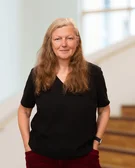
Univ.-Prof. Dr.
Ulrike Willutzki
Professor
Faculty of Health (School of Psychology and Psychotherapy) | Senior Professorship of Clinical Psychology and Psychotherapy
- +49 2302 926-767
Orcid ID: 0000-0002-0149-4554
Alfred-Herrhausen-Straße 50
58448 WittenRoom number: 1.125
Project Coordination
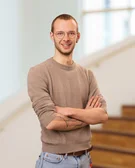
Oliver Amrehn , M. Sc.
Researcher
Faculty of Health (School of Psychology and Psychotherapy) | Senior Professorship of Clinical Psychology and Psychotherapy
Alfred-Herrhausen-Straße 44
58455 WittenRoom number: 1.115
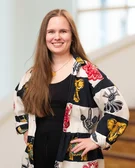
Michelle Raucamp , M. Sc.
Researcher
Faculty of Health (School of Psychology and Psychotherapy) | Senior Professorship of Clinical Psychology and Psychotherapy
Alfred-Herrhausen-Straße 44
58455 WittenRoom number: 1.115
Project staff

Pia Hartung
Student Assistant
Faculty of Health (School of Psychology and Psychotherapy) | Senior Professorship of Clinical Psychology and Psychotherapy
Alfred-Herrhausen-Straße 44
58448 Witten
